
This article's table of contents introduction:
- The System Context
- The Coupling Drivetrain: Why it's Critical
- Types of Couplings Used in This Application
- The "Boiler" Aspect
- Critical Safety & Maintenance Considerations
- Summary Recommendation for a Steel Mill ID Fan on a Boiler Drivetrain
This is a specialized industrial engineering topic combining steel manufacturing, emissions control (dust collection), boiler operation, and mechanical power transmission (couplings).
It sounds like you are asking about a specific configuration: An Induced Draft (ID) Fan used in a Steel Mill's Dust Collector system, which is powered by a motor through a coupling drivetrain, potentially with the fan being located on or near a Boiler or using boiler waste heat.
Let's break down the components, the unique challenges of this environment, and the typical engineering solutions.
The System Context
- Steel Mill Dust Collector: This is the air pollution control system (typically a Baghouse or Electrostatic Precipitator) that pulls dust-laden air from furnaces, ladle metallurgy stations (LMF), and casters.
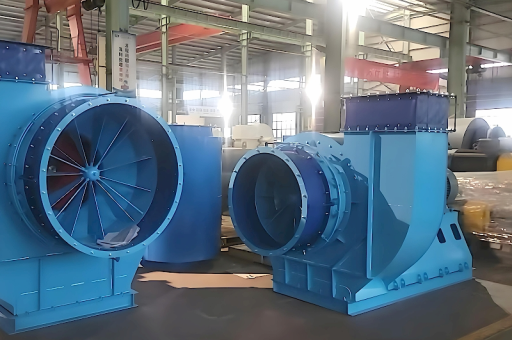
- Induced Draft (ID) Fan: Located after the dust collector. Its job is to pull the dirty air through the collector (creating negative pressure) and exhaust the cleaned air up the stack.
- Boiler Coupling Drivetrain (The Confusion): In a steel mill, there are usually two types of boiler systems:
- Waste Heat Recovery Boilers (WHRB): These capture heat from hot off-gases (e.g., from an Electric Arc Furnace or Basic Oxygen Furnace). The ID fan often pulls gas through the WHRB before or after the dust collector.
- Auxiliary Boilers: Standard package boilers for plant steam. They have their own ID fans.
- The Coupling: This is the mechanical link between the motor and the fan. In large industrial fans, this is never a direct rigid connection.
The Coupling Drivetrain: Why it's Critical
A standard arrangement is: Motor -> Coupling -> ID Fan (Impeller)
The coupling is not just a "shaft connector." It is a critical safety and performance component. In a steel mill ID fan application, the coupling drivetrain faces extreme conditions:
Key Challenges in a Steel Mill ID Fan
- High Temperature: Gas temperatures from a steel furnace can spike, even after a WHRB or cooling tower. The fan shaft and coupling can see radiant heat.
- Heavy Particulate / Fouling: Despite the dust collector, fine "fugitive" dust (iron oxide, lime, coke fines) can settle on the coupling, causing imbalance and wear.
- Vibration & Misalignment: Large ductwork expands and contracts with heat. The fan foundation can settle. The motor and fan shafts require flexible couplings to handle:
- Parallel Misalignment: Shafts not perfectly parallel.
- Angular Misalignment: Shafts not on the same axis.
- Axial Thrust: Thermal expansion of the fan shaft.
- High Torque & Shock Loads: Starting a massive ID fan with a heavy impeller creates high inertia. Dust buildup on blades can cause severe unbalance and vibration shocks.
Types of Couplings Used in This Application
Given the harsh environment, you rarely see standard elastomeric (rubber) couplings unless the mill is very clean. The standard solutions are:
A. Gear Couplings (Most Common for Large Mills)
- Pros: High torque capacity, forgiving of parallel/angular misalignment, can handle high temperatures.
- Cons: Requires continuous lubrication (grease). If the seal fails, dust gets in and destroys the gear teeth. Failure mode: Catastrophic disintegration.
- Application: Main drive between 1500 HP - 5000 HP motors and fans.
B. Disc or Diaphragm Couplings (The Modern Standard for High-Speed/Reliability)
- Pros: No lubrication required (maintenance-free), handles high misalignment, excellent for high-speed fans (1200-3600 RPM), no wear particles.
- Cons: More expensive initially, sensitive to aggressive misalignment if not sized correctly.
- Application: The preferred choice for high-reliability steel mill ID fans today. They are "fail-safe" (the discs can still transmit power if one layer cracks).
C. Grid Couplings (Older but Robust)
- Pros: Very forgiving of misalignment and shock loads (the steel grid flexes). Good for high-torque, low-to-moderate speed.
- Cons: Needs lubrication, wears out over time.
- Application: Older installations, "workhorse" applications.
D. Fluid Couplings (For Very Large / Soft Start)
- Pros: Provides a "soft start" (motor unloads during startup), limits torque shock, dampens torsional vibration.
- Cons: Expensive, heavy, requires oil system, prone to leaks.
- Application: Very large fans (>5000 HP) where starting current is a problem for the electrical grid.
E. Spacer Couplings (Common Configuration)
- Medium/Large ID fans almost always use a spacer coupling. This is a coupling with a removable center section (spacer).
- Why?: Maintenance Access. To remove the fan bearing or fan impeller, you don't need to move the motor. You remove the spacer, slide the fan shaft out.
The "Boiler" Aspect
If the ID fan is indeed part of a Waste Heat Boiler (WHRB) system:
- Variable Frequency Drive (VFD): The motor is almost certainly on a VFD. The coupling must be rated for the VFD's speed range and potential torsional harmonics.
- Heat Dissipation: Gear couplings near a WHRB may need special high-temperature grease. Disc couplings are better as they don't have grease to bake out.
- Duct Expansion: The coupling MUST handle axial movement as the ductwork from the WHRB to the fan expands.
Critical Safety & Maintenance Considerations
- Guard Protection: The coupling must have a heavy-duty steel guard (non-sparking, bolted down) strong enough to contain a coupling failure. A steel mill dust collection fan can be 10-15 feet in diameter; a broken coupling piece can become a missile.
- Alignment Monitoring: Most large ID fans use laser alignment during installation. Vibration monitoring probes (proximity probes or accelerometers) are often placed on the bearing housings near the coupling.
- Balance: The coupling is often balanced as a unit with the shaft/hub. A spacer coupling for a 3000 RPM fan will be balanced to a high grade (G1.0 or G2.5).
Summary Recommendation for a Steel Mill ID Fan on a Boiler Drivetrain
| Feature | Recommended Choice | Reason |
|---|---|---|
| Coupling Type | Disc / Diaphragm (Lubrication-free) | No grease to bake, no dust ingress, handles heat & misalignment best. |
| Configuration | Spacer Type | Allows fan maintenance without moving the motor. |
| Guard | Industrial Steel Guard | Safety against catastrophic failure. |
| Motor | AC Induction with VFD | Allows speed control and soft start (reduces coupling stress). |
| Alignment | Laser Alignment (Thermal Growth Compensation) | Accounts for hot vs. cold alignment (ductwork expands). |
In short: The spacer disc coupling is the gold standard for a modern, high-reliability steel mill induced draft fan drivetrain, especially when tied to a boiler system where heat and maintenance access are prime drivers.





