
This article's table of contents introduction:
- What the Name Means
- Typical Applications
- Key Performance Characteristics
- "Wear Resisting" Construction Details
- Key Selection Considerations
- Where to Find or Specify One
- Summary
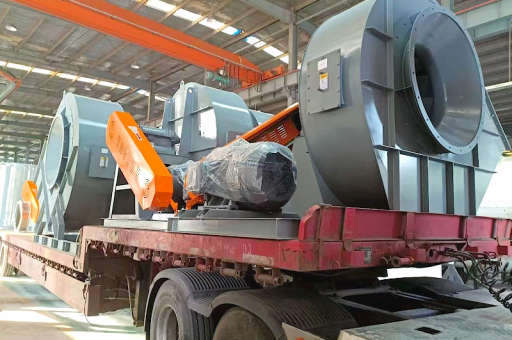
This is a specification for a heavy-duty industrial fan designed to handle abrasive or particulate-laden air. Here is a detailed breakdown of what this specification means, typical applications, and key technical considerations.
What the Name Means
- Wear Resisting: The fan is constructed with materials and coatings designed to withstand erosion from dust, grit, or other abrasive particles in the airstream. This is not a standard HVAC fan.
- Induced Draft (ID) Fan: This fan is placed at the "end" of the system (after the process, like a boiler or dust collector) to pull gases through the system, creating negative pressure.
- 15000 m³/h: The volumetric flow rate. It moves 15,000 cubic meters of air (or gas) per hour. This is a mid-to-large sized industrial fan.
- Centrifugal Blower Fan: The design. Air enters the center of a rotating impeller and is flung outwards at a 90-degree angle by centrifugal force, generating high pressure.
Typical Applications
These fans are designed for harsh environments where standard fans would fail quickly due to wear. Common applications include:
- Cement Plants: Transporting raw meal, clinker dust, or exhaust from kilns and coolers.
- Steel Mills: Exhaust from electric arc furnaces, fume extraction, and material handling.
- Mining & Quarrying: Ventilation and dust extraction.
- Chemical Processing: Handling corrosive or abrasive powders.
- Power Generation: Induced draft for biomass or coal-fired boilers, handling fly ash.
- Woodworking: Large-scale dust collection from sawdust and chips.
- Baghouse/Dust Collector Systems: The fan pulling air through thousands of filter bags.
Key Performance Characteristics
For a 15,000 m³/h centrifugal fan, the performance is defined by the fan curve. You need to know:
- Flow Rate: 15,000 m³/h (Given)
- Total Pressure (Static or Total): This is the critical missing piece. A fan moving 15,000 m³/h could have a pressure of:
- 500 - 1500 Pa (Low pressure, low power, e.g., light dust)
- 1500 - 4000 Pa (Medium pressure, e.g., long ducts, baghouses)
- 4000+ Pa (High pressure, e.g., pneumatic conveying, dense phase)
- Power Consumption (kW): Dependent on flow and pressure. A rough estimate:
Power (kW) = (Flow (m³/s) × Pressure (Pa)) / (Fan Efficiency × 1000). For a decent fan (70-80% efficient) at 2500 Pa, this would be roughly 13-15 kW.
"Wear Resisting" Construction Details
This is the most critical aspect. Standard carbon steel will erode rapidly. A "wear resisting" fan for this duty will often include:
| Component | Standard Construction | Wear-Resisting Construction |
|---|---|---|
| Impeller | Carbon steel (SS400, Q235) | Abrasion-resistant steel (e.g., Hardox, NM400, NM500). Blades are often thicker. |
| Volute/Casing | Standard steel plate | Lined with ceramic tiles, basalt lining, or replaceable wear plates. |
| Shaft & Bearings | Standard | Over-sized shaft for rigidity. Heavy-duty roller bearings in a robust housing. |
| Seals | Basic | Labyrinth seals or fan purge seals to prevent dust ingress into bearings. |
Key Selection Considerations
- Material Carried: What is the particle size, hardness (Mohs scale), and concentration (g/m³)? This dictates the type of wear protection needed (hard steel vs. ceramic lining).
- Temperature: Is the gas hot? Boiler or kiln exhaust requires a shaft cooling fan (overhung design) and appropriate materials.
- Impeller Type:
- Backward Curved (BC): More efficient, non-overloading power curve. Better for continuous operation.
- Radial (Paddle Wheel): Highly robust, allows for thick wear plates on blades. Less efficient but very durable.
- Drive Arrangement:
- Direct Drive: Simple, efficient. Might require a variable frequency drive (VFD).
- Belt Drive: Allows for speed changes, motor placement away from heat/dust, and shock absorption.
- Monitoring: For a critical ID fan, consider vibration sensors (accelerometers), temperature sensors on bearings, and dynamic balancing to predict wear.
Where to Find or Specify One
You would typically contact:
- Industrial Fan Manufacturers: Companies like New York Blower, Howden, Cincinnati Fan, Multi-Wing, Zibo (China), or specialized Indian/Chinese manufacturers.
- Dust Collection System Integrators: They often purchase custom fans for their baghouses.
- OEM Suppliers: For specific equipment (boiler, kiln, crusher).
You must provide the following to get a proper quote:
- Required Static Pressure (Pa or mmWG)
- Gas Temperature (°C)
- Gas Composition & Dust Content (g/m³, particle size, abrasiveness)
- Altitude (affects air density)
- Electrical Supply (Voltage/Hz/Phase)
Summary
A Wear Resisting Induced Draft Fan 15000 m³/h Centrifugal Blower Fan is a robust, specialized piece of equipment. It is not a standard ventilation fan. It is built to survive a harsh, abrasive environment. The key to a successful purchase is defining the gas characteristics (especially temperature, dust loading, and corrosivity) and the required system pressure. Expect a higher initial cost compared to a standard fan, but significantly longer service life and reduced maintenance.





