
This article's table of contents introduction:
- Application Context: Where is this fan used in a Cement Mill?
- Core Design & Engineering Features
- Critical Performance Parameters & Selection Criteria
- Leading Manufacturers (Specialists in this Field)
- Summary: The "Secret Sauce" for Long Lifetime
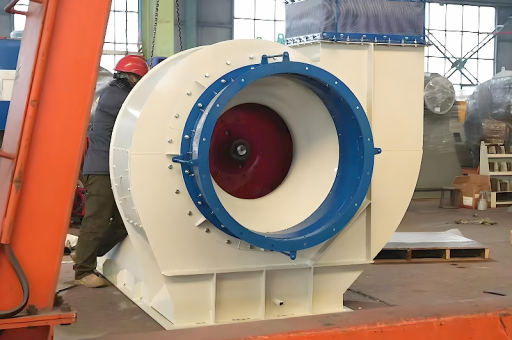
This is a highly specific and demanding industrial application. A High Temperature Long Lifetime Heavy Duty Centrifugal Fan for a Cement Mill is not a standard off-the-shelf unit; it is a critical piece of process equipment engineered for extreme conditions.
Here is a comprehensive breakdown of what this fan is, its key features, where it is used, and critical selection criteria.
Application Context: Where is this fan used in a Cement Mill?
These fans are used in the hottest and most abrasive parts of the cement manufacturing process. The primary applications are:
- Kiln Induced Draft (ID) Fan: The single most critical fan. It pulls hot gases (200°C - 400°C+) and dust through the kiln, preheater, and cooler.
- Preheater Exhaust Fan: Handles hot, dusty gases from the top of the preheater tower (typically 300°C - 350°C).
- Cooler Exhaust Fan: Extracts hot air from the clinker cooler. This air is very hot and contains sharp, abrasive clinker dust.
- Raw Mill Exhaust Fan: Handles gases that may be up to 200°C, laden with fine, abrasive raw material dust.
Core Design & Engineering Features
To meet the "High Temperature, Long Lifetime, Heavy Duty" requirements, these fans incorporate specific design elements:
A. High Temperature Capabilities (200°C - 450°C+)
- Material Selection: The impeller (wheel) and critical casings are made from abrasion-resistant steel (e.g., Hardox, Creusabro) or high-tensile alloy steels that retain strength at temperature. For extreme heat (450°C+), stainless steel or Inconel is used.
- Shaft Cooling: The fan shaft must be cooled to prevent bearing failure. This is done via:
- Shaft Cooling Discs: Finned discs mounted on the shaft between the housing and bearing.
- External Cooling: A dedicated fan blowing ambient air onto the shaft.
- Heat Shielding: Insulation and radiation shields between the housing and bearing supports.
- Bearing Selection: Special high-temperature grease or oil-lubricated bearings are used. Circulating oil systems are common for reliability.
- Expansion Accommodation: The casing and structure are designed with sliding joints, expansion joints, and flexible connections to handle thermal expansion without causing misalignment or stress on the shaft.
B. Heavy Duty Construction (Long Lifetime)
- Robust Impeller: Backward-curved blades are standard for high efficiency and pressure. Impellers are fully welded, stress-relieved, and dynamically balanced (often to G2.5 or higher).
- Thick Wall Casing: Constructed from heavy-gauge steel (e.g., 10mm-20mm+) with internal stiffeners and wear protection.
- Massive Shaft & Bearings: Oversized shafting to minimize deflection. Heavy-duty spherical roller bearings mounted in a sturdy, self-aligning bearing housing.
- Bolted Inlet Cone: Allows for easy removal and replacement, as this area experiences high wear.
C. Abrasion Resistance (Critical for Lifetime)
- Wear Liners: Replaceable, cast-wear or ceramic-tile liners are bolted inside the casing at impact areas (spiral, cut-off plate, side plates).
- Impeller Protection: Hard-facing (welding with a carbide-rich material) is applied to the leading edges of impeller blades. Some designs use segmented blades for easier replacement.
- Laminar Flow Design: The aerodynamic profile is designed to minimize the direct impingement of dust particles on the impeller.
Critical Performance Parameters & Selection Criteria
When specifying or selecting this fan, engineers must provide:
- Gas Volume: Nm³ / hr (Normal cubic meters per hour) or ACFM (Actual Cubic Feet per Minute).
- Differential Pressure: Static pressure (in kPa or mbar) needed to overcome system resistance.
- Gas Temperature: Operating temperature (°C) and maximum peak temperature (°C).
- Gas Composition: Content of O₂, CO, CO₂, moisture.
- Dust Load: Concentration (g/Nm³) and particle size distribution (e.g., P50, P95).
- Altitude & Ambient Conditions: Affects air density and motor power.
Special Considerations:
- Variable Speed Drive (VSD): Almost mandatory for modern plants. Using a VFD motor (e.g., by VACON, ABB, Siemens) allows for precise control of gas flow, significantly reducing energy consumption and mechanical stress (soft start).
- Bypass Systems: Often, a bypass damper or mixing box is used to temper process gas with ambient air to protect the fan during start-up or upset conditions.
- Vibration Monitoring: Mandatory. Continuous online vibration probes (Bearings & Casing) connected to a PLC can trigger alarms or shutdowns to prevent catastrophic failure.
Leading Manufacturers (Specialists in this Field)
You would not buy this from a standard HVAC supplier. Look for specialized industrial fan manufacturers:
- TLT-Turbo (Germany/USA)
- Howden (Global)
- Greenheck - Industrial Process (USA)
- Cincinnati Fan (USA)
- New York Blower (USA)
- Kruger Ventilation (Canada)
- Robinson Fans (USA)
- Ventilatorenfabrik Oelde (Germany)
- Mitsubishi Heavy Industries (Japan)
- Chinese Specialists: Companies like Shanghai Breeze, Zhejiang Shangfeng, Shenyang Blower Works (SBW) are major players in the global cement market.
Summary: The "Secret Sauce" for Long Lifetime
The key to "Long Lifetime" is a holistic engineering approach:
- Robust Aerodynamics: High-efficiency backward-curved blades reduce energy waste and wear.
- Material Science: Correct steel grade for temperature + abrasion-resistant overlays.
- Thermal Management: Effective shaft cooling and thermal expansion handling.
- System Protection: Wear liners that are easily replaced.
- Operational Practice: Using a VFD to avoid resonance frequencies and rapid speed changes.
In short: This fan is an "integrated system of components" designed to survive daily punishment from abrasive dust and 400°C heat for 20+ years with proper maintenance. It is the most expensive and one of the most crucial mechanical assets in a cement plant.





