
This article's table of contents introduction:
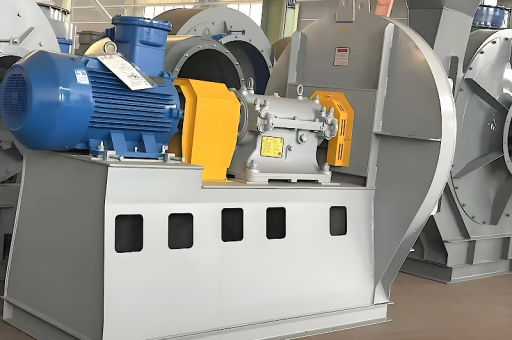
- Long Life (耐用性)
- Backward Centrifugal Fans (后向离心风机)
- Heavy Duty Air Supply (重型送风)
- Antiwear (耐磨 / 抗磨损)
- Summary of Typical Applications:
- Example of a Full Product Name:
It seems you are describing the key features or search keywords for a specific type of industrial fan, likely used in high-temperature, high-dust, or heavy industrial environments.
Here is a breakdown of what these terms mean and how they relate to the fan design:
Long Life (耐用性)
- Meaning: The fan is designed for extended operational periods without failure.
- How it's achieved:
- Heavy-duty bearings (often split-type for easy maintenance).
- Robust shaft design to resist fatigue.
- Corrosion-resistant materials (e.g., Corten steel, stainless steel) or protective coatings.
- HT (High Temperature) design for heat resistance.
Backward Centrifugal Fans (后向离心风机)
- Meaning: The fan blades curve away from the direction of rotation.
- Key Advantages:
- High Efficiency: Less energy loss due to air turbulence.
- Non-Overloading Power Curve: The motor cannot be overloaded by the fan, even if duct pressure drops. This is critical for motor protection.
- Lower Noise: Generally quieter than forward-curved fans.
- Application: Preferred for clean air, dust-laden air, and high-pressure systems.
Heavy Duty Air Supply (重型送风)
- Meaning: These fans are built for continuous, heavy-load duty cycles (e.g., 24/7 operation).
- Key Features:
- Reinforced Casing: Thicker steel plates to handle high static pressure.
- Larger Shaft & Bearings: To support the weight of the impeller and resist radial loads.
- High-Pressure Capability: They can push air through long ductwork, baghouses, or heat exchangers.
Antiwear (耐磨 / 抗磨损)
- Meaning: The fan is designed to survive in environments where the air contains abrasive particles (e.g., dust, sand, fly ash, cement, sawdust).
- Key Design Features:
- Blade Thickening: Blades are made thicker or have a wear-resistant liner on the leading edge.
- Shell Protection: Internal lining of the fan housing (e.g., with ceramic tiles, rubber, or hardox steel).
- Labyrinth Seals: To prevent dust from entering the bearing housing.
- Material Options: Often made from Wear-Resistant Steel (e.g., NM400, NM500, Hardox 450) or with ceramic coating.
Summary of Typical Applications:
This combination of features makes it an ideal fan for:
- Cement Plants: Kiln exhaust, raw mill ventilation.
- Steel Mills: Sintering, blast furnace gas handling.
- Power Plants: Induced Draft (ID) fans for boiler ash removal.
- Mining & Quarrying: Dust extraction and ventilation.
- Woodworking: High-abrasive sawdust extraction.
- Dust Collection Systems: Where high pressure and particle resistance are needed.
Example of a Full Product Name:
"Y5-47 Series High Temperature Heavy Duty Backward Curved Centrifugal Fan with Antiwear Lining"
If you are sourcing such a fan, ensure the manufacturer specifies:
- Blade thickness (e.g., 10mm vs standard 4mm).
- Bearing type (e.g., SKF, NSK with temperature monitoring).
- Wear protection method (Ceramic tile vs Hardox liner).
- Operating temperature (e.g., Max 250°C standard, up to 600°C with special alloys).
Would you like me to help you find specific specifications or a supplier for this type of fan?





