
This article's table of contents introduction:
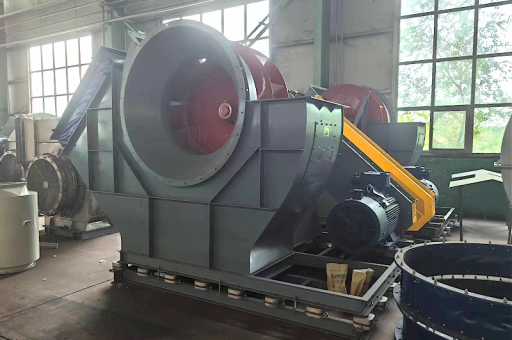
- The Application: Lime Kiln
- The Fan Type: Centrifugal
- The Pressure Category: Medium Pressure
- The Priority: Energy Efficiency
- Summary: The Ideal Fan Specification
It appears you are looking for a specific type of industrial fan. Let's break down the key terms to define the equipment and its application.
The core product you are describing is a: Medium Pressure, High Efficiency, Centrifugal Fan designed for the Lime Kiln industry.
Here is a detailed analysis of each component of your request:
The Application: Lime Kiln
Lime kilns (both Rotary and Vertical/Parallel Flow) are extremely harsh environments for fans. The air/gas being moved is typically:
- High Temperature: Can range from 150°C (302°F) to over 400°C (752°F) for combustion air and product cooling.
- Dust-Laden: Contains calcium oxide (CaO) and calcium carbonate (CaCO3) particles which are highly abrasive.
- Corrosive: Contains gases like SO2 and water vapor, especially if using alternative fuels (tires, waste oil, biomass).
- Variable: The system pressure and volume change based on the kiln's production rate and draft control.
Common Fan Applications in a Lime Kiln:
- Induced Draft (ID) Fan: Pulls combustion gases through the kiln, preheater, and baghouse.
- Forced Draft (FD) Fan: Pushes primary or secondary combustion air into the kiln or cooler.
- Cooling Air Fan: Blows ambient air over the hot lime product in the rotary cooler.
- Baghouse Fan: Pulls exhaust through the dust collector.
The Fan Type: Centrifugal
For medium pressure, high volume, and dirty gas streams, a specific type of centrifugal fan is required. The most common choices are:
-
Backward Inclined (BI) or Backward Curved (BC):
- Best Choice for High Efficiency. Modern high-efficiency airfoil or flat-backward-inclined blades are standard.
- Non-Overloading Power Curve: This is critical. If the kiln system opens up (less pressure), a BI fan will not overload the motor.
- Efficiency: Typically 80-85%.
-
Radial Tip (RT) or Industrial Exhauster (IE):
- Used for the dirtiest applications (e.g., directly after the kiln or preheater before the filter).
- Less efficient (60-70%) but stronger, self-cleaning blades.
- Good for high temperature and heavy dust loads.
The Pressure Category: Medium Pressure
In fan engineering, "Medium Pressure" typically refers to fans operating in the range of:
- 2,000 Pa to 15,000 Pa (8 to 60 inches w.g.).
In a lime kiln:
- FD Fans (for combustion air) are often on the lower end of medium pressure.
- ID Fans (for draft control) are often specifically in the medium range (e.g., 3,000 - 10,000 Pa / 12-40 inches w.g.).
The Priority: Energy Efficiency
This is the most critical modern requirement. Lime production is energy-intensive. Achieving high efficiency requires specific design features:
- Aerodynamic Design: The fan wheel must be designed with Computational Fluid Dynamics (CFD) to minimize turbulence and shock losses. Backward Curved Airfoil (BCA) blades are the gold standard for efficiency.
- Inlet Dampers (IGV): Variable Inlet Guide Vanes are far more efficient than outlet dampers for controlling flow. They pre-swirl the air entering the wheel, matching the fan output to the kiln's demand without wasting energy on throttling.
- VFD (Variable Frequency Drive): In modern high-efficiency plants, a VFD is used to control the motor speed. This is significantly more efficient than any damper control system, especially when the kiln operates at partial loads.
- Proper Sealing: Minimizing internal leakage (recirculation between the impeller inlet and outlet) improves volumetric efficiency.
- Drivetrain Efficiency: Using high-efficiency motors (IE4 or IE5) and direct-drive (where possible) instead of belt-drive reduces energy losses.
Summary: The Ideal Fan Specification
For your query, the ideal fan would be specified as follows:
Application: Lime Kiln ID or FD Fan Type: Centrifugal, Single Inlet, Single Width Wheel Design: Backward Inclined Airfoil (BIA) for clean/moderate dust OR Backward Inclined Flat (BIF) for higher dust loads and abrasion resistance. Pressure: Medium (e.g., 5,000 Pa) Housing: Heavy-gauge steel with split housing (for access), abrasion-resistant liners (e.g., AR400 or ceramic tiles) at the wear zone (volute tongue and cutoff). Shaft: Oversized to handle high temperature expansion and heavy impeller weight. Bearings: Heavy-duty spherical roller bearings with external cooling (water-cooled or oil-lubricated for high-temp). Speed Control: VFD (Required for best ROI). Driver: High-efficiency motor (IE4/IE5) or Steam Turbine (if waste heat is used). Efficiency Target: > 85% static efficiency at the design point.
Bottom Line: If you are sourcing these fans, look for a manufacturer specializing in High-Temperature, Abrasion-Resistant Industrial Fans (e.g., Howden, New York Blower, Loren Cook, Twin City Fan, or specialized Chinese manufacturers like Yilida or Cibola Fan). The initial cost of a high-efficiency fan + VFD package is higher than a cheap utility-ventilator, but the payback in energy savings for a 24/7/365 operation like a lime kiln is typically less than 18 months.





