
This article's table of contents introduction:
- Table of Contents
- Introduction: The Critical Interface Between Fan and Boiler
- Understanding the Core Components: Single Inlet Heavy Duty Centrifugal Fans
- The Wear-Resistant Imperative: Why Standard Fans Fail
- Fluidized Bed Boilers: A Demanding Environment for Air Movement
- Design Innovations: Hard facing, Liners, and Impeller Geometry
- Performance Metrics: Pressure, Flow, and Efficiency under Load
- Installation and Maintenance Best Practices
- Frequently Asked Questions (FAQ)
- Conclusion: Future-Proofing Your Boiler System
Table of Contents
- Introduction: The Critical Interface Between Fan and Boiler
- Understanding the Core Components: Single Inlet Heavy Duty Centrifugal Fans
- The Wear-Resistant Imperative: Why Standard Fans Fail
- Fluidized Bed Boilers: A Demanding Environment for Air Movement
- Design Innovations: Hard facing, Liners, and Impeller Geometry
- Performance Metrics: Pressure, Flow, and Efficiency under Load
- Installation and Maintenance Best Practices
- Frequently Asked Questions (FAQ)
- Conclusion: Future-Proofing Your Boiler System
Introduction: The Critical Interface Between Fan and Boiler
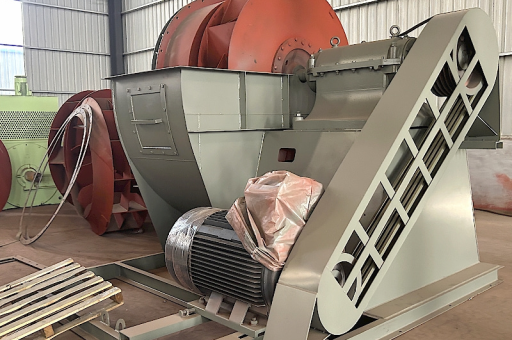
In the world of industrial combustion, the Single Inlet Heavy Duty Centrifugal Fan is not merely an accessory; it is the respiratory system of the Fluidized Bed Boiler (FBB) . These fans must deliver consistent, high-volume airflow against significant resistance while being subjected to a constant barrage of abrasive particulate matter. Standard fans, designed for clean air applications, fail rapidly in this environment. This article explores the specific engineering, material science, and operational strategies that define the wear-resistant variant of these fans, ensuring that your FBB operates at peak thermal efficiency with minimal unscheduled downtime. We will dissect why a single inlet, heavy-duty construction is the ideal answer for the punishing conditions of fluidized bed combustion.
Understanding the Core Components: Single Inlet Heavy Duty Centrifugal Fans
What defines a "Single Inlet Heavy Duty Centrifugal Fan"?
- Single Inlet vs. Double Inlet: Single inlet fans draw air from one side of the impeller. In a fluidized bed boiler, this often simplifies ductwork and allows for a more direct, uniform air stream into the windbox. The heavy-duty designation implies a robust shaft, oversized bearings, and a thicker housing plate (typically 6mm to 12mm steel) to handle thermal expansion and vibration.
- Centrifugal Action: Unlike axial fans that move air straight through, centrifugal fans accelerate air radially. This design is non-negotiable for FBBs because it generates the high static pressure required to fluidize the sand and fuel bed. The impeller—whether backward-curved, radial, or forward-curved—dictates the fan’s efficiency curve. For heavy duty, backward-curved airfoil or radial-tip impellers are preferred as they are less prone to stall and are easier to balance.
Architectural Insight: The housing of these fans is typically a scroll type. The clearance between the impeller and the cut-off (the tongue of the scroll) is carefully calculated. Too tight, and noise and vibration increase. Too loose, and efficiency plummets. High-quality manufacturers use CNC-machined inlets and outlet cones to ensure concentricity, which is the foundation of long seal life and low vibration.
The Wear-Resistant Imperative: Why Standard Fans Fail
In a Fluidized Bed Boiler, the air stream is not clean. It contains:
- Coarse Fly Ash: Silica and alumina particles.
- Unburnt Carbon: Abrasive and sticky.
- Sulfur Compounds: Leading to corrosive wear.
- Moisture: From fuel or ambient air.
Standard galvanized or mild steel fans will experience "pitting" and "erosion" within weeks. The wear pattern is predictable: the maximum erosion occurs at the leading edge of the impeller blades and at the cut-off (volute tongue) of the housing. The dust-laden air, moving at over 30 m/s, acts like a sandblaster.
The Wear-Resistant Solution:
- Impeller Hard facing: The leading edges of blades are coated with a layer of tungsten carbide or chrome carbide. This is not a paint but a weld overlay that creates a metallurgical bond. A hardness of 60-65 HRC (Rockwell) is standard for heavy duty FBB service.
- Inlet Cone Bushings: Ceramic tile linings (alumina oxide, 92% purity) are bonded to the inlet cone. This prevents the "hole cutting" that occurs when particles recirculate back into the eye of the impeller.
- Housing Liners: The interior of the scroll is fitted with replaceable wear plates or cast basalt liners. These are bolted or welded in, allowing for field replacement without replacing the entire fan housing.
Fluidized Bed Boilers: A Demanding Environment for Air Movement
The Fluidized Bed Boiler operates on a simple but violent principle: air is blown through a bed of sand and fuel (coal, biomass, or waste) until the particles behave like a fluid. This requires:
- High Static Pressure (1500 – 3000 Pa): To lift the dense bed.
- Controlled Airflow: Too little air, the bed slumps. Too much, the bed blows out. The fan must deliver a precise mass flow.
- Temperature Variability: While the fan typically handles ambient or preheated air (up to 150°C), the boiler’s internal temperature (850°C) creates thermal stress on the fan base.
The Single Inlet Fan’s Role: It serves as the Primary Air (PA) fan or the Secondary Air (SA) fan. For PA fans, the wear resistance is paramount because the air is loaded with sand fines. For SA fans, the wear is less aggressive but higher temperatures demand different alloys. A modern, heavy-duty fan for this application must have a dedicated expansion joint on the inlet to absorb thermal growth and a drain port at the bottom of the housing to remove accumulated dust and condensation.
Design Innovations: Hard facing, Liners, and Impeller Geometry
Recent advancements have made these fans more reliable than ever:
- Labyrinth Seals: Instead of simple packing, modern fans use non-contacting labyrinth seals to prevent dust from entering the bearing housing. This is critical for heavy duty longevity.
- Double-Wall Construction: Some manufacturers use a "double-wall" housing where the outer skin is structural and the inner skin is a sacrificial wear liner. This reduces noise and retains heat.
- Variable Speed Drives (VSD): When paired with a VSD, the fan can modulate airflow without dampers. This saves energy but also reduces wear at partial loads (erosion is proportional to the cube of velocity).
- Radial vs. Backward Curved: For the most abrasive service (e.g., feeding sand into the bed), radial tip (Rimpeller) fans are preferred. They have thick blades that are easily repaired. For efficiency, backward curved (BC) fans with hardened wear strips are superior.
ChatGPT/Expert Logic Check: Always ask: "Is the wear at the blade root or tip?" If the wear is at the root, the impeller disc needs a thicker gauge. If at the tip, the hard facing is insufficient.
Performance Metrics: Pressure, Flow, and Efficiency under Load
A wear-resistant fan is only useful if it still performs its hydraulic duty. Key metrics to monitor:
- Total Static Pressure (TSP): The fan must overcome the bed resistance (the "drag" of sand and fuel). As the fan wears, the TSP drops. A drop of 10% suggests the impeller is wearing out.
- Volume Flow Rate (CFM/m³/h): Must remain stable. The fan curve must be "steep" enough that variations in boiler pressure do not cause wide swings in airflow.
- Efficiency: A coat of paint reduces efficiency by 2%. A completely eroded blade tip (rounding) can drop efficiency by 15%. The motor amps will rise to compensate.
- Vibration Velocity (mm/s): Heavy duty fans should operate below 4.5 mm/s. An increase signals imbalance from uneven wear or dust buildup.
Predictive Maintenance Insight: Use a thickness gauge on the impeller blades every month. Plot the wear rate. You can predict exactly when the blade will fail and schedule a shutdown for repair or replacement. This is the essence of "condition-based" heavy duty maintenance.
Installation and Maintenance Best Practices
To maximize the life of your Single Inlet Heavy Duty Centrifugal Fan:
- Foundation: It must be a massive, rigid concrete block to absorb vibration. A flexible base leads to bearing failure.
- Inlet Ducting: Ensure a straight run of at least 5 diameters before the fan inlet. A 90-degree elbow directly at the inlet causes non-uniform flow and rapid localized wear.
- Dampers: Never use a butterfly damper near the fan inlet. Use an inlet box damper (lowered) or variable speed drive.
- Bearing Lubrication: Use a high-temperature grease (NLGI #2) with molybdenum disulfide for the heavy thrust loads. Regrease every 500 hours.
- Wear Inspection: Focus on the "wear zones": the cut-off, the first 30 degrees of the scroll after the cut-off, and the blade leading edges. Use borescopes for inspection without dismantling.
Frequently Asked Questions (FAQ)
Q1: Why choose a Single Inlet fan over a Double Inlet for a Fluidized Bed Boiler? A: Single inlet fans are simpler to install, have lower initial cost, and provide easier access for maintenance and wear pad replacement. For a typical FBB, they offer adequate flow. Double inlets are reserved for massive utility boilers where space or high mass flow demands it.
Q2: How often should I replace the wear liners on a heavy duty FBB fan? A: This depends on fuel ash content and particle size. For coal-fired FBBs, cast basalt liners last 12–18 months. For biomass, they may last 24+ months. Inspection every quarter is mandatory. Replace when liner thickness is reduced by 50%.
Q3: What is the typical lifespan of a hard-faced impeller? A: With proper hard facing (e.g., chrome carbide overlay), a radial tip impeller in a fluidized bed primary air fan can last 8,000 to 12,000 hours before needing rebuild. This is three to four times longer than an untreated steel impeller.
Q4: Can I convert a standard air fan to a wear-resistant FBB fan? A: Not cost-effectively. The housing thickness, shaft diameter, bearing size, and internal aerodynamics are fundamentally different. It is cheaper and safer to buy a purpose-built fan designed for heavy duty.
Q5: What causes premature failure of the fan bearings? A: The #1 cause is dust ingress through the shaft seal. The #2 cause is vibration from impeller imbalance due to uneven wear or dust buildup on blades. Always use a shaft seal system (labyrinth or carbon ring) designed for heavy duty.
Conclusion: Future-Proofing Your Boiler System
The Single Inlet Heavy Duty Centrifugal Fan Wear Resistant Fluidized Bed Boiler is a critical investment in plant reliability. By understanding the specific wear mechanisms of the FBB environment—erosion, corrosion, and thermal stress—engineers can specify fans with hard-faced impellers, ceramic-lined housings, and heavy-duty bearings. The upfront cost is higher than a standard fan, but the total cost of ownership is drastically lower due to reduced downtime and fewer emergency repairs. When selecting a fan for your boiler, prioritize vendors who offer detailed wear analysis and who can provide replacement parts (liners, impellers) with a proven track record in similar applications.
For a custom quotation or to discuss your specific airflow requirements, consult a specialist engineer. The right fan is not just a piece of equipment; it is the guarantee of your boiler’s operational integrity.





