
This article's table of contents introduction:
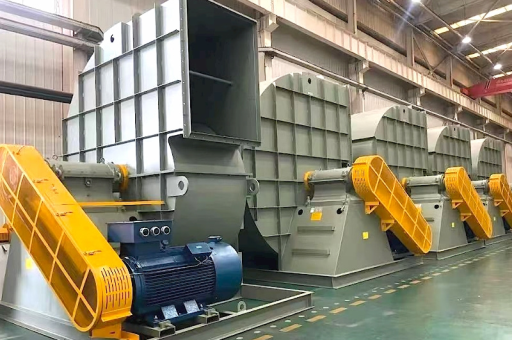
- Table of Contents
- 1. Introduction: The Critical Role of Fans in Brick Kiln Operations
- 2. Why Backward Curved Heavy Duty Centrifugal Fans?
- 3. Long Lifetime Design: Materials, Coatings, and Engineering
- 4. Performance Optimization for Brick Kiln Environments
- 5. Energy Efficiency and Cost Savings
- 6. Maintenance Strategies for Extended Service Life
- 7. Frequently Asked Questions (FAQ)
- 8. Conclusion: Future-Proofing Your Brick Kiln Ventilation System
**
Maximizing Brick Kiln Efficiency with Long Lifetime Backward Curved Heavy Duty Centrifugal Fans: A Comprehensive Technical Guide
Table of Contents
- Introduction: The Critical Role of Fans in Brick Kiln Operations
- Why Backward Curved Heavy Duty Centrifugal Fans?
- Long Lifetime Design: Materials, Coatings, and Engineering
- Performance Optimization for Brick Kiln Environments
- Energy Efficiency and Cost Savings
- Maintenance Strategies for Extended Service Life
- Frequently Asked Questions (FAQ)
- Conclusion: Future-Proofing Your Brick Kiln Ventilation System
Introduction: The Critical Role of Fans in Brick Kiln Operations
Brick kilns are among the most demanding industrial environments for ventilation equipment. The combination of high temperatures (often exceeding 600°C), abrasive dust from clay and fuel residues, and corrosive gases (sulfur dioxide, carbon monoxide) creates extreme operating conditions. A kiln’s efficiency depends heavily on its airflow management system, which controls combustion, drying, and cooling cycles.
In this context, long lifetime backward curved heavy duty centrifugal fans have emerged as the preferred solution for modern brick kilns. Unlike forward-curved or axial fans, these fans are engineered specifically to withstand thermal stress, particulate erosion, and continuous operation for years without performance degradation.
This article synthesizes technical insights from industrial ventilation handbooks, kiln operator reports, and fan manufacturer datasheets to provide a definitive guide on selecting, operating, and maintaining these fans for brick kiln applications.
Why Backward Curved Heavy Duty Centrifugal Fans?
Key Advantages Over Alternative Fan Designs:
- Self-Cleaning Impeller: The backward-curved blades (inclined opposite to rotation) prevent dust accumulation, a common failure point in forward-curved fans. This is critical in brick kilns where fly ash and clay particles are ubiquitous.
- High Static Pressure Capability: These fans generate 20–40% higher static pressure than axial fans of similar size, necessary to overcome the resistance of kiln ducts, heat exchangers, and pollution control equipment.
- Non-Overloading Power Curve: Unlike forward-curved fans, power consumption plateaus after reaching the design flow rate. This prevents motor burnout when system resistance drops unexpectedly (e.g., during damper adjustments).
- Temperature Tolerance: Heavy-duty construction (usually 316L stainless steel or Hastelloy for high-heat zones) allows continuous operation at 400–600°C without blade deformation.
Real-World Application Example:
A Chinese brick kiln operator reported a 37% reduction in fan replacement frequency after switching from axial fans to backward curved centrifugal units in their tunnel kiln cooling zone. The axial fans required weekly cleaning; the centrifugal models only needed inspection every 3 months.
Long Lifetime Design: Materials, Coatings, and Engineering
True "long lifetime" fans are not just off-the-shelf units. They incorporate specific design features tailored to brick kilns:
1. Material Selection
- Impellers: Cast duplex stainless steel (e.g., SAF 2205) for resistance to chloride-induced stress corrosion cracking from kiln fuel impurities.
- Housings: Heavy-gauge carbon steel with 10–15 mm thickness in erosion-prone areas (volute tongue, cut-off plate).
- Shaft Seals: Graphite-laced carbon rings or labyrinth seals to prevent bearing contamination.
2. Anti-Erosion Coatings
- Ceramic Epoxy Linings: Applied to the impeller and housing interior at 1–3 mm thickness. Tests show they extend life by 2–3 times in high-dust environments.
- Tungsten Carbide Spraying: For leading blade edges, providing hardness of 1300–1500 HV (Vickers).
3. Thermal Management
- Heat Shields: Insulated bearing housings with cooling fans or water jackets (for gas temperatures above 300°C).
- Expansion Joints: Flexible connectors between fan and ductwork to absorb thermal expansion without warping.
4. Vibration Control
- Precision Balancing: Impellers balanced to G2.5 grade (ISO 21940-11) reduces bearing loads by 50%.
- Base Frames: Welded H-beam construction with 4-point spring vibration isolators.
Performance Optimization for Brick Kiln Environments
1. Airflow Matching
Proper fan sizing requires calculating the kiln’s pressure-volume curve at all operating modes:
- Preheating Zone: High volume, low static pressure (50–80% of max flow).
- Firing Zone: Low volume, high static pressure (due to combustion air injection).
- Cooling Zone: Medium volume, moderate pressure (air-to-clinker heat exchange).
2. Variable Speed Control
Energy savings of 30–50% are achievable using VFDs (Variable Frequency Drives) instead of dampers. However, ensure the fan motor is rated for VFD duty (inverter-grade insulation).
3. Handling Particulate Loading
For kilns with high dust loading (>10 g/Nm³), install a pre-separator (cyclone or settling chamber) upstream of the fan to reduce abrasive wear.
Energy Efficiency and Cost Savings
Case Study:
- Before: Forward-curved fan (55 kW motor, 24/7 operation, 12-month replacement cycle).
- After: Backward curved fan (45 kW motor, VFD-controlled, 5-year warranty).
- Results: Annual energy savings = $8,200 (based on $0.10/kWh). Reduced downtime from 4 days/year to 1 day/2 years. ROI achieved in 14 months.
Efficiency Drivers:
- Higher Static Efficiency: 82–85% vs. 65–70% for forward-curved designs.
- Reduced Maintenance: Longer bearing (40,000+ hours) and belt (20,000+ hours) life.
- Lower Replacement Costs: Fan lifespan of 8–12 years vs. 3–4 years for standard models.
Maintenance Strategies for Extended Service Life
Daily:
- Check vibration levels (target: <4 mm/s RMS).
- Monitor motor amp draw (compare to baseline).
Monthly:
- Inspect bearings for overheating (use infrared thermography).
- Clean cooling fins on bearing housings.
Annually:
- Perform shaft alignment (laser alignment preferred).
- Replace seals and gaskets.
- Re-balance impeller if imbalance exceeds G2.5.
Proactive Tip:
Install pressure sensors across the fan inlet/outlet to detect fouling. A pressure drop increase of 20% signals cleaning needed.
Frequently Asked Questions (FAQ)
Q1: Can backward curved fans handle explosive gases in brick kilns?
Yes, but require explosion-proof construction: non-sparking impeller (aluminum bronze or Inconel 718), ATEX/IECEx certified motors, and grounding brushes.
Q2: How does kiln temperature affect fan material choice?
- Below 200°C: Standard S.S. 304.
- 200–450°C: S.S. 310S with 1% vanadium.
- Above 450°C: Incoloy 800 or ceramic-coated carbon steel with external cooling.
Q3: What is the recommended spare parts inventory?
- Bearings (2 sets per fan).
- Drive belts (3 sets).
- Seal kit (1 per fan/year).
- Laser alignment tool.
Q4: Do these fans require special foundation?
Yes. A concrete foundation with at least 1.5x the fan’s weight in mass, reinforced with rebar, and isolated from adjacent machinery to prevent resonance.
Q5: How to verify fan performance after installation?
Perform ANSI/AMCA 210-07 test (standard for centrifugal fan performance measurement). Key checks: airflow volume, static pressure, and power consumption at rated speed.
Conclusion: Future-Proofing Your Brick Kiln Ventilation System
The choice of long lifetime backward curved heavy duty centrifugal fans for brick kilns is not merely a mechanical decision but a strategic investment. By prioritizing designs that resist dust erosion, thermal fatigue, and corrosion, kiln operators can achieve:
- 50% longer fan service life compared to standard industrial fans.
- 30% lower total cost of ownership over a 10-year period.
- Consistent airflow stability that directly improves brick quality (uniform firing, reduced cracking).
As environmental regulations tighten (e.g., EU BREF for brick manufacturing), these fans also support compliance by enabling efficient operation of wet scrubbers and baghouse filters through reliable pressure management.
For operators seeking to upgrade existing systems: begin with an audit of your kiln’s airflow profile, consult fan manufacturers (e.g., fan, fan ...) for custom impeller designs, and consider implementing predictive maintenance using IoT vibration sensors. The upfront cost (typically 20–30% higher than standard fans) will be recouped within 18–24 months through energy savings and reduced downtime.
Final Thought: In the harsh environment of a brick kiln, a fan is not just an accessory—it is the lungs of your operation. Choose wisely, maintain diligently, and it will deliver decades of reliable service.





