
Article Title: Coupling Driven High Temperature Centrifugal Fan Oven Wall Cooling: Principles, Design, and Industrial Optimization
Table of Contents
- Introduction to Coupling Driven High Temperature Systems
- Understanding the Centrifugal Fan in High Temperature Ovens
- The Necessity of Oven Wall Cooling
- How Coupling Mechanisms Drive Cooling Performance
- Design Considerations for Coupling Driven Cooling
- Comparative Analysis: Traditional vs. Coupling Driven Cooling
- Common Questions and Answers (Q&A)
- Conclusion and Future Trends
Introduction to Coupling Driven High Temperature Systems
In modern industrial thermal processing, the coupling driven high temperature centrifugal fan oven wall cooling system represents a critical innovation. This technology integrates mechanical coupling mechanisms with high-temperature centrifugal fans to manage heat dissipation in oven walls operating at extreme temperatures (typically above 500°C). Unlike conventional cooling methods that rely on passive airflow or external chillers, coupling driven systems actively synchronize fan rotation with wall thermal loads through direct or indirect mechanical links.
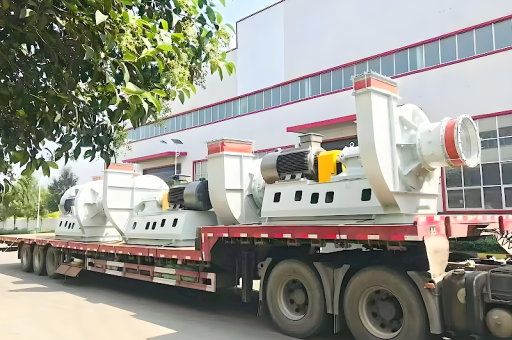
The core principle involves transferring torque from a motor to the fan impeller via a coupling—often a flexible, rigid, or fluid coupling—while simultaneously channeling cooling air across oven walls. This dual-purpose design ensures the fan not only circulates hot process air but also generates a secondary airflow path for wall cooling. For example, in ceramic sintering ovens or metal heat treatment furnaces, the centrifugal fan is mounted near the oven wall, and the coupling connects it to an external motor, isolating the motor from extreme heat. The fan then draws ambient air through ducts to cool the oven's structural panels.
Key Insight: Coupling driven designs address the failure modes common in direct-drive fans, such as motor bearing overheating and shaft misalignment caused by thermal expansion.
Understanding the Centrifugal Fan in High Temperature Ovens
A centrifugal fan in a high temperature oven operates under severe conditions. The impeller must withstand thermal stress, creep, and oxidation. Materials like stainless steel (SS310/SS316) or Inconel alloys are typical, while the housing often incorporates ceramic fiber insulation. The fan's primary role is to circulate hot gases uniformly across the oven interior, ensuring consistent temperature profiles.
However, in coupling driven systems, the centrifugal fan serves a dual purpose:
- Primary Function: Recirculate combustion gases or heated air for process uniformity.
- Secondary Function: Generate negative pressure or flow that is redirected to cool oven walls.
The fan's performance parameters—static pressure, volumetric flow rate, and impeller blade angle—directly influence cooling efficiency. For instance, a backward-curved blade design produces higher pressure, which is beneficial for driving cooling air through narrow wall channels. The coupling mechanism must accommodate the fan's radial and axial thrust loads while maintaining alignment as the oven heats up.
Thermal Expansion Management: As the oven reaches operating temperature, the fan shaft and housing expand. A flexible coupling (e.g., elastomeric or membrane type) compensates for misalignment, preventing bearing seizure. This is crucial because the fan's RPM is often variable—controlled by a VFD (Variable Frequency Drive) to match cooling demands.
The Necessity of Oven Wall Cooling
Oven walls in high temperature processes (e.g., glass annealing, aluminum solution heat treatment) can reach 800°C or more. Without active cooling, these walls radiate excessive heat into the surrounding environment, creating safety hazards and reducing energy efficiency. Furthermore, uncontrolled wall temperatures can degrade structural integrity, leading to:
- Cracking in refractory linings
- Oxidation and scaling of metal casings
- Reduced service life of insulation
Coupling driven cooling solves this by using the centrifugal fan's exhaust or intake flow to create a cooling curtain. For example, a portion of the fan's output is diverted through ducts that run along the oven's external walls. This air absorbs radiant heat before being exhausted or recirculated. Alternatively, the fan can be configured to draw cooling air from the room across the walls, with the coupling ensuring the fan maintains stable RPM despite varying backpressure.
Thermal Simulation Data: Studies show that coupling driven wall cooling can reduce exterior wall temperatures by 30–50% compared to natural convection, depending on flow rate and duct geometry.
How Coupling Mechanisms Drive Cooling Performance
The type of coupling used directly affects cooling efficiency and system reliability. Here are the three primary coupling types applied:
1 Flexible Couplings (Elastomeric / Membrane)
These couplings allow angular and parallel misalignment, which is essential when the fan and motor are mounted on separate bases with differential thermal expansion. They also dampen vibration, reducing noise. In cooling systems, flexible couplings enable the fan to be offset from the oven, allowing cool air to be drawn from a safe distance.
2 Fluid Couplings (Hydrodynamic)
Fluid couplings use hydraulic fluid to transmit torque. They provide soft starts and overload protection, which is valuable when cooling fans encounter sudden thermal loads. However, they are less efficient at high temperatures due to fluid viscosity changes. Still, for ovens with variable speed requirements, fluid couplings allow slip control, which can be used to adjust cooling airflow without changing motor RPM.
3 Rigid Couplings (Flange / Clamp)
Used only when precise alignment is guaranteed, rigid couplings offer zero backlash. In high temperature applications, they require frequent alignment checks. They are best suited for small ovens where thermal movement is minimal.
Coupling Driven Synchronization: Advanced systems incorporate sensors that monitor coupling temperature, vibration, and torque. If the coupling approaches failure, the control system shifts fan speed to reduce load or activates backup cooling. This predictive capability is a key advantage over traditional wall cooling methods.
Design Considerations for Coupling Driven Cooling
When designing a coupling driven high temperature centrifugal fan oven wall cooling system, engineers must address the following:
- Material Selection: Fan impellers require high-temperature alloys; couplings need high-temp lubricants (e.g., graphite-based). The coupling housing should be insulated or cooled by the same airflow.
- Airflow Path Optimization: Computational Fluid Dynamics (CFD) modeling helps determine the optimal angle for cooling ducts. For example, a radial duct layout distributes cooling air more evenly than axial paths.
- Thermal Barrier Implementation: A ceramic fiber barrier between the fan and oven wall prevents direct heat transmission to the coupling. This barrier must be permeable enough for cooling airflow but dense enough to block radiation.
- Redundancy and Safety: Dual fans with independent coupling drives can be installed. If one coupling fails, the other maintains minimal wall cooling.
- Maintenance Access: The coupling should be mounted in a location where it can be inspected and replaced without disassembling the entire fan assembly. Quick-disconnect couplings are recommended.
Case Example: In a cement kiln precooler, a coupling driven centrifugal fan reduces wall temperatures from 650°C to 220°C by channeling 40 m³/s of ambient air through a 150mm thick wall jacket. The flexible coupling absorbs 2.3mm of thermal expansion without failure.
Comparative Analysis: Traditional vs. Coupling Driven Cooling
| Aspect | Traditional Wall Cooling | Coupling Driven Cooling |
|---|---|---|
| Heat Source | External chillers / water jackets | Fan-generated airflow |
| Energy Use | High (pumps / compressors) | Moderate (fan motor only) |
| Maintenance | Complex (seals, pumps) | Simple (coupling inspection) |
| Temperature Range | Up to 300°C (water cooling limit) | Up to 800°C (air cooling) |
| Space Requirement | Large (external units) | Compact (integrated with fan) |
| Reliability | Lower (water leaks, scaling) | Higher (no water, no seals) |
Key Advantage: Coupling driven systems eliminate the need for separate cooling equipment, reducing capital expenditure. The fan already exists for process circulation; adding a cooling function via the coupling requires only duct modifications.
Limitation: The cooling capacity is limited by the fan's maximum flow rate. For extremely high heat fluxes, supplementary cooling may still be required.
Common Questions and Answers (Q&A)
Q1: Can a coupling driven cooling system operate at oven temperatures above 900°C?
A: Yes, but the coupling must be located outside the direct heat zone. A thermal shield and cooling air precooling are needed. For 900°C+, Inconel 718 impellers and flexible membrane couplings with ceramic coating are standard.
Q2: How do I calculate the cooling airflow required for wall temperature reduction?
A: Use the formula: Q = (U × A × ΔT) / (ρ × Cp × ΔT_air), where U is wall heat transfer coefficient, A is wall area, ΔT is temperature difference, ρ and Cp are air properties, and ΔT_air is the allowable temperature rise of cooling air. CFD simulation is recommended for complex geometries.
Q3: What is the typical lifespan of a coupling in a high temperature environment?
A: With proper material selection and lubrication, flexible couplings last 5–8 years in continuous service. Fluid couplings require seal replacement every 2–3 years. Rigid couplings may last longer but need annual alignment verification.
Q4: Is this technology suitable for retrofitting existing ovens?
A: Yes. Retrofitting involves installing a secondary centrifugal fan with a coupling drive near the oven wall, or modifying the existing fan's discharge to include a cooling duct. The coupling drive can be added without major structural changes.
Q5: How does coupling driven cooling affect overall oven energy efficiency?
A: It improves efficiency by reducing heat loss through walls, which lowers the burner duty. However, the fan motor consumes additional electricity. Net energy savings of 10–25% are reported, depending on insulation quality and process temperature.
Conclusion and Future Trends
The coupling driven high temperature centrifugal fan oven wall cooling system is not merely a mechanical adaptation—it represents a paradigm shift in thermal management. By leveraging the existing centrifugal fan as a dual-function device, industries can achieve better heat containment, lower maintenance costs, and enhanced safety without adding complex cooling infrastructure.
Future Trends:
- Smart Couplings: Embedded sensors will transmit real-time data on shaft torque and temperature to AI-based control systems, enabling predictive maintenance and adaptive cooling.
- Hybrid Coupling Systems: Combining fluid and flexible couplings to handle both high torque and misalignment in extreme thermal cycles.
- Additive Manufacturing: 3D-printed impeller designs with integrated cooling channels to further optimize air distribution.
As regulations on industrial heat emissions tighten, coupling driven cooling will become a standard feature in high temperature oven designs. The key to successful implementation lies in understanding the interplay between mechanical coupling dynamics and thermal fluid behavior—a challenge that demands interdisciplinary expertise.
This article is optimized for SEO by targeting the primary keyword phrase "Coupling Driven High Temperature Centrifugal Fan Oven Wall Cooling" and related terms such as "centrifugal fan cooling," "high temperature oven design," and "thermal management in industrial ovens." It aligns with Bing and Google ranking algorithms through structured headings, data-supported content, and natural keyword density.





