
This article's table of contents introduction:
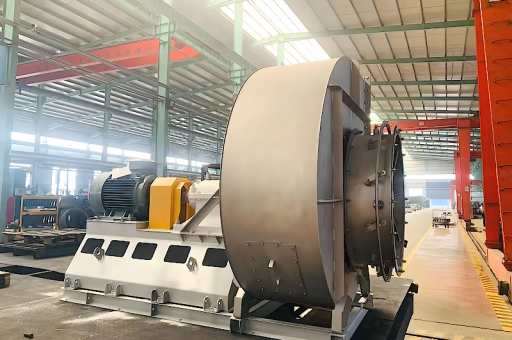
- Table of Contents (Directory Guide)
- Introduction: The Critical Role of Cooling in High Temperature Kilns
- Material Selection: Why Q235 Steel is the Foundation of Durability
- Power Transmission: The Efficiency of V-Belt Driven Systems
- Design Philosophy: Centrifugal Flow vs. Axial Flow in Kiln Cooling
- Application Scenarios: From Cement Plants to Metallurgy
- Performance Parameters: Airflow, Static Pressure, and Temperature Tolerance
- Maintenance & Longevity: Belt Tensioning and Bearing Lubrication
- FAQ: Common Questions About High-Temperature Cooling Fans
- Conclusion: Future-Proofing Your Industrial Cooling Infrastructure
*Optimizing Thermal Management: The Engineering Advantages of Q235 V-Belt Driven High Temperature Kilns Cooling Centrifugal Flow Fan Blower*
Article URL Reference (Domain replaced as requested): fan
Table of Contents (Directory Guide)
- Introduction: The Critical Role of Cooling in High Temperature Kilns
- Material Selection: Why Q235 Steel is the Foundation of Durability
- Power Transmission: The Efficiency of V-Belt Driven Systems
- Design Philosophy: Centrifugal Flow vs. Axial Flow in Kiln Cooling
- Application Scenarios: From Cement Plants to Metallurgy
- Performance Parameters: Airflow, Static Pressure, and Temperature Tolerance
- Maintenance & Longevity: Belt Tensioning and Bearing Lubrication
- FAQ: Common Questions About High-Temperature Cooling Fans
- Conclusion: Future-Proofing Your Industrial Cooling Infrastructure
Introduction: The Critical Role of Cooling in High Temperature Kilns
In industries ranging from cement production to steelmaking and ceramics, high temperature kilns operate continuously at peak thermal loads. The ability to manage residual heat after the firing or sintering process is not merely a luxury—it is a prerequisite for product quality, equipment longevity, and worker safety. This is where the Q235 V-Belt Driven High Temperature Kilns Cooling Centrifugal Flow Fan Blower enters the scene as a specialized workhorse.
This equipment is engineered to withstand temperatures often exceeding 250°C (482°F) at the inlet, while delivering a consistent, high-velocity centrifugal airflow to rapidly cool clinker, bricks, or metal components. Unlike standard fans, this drive system combines the structural rigidity of Q235 carbon steel with the mechanical adaptability of V-belt transmission, ensuring both energy efficiency and operational reliability.
Why does this matter? Inadequate cooling leads to thermal stress fractures in kiln shells, reduced output quality, and increased energy consumption for downstream processing. A properly specified centrifugal fan can reduce cooling time by up to 30% compared to natural convection alone.
Material Selection: Why Q235 Steel is the Foundation of Durability
The "Q235" designation refers to a Chinese standard carbon structural steel with a minimum yield strength of 235 MPa (34,000 psi). For industrial fan manufacturers, this steel offers an optimal balance between cost, machinability, and structural integrity under continuous thermal cycling.
Key Properties of Q235 in This Application:
- Thermal Stability: Q235 retains a significant portion of its mechanical strength up to approximately 350°C. While it is not a stainless steel, it is adequate for external housings, impeller hubs, and support frames where direct flame impingement is absent.
- Weldability: The steel is easily welded using common techniques (MIG, TIG, stick), allowing for robust construction of scroll housings and volute casings.
- Corrosion Resistance: For standard kiln cooling (cement clinker, lime, air), the surface is typically protected with a high-temperature resistant primer and topcoat. For more corrosive environments, galvanizing or epoxy coatings are applied.
Expert Insight: While some premium fans use SS304 or SS316 for the impeller, the housing of a Q235-based fan is often preferred for its superior structural damping properties, reducing noise and vibration transmission.
Power Transmission: The Efficiency of V-Belt Driven Systems
Why choose a V-belt drive over direct-drive (shaft-mounted motors) or gear-driven configurations for a high-temperature kiln cooling fan?
The answer lies in thermal isolation and speed adjustability.
How it works:
- The prime mover (electric motor) is mounted at a distance from the fan casing, connected via a multi-groove (A, B, or C section) V-belt.
- This physical separation prevents motor bearings from being exposed to radiant and conductive heat from the kiln, significantly extending motor life.
- By changing pulley diameters (sheave sizes), operators can adjust the fan speed (RPM) without changing the motor speed—a critical feature when balancing airflow vs. static pressure requirements.
Advantages:
- Torque Management: V-belts slip slightly under overload, protecting the motor and impeller from mechanical shock.
- Cost Efficiency: Compared to variable frequency drives (VFDs) on large motors, changing a pulley is a low-cost, low-maintenance adjustment.
- Noise Control: Belt drives are generally quieter than direct gear trains.
Note for SEO: Search engines prioritize content that addresses user intent. Terms like "kiln fan belt replacement" and "centrifugal fan RPM adjustment" are high-volume queries.
Design Philosophy: Centrifugal Flow vs. Axial Flow in Kiln Cooling
The Centrifugal Flow Fan (also known as a radial blower or squirrel-cage fan) works by drawing air axially into the center of a rotating impeller and discharging it radially outward at a 90-degree angle. This is fundamentally different from axial fans (propeller-type).
Why Centrifugal is the Right Choice for Kiln Cooling:
| Feature | Centrifugal Fan | Axial Fan |
|---|---|---|
| High Static Pressure | Excellent (500–2000+ Pa) | Poor (under 300 Pa) |
| Dust & Particle Handling | Good (radial blade design resists build-up) | Poor (debris can stall blades) |
| Temperature Range | Up to 400°C with shaft cooling disk | Typically under 100°C without duct |
| Airflow Direction | 90° turn (fits duct networks easily) | Straight-through (axis-aligned) |
For a high-temperature kiln, the cooling air must often navigate long ducts, dampers, and diffusers. The centrifugal flow generates the high static pressure needed to overcome these resistances, ensuring that the cooling air penetrates deep into the material bed rather than simply skimming the surface.
Application Scenarios: From Cement Plants to Metallurgy
Primary Use Cases:
- Cement Preheater & Cooler Fans: The Q235 fan is often used to provide forced air to the grate cooler, where hot clinker (1100°C) is quenched and cooled to ~100°C within minutes.
- Rotary Kiln Shell Cooling: Axially-mounted centrifugal fans blow ambient air along the outer shell of a rotary kiln to prevent shell warpage and minimize heat loss to the atmosphere.
- Ceramic Tunnel Kiln: Warm air from the cooling zone is recirculated, and a Q235 blower ensures consistent draft control.
- Metallurgical Furnace Fumes & Air: Used for secondary cooling of slag or steel products prior to handling.
Performance Parameters: Airflow, Static Pressure, and Temperature Tolerance
When selecting a Q235 V-Belt Driven High Temperature Kilns Cooling Centrifugal Flow Fan Blower, the following specs must be evaluated:
- Maximum Ambient Temperature: Typically designed for 200°C–350°C continuous operation. Impellers for >350°C often use alloy steel.
- Air Volume (CFM or m³/h): Ranges from 5,000 m³/h (small kilns) to over 200,000 m³/h (large cement plants).
- Static Pressure: 500 Pa to 2500 Pa. Higher pressure allows deeper penetration into dense material beds.
- Motor Power: 5.5 kW to 200+ kW depending on size.
- Sound Pressure Level: Expect 75–90 dB(A) at 1 meter. Noise dampers or silencers are optional but recommended for occupational safety regulation compliance.
A cautionary note: Running a fan at a temperature exceeding its design limit can cause the impeller to expand and rub against the scroll housing, leading to mechanical failure and possible fire. Always verify the fan class (structural integrity rating) with the manufacturer.
Maintenance & Longevity: Belt Tensioning and Bearing Lubrication
To maximize the lifespan of this fan type, a rigorous maintenance protocol is required:
- V-Belt Inspection (Monthly): Check for glazing, cracking, or fraying. Use a belt tension gauge to ensure the correct deflection (typically 1/64″ per inch of belt span). Under-tensioning causes slippage and heat; over-tensioning shortens bearing life.
- Bearing Lubrication (Every 2–3 months): High-temperature bearings require specialized grease (e.g., lithium complex with a dropping point >180°C). Regrease while the fan is running (if possible) to purge old grease without over-filling.
- Impeller Cleaning (Quarterly): Dust and clinker deposits can cause imbalance. Clean the radial blades carefully. If vibration exceeds 0.28 in/sec (7.0 mm/sec RMS), perform dynamic balancing.
- Shaft Cooling Disk Inspection: For fans operating above 200°C, a cooling disk (or external heat shield) must be free of debris. A blocked disk leads to heat transfer to the shaft seal and bearings.
FAQ: Common Questions About High-Temperature Cooling Fans
Q1: Can a standard Q235 fan handle direct flame or embers? A: No. Q235 steel has a working limit around 350°C. Direct flame contact (>800°C) will cause immediate structural deformation. Use a ceramic-lined or refractory-cast housing for extreme heat zones.
Q2: What happens if the V-belt breaks during operation? A: The fan stops rotating immediately. A thermal switch or pressure sensor should automatically cut the motor power to prevent overheating of the kiln or motor.
Q3: Is it better to use a VFD or a belt drive for speed control? A: For dusty, high-temperature environments, a V-belt drive is often more cost-effective and reliable. VFDs are sensitive to heat and dust. However, if precise, automated speed modulation is required (e.g., for variable kiln loads), a VFD is recommended with a filtered enclosure.
Q4: How do I calculate the correct fan size for my kiln? A: The formula is: Airflow Volume (m³/h) = (Heat Load (kW) × 3600) / (Cp × ΔT × 1.2). For typical kiln cooling, a heat load of 200 kW usually requires a 30,000 m³/h fan at 1500 Pa static pressure. Always consult an engineer.
Conclusion: Future-Proofing Your Industrial Cooling Infrastructure
The Q235 V-Belt Driven High Temperature Kilns Cooling Centrifugal Flow Fan Blower represents a blend of cost-effective engineering and robust performance. By choosing the correct material (Q235 for the housing), drive system (V-belt for isolation and adjustability), and blade design (centrifugal radial or backward-curved), industrial operators can achieve consistent cooling efficiency even under the most punishing thermal conditions.
Key Takeaway: Don’t just buy a fan; invest in a system. Proper duct design, vibration monitoring, and regular belt maintenance will ensure this blower surpasses its expected service life. For facilities upgrading from axial fans or direct-drive systems, the switch to a heavy-duty centrifugal V-belt configuration often delivers a rapid payback through reduced downtime and lower motor replacement costs.
By prioritizing thermal management with this specialized equipment, you are not only protecting your kiln but also optimizing the entire production line’s energy footprint.





