
This article's table of contents introduction:
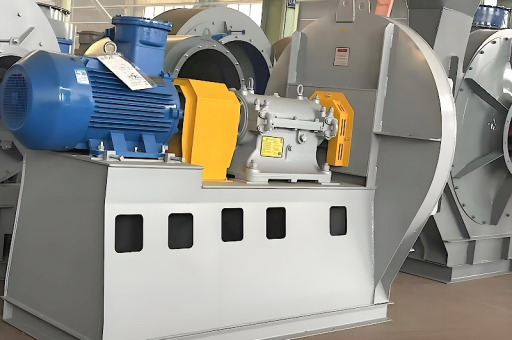
- Understanding the Application (Coal Injection Boiler Fan)
- Key Features of a High-Efficiency, Long-Life Fan
- How to Maximize Energy Efficiency (The "VFD" Factor)
- Recommended Fan Type for This Application
- Three Steps to Optimize Your Fan System
- Summary Table: Small Fan vs. Large Capacity High-Efficiency Fan
- Need Specific Data?
It appears you are looking for information on a high-capacity, long-life fan specifically designed for coal injection systems in large boilers, with a focus on energy efficiency.
This is a specialized piece of heavy industrial equipment, often used in steel mills (blast furnaces) or power plants.
Here is a detailed breakdown of what that specification means, the technology involved, and how to maximize energy efficiency for such a fan.
Understanding the Application (Coal Injection Boiler Fan)
- What it does: These fans are typically Primary Air (PA) Fans or Coal Mill Exhaust Fans. They provide the high-pressure air needed to dry, transport, and inject pulverized coal into the boiler furnace.
- Key Challenges:
- Abrasion: Coal dust is highly abrasive, causing fan blade wear.
- High Pressure: Requires significant static pressure to overcome mill resistance and ductwork.
- Continuous Operation: These fans run 24/7, making "long life" and "energy efficiency" critical to operational costs (OPEX).
Key Features of a High-Efficiency, Long-Life Fan
To meet your criteria, a fan must incorporate specific engineering choices:
| Feature | Benefit (Long Life) | Benefit (Energy Efficiency) |
|---|---|---|
| High-Efficiency Airfoil Blades | Reduces stress on the impeller. | 5-10% higher static efficiency than backward-inclined blades. |
| Inlet Box & Damper Design | Smooth airflow reduces turbulence & erosion. | Precise control with inlet guide vanes (IGVs) reduces power draw. |
| Wear-Resistant Liners | Ceramic tiles or tungsten carbide coatings on blades & housing prevent erosion. | Maintains aerodynamic profile over time, preventing efficiency loss. |
| Overhung vs. Double-Suction | Double-suction designs handle axial thrust better, extending bearing life. | Double-suction handles 2x the flow with same wheel diameter, improving efficiency. |
| Bearing & Lubrication System | Oil mist or forced oil lubrication prevents failure in high-temp environments. | Low-friction bearings (e.g., spherical roller bearings) reduce mechanical losses. |
How to Maximize Energy Efficiency (The "VFD" Factor)
The single most impactful technology for energy efficiency in large coal injection fans is Variable Frequency Drives (VFDs) .
Vs. Traditional Control (Dampers/Inlet Vanes):
- Dampers: Waste energy by creating artificial resistance (throttling). A fan running at 80% speed with dampers might only be 40% efficient.
- VFD: Matches fan speed exactly to the required airflow.
- Fan Affinity Law: Power is proportional to the cube of the speed.
- Example: Reducing speed by just 20% (to 80% flow) reduces power consumption by 8% (0.8³ = 0.512).
Calculation:
- Fan Power (kW) = (Flow × Pressure) / (Efficiency × Constant)
- By using a VFD, you eliminate the pressure drop across dampers, achieving the same flow with significantly less power.
Recommended Fan Type for This Application
For your specific requirements, the optimal design is typically:
Double-Suction, High-Efficiency Centrifugal Fan (Airfoil or Backward-Curved)
- Why: Handles large volumes (100,000+ CFM) and high static pressures (up to 80 in. w.g.).
- Efficiency: Up to 88-92% static efficiency at peak.
- Materials: Often uses AR400/500 or 16MnCr5 steel with ceramic tile lining in wear zones.
Alternative (for extremely abrasive duty): Robinson “TE” (Tapered Energy) Fan – a specialized design combining high efficiency with a wear-resistant, heavy-duty construction.
Three Steps to Optimize Your Fan System
If you are evaluating or operating such a fan, follow this checklist:
- Audit the System: Measure actual airflow, static pressure, and motor power. Compare to the fan’s design point. Often, fans are oversized, leading to "fan law" inefficiency.
- Retrofit with VFD: If not already installed, this is the fastest payback (often <1 year).
- Inspect & Balance: Check blade wear annually. An unbalanced impeller causes vibration and bearing wear, reducing efficiency by 3-5%.
Summary Table: Small Fan vs. Large Capacity High-Efficiency Fan
| Metric | Standard Industrial Fan | High Efficiency Coal Injection Fan |
|---|---|---|
| Efficiency (Peak) | 75-80% | 88-92% |
| Blade Type | Backward Inclined | Airfoil / Backward Curved |
| Wear Life | 1-2 years | 5-8 years (with liners) |
| Control | Damper / Inlet Vanes | VFD + Inlet Vanes |
| Annual Energy Cost (for 500 HP motor @ 8760 hrs) | ~$250,000 (at $0.08/kWh) | ~$200,000 (20% savings) |
Need Specific Data?
To provide a precise recommendation for your "Large Capacity Long Life Coal Injection Boiler Fan", I would need the following details:
- Required Airflow: (e.g., 250,000 m³/h or 150,000 CFM)
- Static Pressure: (e.g., 15 kPa or 60 in. w.g.)
- Gas Temperature: (e.g., Ambient to 80°C)
- Current Motor Size: (e.g., 800 kW)
- Desired Control Method: (e.g., VFD vs. Dampers)
Bottom Line: The combination of high-efficiency airfoil blades + VFD control + ceramic wear liners is the gold standard for achieving both long life and energy efficiency in a large coal injection fan.





