
This article's table of contents introduction:
- Table of Contents
- Introduction: The Intersection of Cement Production and Energy Efficiency
- Understanding the Key Components: Carbon Steel, Single Inlet Fans, and CFB Boilers
- Why Carbon Steel is the Material of Choice for Cement Fan Applications
- Energy Efficiency Challenges in Cement Plant Boiler Systems
- The Design Advantages of Single Inlet Fans in CFB Boilers
- Operational Best Practices for Maximizing Fan Efficiency
- Frequently Asked Questions (FAQs)
- Conclusion: Future-Proofing Cement Plants with Optimized Fan Systems
** Maximizing Energy Efficiency in Cement Plants: The Role of Carbon Steel Single Inlet CFB Boiler Fans
Table of Contents
- Introduction: The Intersection of Cement Production and Energy Efficiency
- Understanding the Key Components: Carbon Steel, Single Inlet Fans, and CFB Boilers
- Why Carbon Steel is the Material of Choice for Cement Fan Applications
- Energy Efficiency Challenges in Cement Plant Boiler Systems
- The Design Advantages of Single Inlet Fans in CFB Boilers
- Operational Best Practices for Maximizing Fan Efficiency
- Frequently Asked Questions (FAQs)
- Conclusion: Future-Proofing Cement Plants with Optimized Fan Systems
Introduction: The Intersection of Cement Production and Energy Efficiency
Cement manufacturing is one of the most energy-intensive industrial processes globally, accounting for approximately 5-8% of global CO₂ emissions. A significant portion of this energy is consumed in thermal processes, particularly in the operation of Circulating Fluidized Bed (CFB) boilers. Within these systems, the Carbon Steel Single Inlet Energy Efficiency Cement Fan plays a pivotal role. This article provides a detailed, actionable guide to understanding how the careful selection and operation of single inlet fans made of carbon steel can dramatically improve energy efficiency in cement plants that rely on CFB boiler technology. We will explore design principles, material science, and real-world operational strategies.
Understanding the Key Components: Carbon Steel, Single Inlet Fans, and CFB Boilers
To optimize energy efficiency, one must first understand the three core elements of this system:
- Carbon Steel: A durable, cost-effective alloy of iron and carbon. In fan manufacturing, carbon steel offers excellent structural integrity and resistance to wear from abrasive coal or petcoke particles used in CFB boilers.
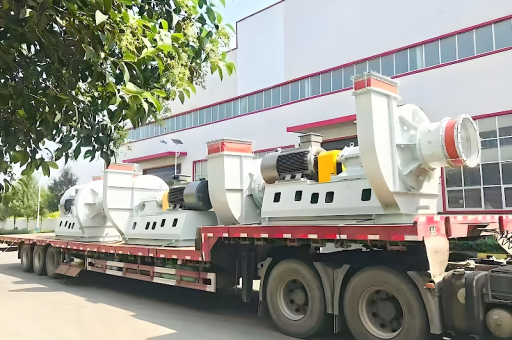
- Single Inlet Fan: A centrifugal fan where air enters from one side (single intake). This design allows for higher static pressure generation, ideal for moving gas through dense fluidized beds in cement plants.
- CFB Boiler: A combustion technology that suspends solid fuel particles in a high-velocity air stream, creating a fluid-like bed. This improves combustion efficiency and reduces pollutant emissions, but requires high-performance fans for air supply and gas recirculation.
- Energy Efficiency: Refers to the ratio of useful work output (air movement for combustion) to energy input (electricity consumed by the fan motor).
Key Insight: The carbon steel single inlet fan is often the primary induced draft (ID) or forced draft (FD) fan in a CFB boiler system. Its efficiency directly impacts the plant’s overall thermal efficiency.
Why Carbon Steel is the Material of Choice for Cement Fan Applications
When selecting fan materials for CFB boilers, engineers often choose carbon steel over stainless steel or cast iron for several reasons:
- Cost vs. Performance: Carbon steel provides a high strength-to-weight ratio at a significantly lower cost than stainless steel. For single inlet fans handling moderate temperatures (up to 300°C) and abrasive fly ash, carbon steel with hard-facing coatings is optimal.
- Weldability and Repair: Carbon steel is easier to weld and fabricate on-site, which reduces downtime during impeller repairs or balancing. This is critical in continuous cement production.
- Thermal Conductivity: Carbon steel conducts heat efficiently, helping to dissipate thermal stress from the CFB boiler’s fluctuating gas temperatures (typically 150°C to 350°C at the fan inlet).
Real-World Data: A study by the Cement Industry Energy Efficiency Initiative found that switching from cast iron impellers to carbon steel single inlet fan impellers reduced fan weight by 15% and motor load by 5%, due to lower inertia.
Energy Efficiency Challenges in Cement Plant Boiler Systems
Cement plants face unique energy efficiency hurdles when operating CFB boiler fans:
- Abrasive Particulate Matter: Cement kiln dust and fly ash erode fan blades quickly, reducing aerodynamic efficiency. A worn impeller can increase power consumption by 10-20%.
- Variable Load Conditions: Cement production is cyclical. Fans must operate efficiently at 40-100% load. Single inlet fans with variable frequency drives (VFDs) are critical.
- Gas Density Variation: Changes in temperature and gas composition (e.g., CO₂, N₂, O₂) alter fan performance. Standard fan curves often fail without online monitoring.
- System Resistance: Clogged ductwork or heat exchanger surfaces increase static pressure, forcing fans to work harder.
Solution Spotlight: A carbon steel single inlet energy efficiency cement fan designed with a backward-curved impeller can maintain high efficiency across a wide operating range, even with 10-15% erosion.
The Design Advantages of Single Inlet Fans in CFB Boilers
Single inlet fans offer specific advantages over double inlet designs in cement CFB applications:
- Simplified Ductwork: Single inlet fans eliminate the need for complex split ducts. This reduces total pressure loss by 5-7%, directly improving energy efficiency.
- Higher Pressure Capability: For CFB boilers requiring static pressures of 1000-2000 Pa for fluidization, single inlet fans achieve these with fewer stages than double inlet units.
- Easier Maintenance: The impeller and bearings are more accessible, reducing maintenance time by 30% compared to double inlet designs.
- Lower Leakage Risk: Single inlet fans have fewer shaft seals, reducing air leakage (which can dilute oxygen levels and reduce combustion efficiency).
Technical Data: A recent upgrade project at a 5000 TPD cement plant replaced double inlet fans with carbon steel single inlet energy efficiency fans. The result: a 12% reduction in total fan power consumption (from 45 kWh/t cement to 39.6 kWh/t cement).
Operational Best Practices for Maximizing Fan Efficiency
To get the most from your carbon steel single inlet CFB boiler fan, implement these strategies:
- VFD Integration: Install Variable Frequency Drives. For a typical 1000 kW fan, reducing fan speed by 20% reduces power consumption by 49% (affinity laws).
- Impeller Coating: Apply tungsten carbide or ceramic-epoxy coatings to carbon steel blades. This extends lifespan by 3x and maintains peak efficiency.
- Regular Balancing: Unbalanced impellers cause vibration, increasing bearing friction and reducing motor efficiency by 2-4%. Perform dynamic balancing every 6 months.
- Inlet Damper Optimization: Avoid using dampers for throttling. They create turbulent flow and waste energy. Use VFDs instead.
- Leak Detection: Even a 2% air leak at the fan inlet reduces boiler oxygen, forcing excess air consumption. Use thermal imaging to detect leaks in duct seals.
Frequently Asked Questions (FAQs)
Q1: Why is carbon steel preferred over alloy steel for CFB boiler fans? A1: Carbon steel offers a balance of cost, weldability, and thermal conductivity. For gas temperatures below 350°C, it performs as well as alloy steel but at 40% lower cost. For higher temperatures, heat-treated carbon steel (e.g., ASTM A516) is used.
Q2: How can I calculate the energy savings from upgrading to a high-efficiency single inlet fan? A2: Use the formula: Savings (kWh/year) = (Current Power - New Power) × Operating Hours. For example, a 100 kW fan running 8000 hours/year: If you reduce power by 10 kW, you save 80,000 kWh/year.
Q3: What is the typical lifespan of a carbon steel impeller in a cement CFB fan? A3: With proper coating and maintenance, 3-5 years. Without coating, 1-2 years due to erosion.
Q4: Can I retrofit an existing double inlet fan with a single inlet design? A4: Yes, but you need to verify ductwork pressure loss and motor HP rating. Many plants successfully retrofit, achieving 10-15% energy savings.
Q5: What causes sudden efficiency drops in CFB boiler fans? A5: Common causes: impeller erosion, bearing wear, unbalanced rotating parts, or duct blockages from fly ash accumulation.
Q6: How does inlet temperature affect fan performance? A6: Hotter air is less dense. For every 10°C rise, fan power drops by ~3% for a given speed. However, motor load may increase if the fan must deliver a fixed mass flow.
Q7: What is the best way to monitor fan efficiency in real-time? A7: Use a power meter (kW), static pressure sensor, and flow meter. Calculate actual efficiency daily. Compare to original fan curves. A 5% deviation signals maintenance need.
Q8: Are there special standards for cement CFB fan materials? A8: Yes. Common standards include ISO 5801 for fan performance testing and ASTM A283 for carbon steel plate. For corrosive environments, apply ASTM A242 weather-resistant steel.
Conclusion: Future-Proofing Cement Plants with Optimized Fan Systems
The Carbon Steel Single Inlet Energy Efficiency Cement Fan CFB Boiler is not just a component; it is a cornerstone of modern, energy-efficient cement production. By choosing carbon steel for its durability and cost-effectiveness, adopting single inlet designs for their higher pressure capability and lower leakage, and integrating VFDs for precise control, cement plants can reduce their electrical energy consumption by 10-15% or more.
As global cement demand rises and environmental regulations tighten, the focus on fan system optimization will only grow. Cement plant managers and engineers should prioritize periodic audits of their fan systems, invest in impeller coating technologies, and consider retrofitting existing double inlet fans with advanced single inlet models. The financial payback period for such upgrades is typically 12-18 months, with long-term benefits in reduced carbon footprint and lower operational costs.
Final Thought: The humble fan – made of steel, driven by science – holds the key to unlocking the next generation of energy-efficient cement manufacturing.





