
This article's table of contents introduction:
- Table of Contents
- Introduction: The Critical Role of the Power Plant Fan
- What is a Q235 Single Suction Power Plant Fan?
- Anti-Explosion Mechanism: Safety in Hazardous Environments
- Long Life Engineering: Material Science & Maintenance
- Q: How does the Q235 material contribute to the fan's durability?
- Q: Why is "Single Suction" preferred over Double Suction in explosion-proof settings?
- Performance Metrics: Efficiency, Noise Control, and Vibration
- Installation Best Practices for Anti-Explosion Fans
- Common Failure Modes and How to Extend Fan Life
- Conclusion: Future Trends in Power Plant Fan Technology
*The Ultimate Guide to Q235 Single Suction Power Plant Fan: Anti-Explosion Design and Long Life Optimization*
Table of Contents
- Introduction: The Critical Role of the Power Plant Fan
- What is a Q235 Single Suction Power Plant Fan?
- Anti-Explosion Mechanism: Safety in Hazardous Environments
- Long Life Engineering: Material Science & Maintenance
- Q: How does the Q235 material contribute to the fan's durability?
- Q: Why is "Single Suction" preferred over Double Suction in explosion-proof settings?
- Performance Metrics: Efficiency, Noise Control, and Vibration
- Installation Best Practices for Anti-Explosion Fans
- Common Failure Modes and How to Extend Fan Life
- Conclusion: Future Trends in Power Plant Fan Technology
Introduction: The Critical Role of the Power Plant Fan
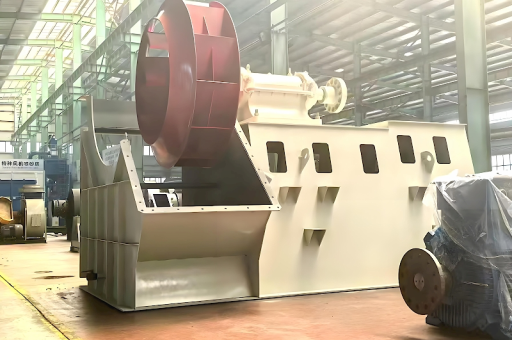
In any thermal power plant, whether coal-fired, gas-fired, or biomass, the power plant fan is not merely an accessory—it is the respiratory system of the entire facility. These fans are responsible for forced draft (supplying combustion air), induced draft (removing flue gases), and primary air circulation. Among the various configurations available, the Q235 Single Suction Power Plant Fan has emerged as a preferred choice for environments where anti-explosion safety and long life are non-negotiable.
This article provides an in-depth, SEO-optimized analysis of this specific fan type, drawing from industry standards, material science, and operational best practices. We will answer two critical questions and explore the engineering behind its reputation for reliability.
What is a Q235 Single Suction Power Plant Fan?
To understand this fan, we must break down its name:
- Q235: This is a Chinese standard carbon structural steel grade (equivalent to ASTM A36 or S235JR). It offers excellent weldability, moderate strength (yield strength ~235 MPa), and good impact toughness at low cost. For fan casings and impellers, Q235 provides a balance between mechanical integrity and formability.
- Single Suction: This refers to the air intake design. Air enters from one side of the impeller only. This is distinct from double suction fans, where air enters from both sides. Single suction designs are typically simpler, more compact, and easier to seal for explosion-proof applications.
- Power Plant Fan: Specifically designed for continuous industrial operation under high temperature, dust load, and pressure variations.
- Anti-Explosion: The fan is constructed with non-sparking materials (e.g., aluminum-bronze impellers or coated Q235 surfaces) and features a housing that can withstand internal deflagration without igniting the external atmosphere.
- Long Life: Achieved through thicker wall sections, corrosion-resistant coatings, and precision balancing.
Anti-Explosion Mechanism: Safety in Hazardous Environments
In power plants handling pulverized coal, biomass dust, or volatile gases, any spark from a fan can trigger a catastrophic explosion. The anti-explosion design of the Q235 Single Suction fan addresses this through several redundant layers:
- Spark-Resistant Construction: The impeller and inlet cone are often made of, or clad with, non-ferrous materials such as aluminum bronze (QAl9-4) or stainless steel (304L). If metal-to-metal contact occurs, these alloys produce no sparks.
- Casing Strength: The housing is fabricated from thick Q235 steel plate (usually 6-10 mm, depending on fan size). This is designed to contain an internal explosion up to a certain pressure (e.g., 0.35 MPa) without rupturing.
- Grounding and Seal: A dedicated grounding wire dissipates static electricity. The shaft seal is designed to prevent dust ingress into bearing housings, reducing friction heat.
- Compliance: These fans are certified to standards such as ATEX, IECEx, or GB/T 3836 (China equivalent). The fan must be labeled with its maximum surface temperature class (e.g., T4 = 135°C) to ensure it does not ignite surrounding combustible dust.
Long Life Engineering: Material Science & Maintenance
The "long life" promise of a Q235 Single Suction fan is not accidental—it is the result of deliberate engineering choices:
- Material Protection: Bare Q235 steel would corrode rapidly in a flue gas environment (SO₂, NOₓ, moisture). Therefore, the internal surfaces are typically treated with high-temperature epoxy coatings (resistant to 200°C) or zinc-rich primers followed by a polyurethane topcoat.
- Bearing and Lubrication: Heavy-duty spherical roller bearings (SKF or FAG equivalent) are used, often with automatic grease lubrication systems. Grease intervals are calculated based on temperature (e.g., relubrication every 500 hours at 80°C).
- Impeller Balancing: Each impeller undergoes dynamic balancing to G2.5 grade per ISO 1940-1. This reduces vibration, which is the primary cause of bearing fatigue and shaft cracking.
- Corrosion Allowance: The Q235 casing thickness includes a 2 mm corrosion allowance, meaning the fan is designed to operate safely even after 10-15 years of gradual metal loss.
Q: How does the Q235 material contribute to the fan's durability?
Answer: Q235 steel provides an optimal balance of strength, weldability, and cost. For power plant fans, durability is not just about hardness—it is about fatigue resistance under cyclic loads. Q235's moderate yield strength (235 MPa) means it can absorb vibration and thermal expansion without cracking. Additionally, its excellent weldability ensures that repairs (e.g., patching a corroded area) can be performed with standard MMA or MIG welding without preheating. However, Q235 alone is not sufficient; it must be paired with protective coatings or cladding to resist chemical attack from flue gases.
Q: Why is "Single Suction" preferred over Double Suction in explosion-proof settings?
Answer: The single suction design offers several advantages in explosion-proof applications:
- Simpler Sealing: Only one air inlet needs to be sealed against dust and gas ingress. Double suction fans require two complex seals, doubling the potential leak points.
- Lower Inertia: A single-sided impeller has less rotating mass than a double-sided one of the same capacity. This reduces the energy released if the impeller disintegrates during an explosion.
- Better Accessibility: Maintenance is easier because the bearings and shaft are exposed on the non-drive end. In a double suction fan, the shaft passes through both air streams, complicating bearing replacement.
- Cost-Effective Explosion Containment: It is easier to design a single suction casing to withstand internal pressure (e.g., 0.5 bar overpressure) without excessive weight.
Performance Metrics: Efficiency, Noise Control, and Vibration
For an anti-explosion power plant fan, performance must be measured beyond simple airflow:
- Static Efficiency: Typically 75-82% for single suction centrifugal fans. Higher efficiency means less heat generation, which is safer in explosive atmospheres.
- Noise Level: Fans with backward-curved blades generate less noise (85-90 dBA at 1 meter) compared to radial blades. Silencers can be added at the inlet.
- Vibration Velocity: Must stay below 5 mm/s (RMS) as per ISO 14694 for continuous operation. Higher vibration indicates imbalance or bearing wear, which can generate sparks.
Installation Best Practices for Anti-Explosion Fans
- Foundation: Use a concrete inertia base with vibration isolators (spring or rubber) to prevent resonance with building structures.
- Ductwork Connection: Install flexible joints (e.g., fabric bellows) on both inlet and outlet to isolate duct stresses from the fan casing.
- Electrical Isolation: The fan motor must be explosion-proof (e.g., Ex d IIB T4). The cable gland must be rated for the hazardous zone.
- Inlet Screen: A metal mesh screen prevents large debris from entering the impeller, which could cause sparking.
Common Failure Modes and How to Extend Fan Life
| Failure Mode | Cause | Solution |
|---|---|---|
| Bearing overheating | Contaminated grease, misalignment | Use sealed bearings; align shaft monthly. |
| Casing corrosion | Acidic moisture in flue gas | Apply phenolic epoxy coating. |
| Impeller erosion | Fly ash particles impacting blades | Install hard-faced wear strips (WC-Co). |
| Vibration increase | Uneven dust buildup on blades | Conduct online cleaning with water spray (if allowed). |
A predictive maintenance schedule (e.g., vibration analysis monthly, thermography quarterly) can extend fan life from the typical 8-year design life to over 15 years.
Conclusion: Future Trends in Power Plant Fan Technology
The Q235 Single Suction Power Plant Fan represents a mature, cost-effective solution for anti-explosion and long-life requirements. However, the industry is moving toward:
- Variable Frequency Drives (VFDs): To reduce energy consumption and mechanical shock during start-up.
- Smart Sensors: Embedded accelerometers and temperature probes for real-time condition monitoring.
- Hybrid Materials: Combining Q235 casing with ceramic-lined impellers for extreme erosion resistance.
For plant engineers, selecting such a fan is an investment in safety and uptime. Ensure that your fan supplier provides full certification for the specific hazardous zone (e.g., Zone 21 for dust) and a documented long-life coating warranty.
For more information on explosion-proof fan sizing, selection software, or customized Q235 fan solutions, visit [fan] specifications or consult with a certified industrial ventilation engineer.





