
This article's table of contents introduction:
- The Core Terminology Explained
- Potential Challenges in Metallurgy
- Key Specifications to Verify
- Recommended Alternatives (If the Forward-Curved Fan Fails)
- Summary: Is "Low Pressure Forward" right for your Metallurgy job?
This query appears to be a collection of technical specifications or keywords related to industrial equipment. Based on the terms provided, here is a breakdown of what you are likely looking for:
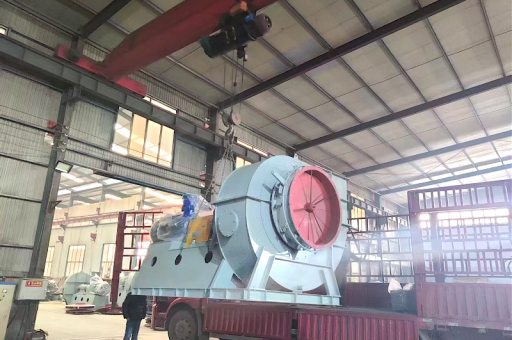
You are describing a Corrosion-Resistant, Low-Pressure, Forward-Curved Centrifugal Fan designed for Metallurgy applications.
Here is a detailed explanation of each component and what to look for when sourcing this equipment:
The Core Terminology Explained
- Low Pressure:
- Definition: Typically refers to fans operating at a static pressure of less than 1000 Pa (Pascals).
- Application in Metallurgy: Used for general ventilation, air movement in large spaces, or moving air through light ductwork (not for pushing against high furnace resistance).
- Forward (Curved) Blades:
- Definition: The fan blades curve in the direction of rotation.
- Characteristics: High volume, relatively low pressure, low noise, and lower efficiency than backward-curved blades.
- Why use it? Ideal for clean or slightly dusty air handling in HVAC and general ventilation.
- Centrifugal Ventilation Fans:
- How it works: Air enters axially and is expelled radially via centrifugal force.
- Metallurgy Use: Typically used for supply air (fresh air) or exhaust air (fume extraction) on the clean side of a filter system.
- Anticorrosion (Anti-corrosion):
- Critical Feature: Metallurgy environments contain moisture, acids (like HCl from pickling), alkalis, and high humidity.
- Materials:
- FRP (Fiber-Reinforced Plastic): The most common for extreme corrosion (handles acids/bases well).
- Stainless Steel (SS304/SS316): For high-temperature or heavy-duty environments where FRP cannot be used (e.g., hot exhaust).
- Coated Carbon Steel: Epoxy or rubber lining (cheaper but less durable than FRP/SS).
Potential Challenges in Metallurgy
While forward-curved fans are good for general ventilation, they have a specific limitation for metallurgy: Blade fouling.
- The Problem: Metallurgy often involves dust, scale, or sticky fumes. Forward-curved blades are "dirt traps." The concave shape allows particles to build up, causing imbalance and vibration.
- The Solution:
- Filtration: Ensure the fan is on the clean side of a baghouse or scrubber.
- Wheel Design:
- Paddle-wheel (Radial) or Backward-inclined is often preferred over Forward-curved for dirty metallurgy applications.
- If you must use Forward-curved, ask for a self-cleaning wheel or a coating (e.g., Teflon, Halar) that prevents adhesion.
Key Specifications to Verify
When ordering, you must clarify these four factors:
| Specification | Why it matters for Metallurgy |
|---|---|
| Impeller Material | FRP (best for acids, max 80°C) vs SS316 (good for hot, humid air with chlorides) vs Coated Steel (low budget, limited life). |
| Temperature Rating | Standard fans are 20-40°C. Metallurgy exhaust can reach 60-200°C. Forward-curved FRP fails above 80°C. |
| Spark Resistance | Is the environment flammable (e.g., hydrogen, solvents)? If yes, require Aluminum impeller or non-sparking material (Al-bronze). |
| Motor Enclosure | IP55 (minimum for dust). For wet environments: IP66 or TEFC (Totally Enclosed Fan Cooled). |
Recommended Alternatives (If the Forward-Curved Fan Fails)
If your application involves dust, high heat, or sticky fumes, consider changing the wheel type:
| Wheel Type | Best For | Worst For |
|---|---|---|
| Forward-Curved (Your query) | Clean air, low noise, HVAC | Dust, high heat, high pressure |
| Backward-Inclined | Clean to slightly dirty air, higher efficiency | Sticky, fibrous materials |
| Radial / Paddle Wheel | Dusty / Hot metallurgy (e.g., furnace exhaust) | High noise, low efficiency |
| Airfoil | High efficiency, clean air only | Expensive, fragile blades |
Summary: Is "Low Pressure Forward" right for your Metallurgy job?
- YES: If this fan is for general building ventilation (e.g., blowing fresh air into a break room or clean warehouse area) where the air is clean and cool.
- NO (Probably): If this fan is exhausting from a furnace, pickling line, grinding area, or foundry. For those, you likely need a Radial Paddle Wheel (High Pressure, Heavy Duty) or a Backward-Inclined (Higher Efficiency) with a robust anticorrosion coating (e.g., Halar or SS316).
Next Step: To get a specific quote or technical drawing, provide the following to a supplier:
"I need a FRP/Stainless Steel, low-pressure, forward-curved centrifugal fan rated for [Volume: e.g., 5000 CFM] at [Pressure: e.g., 2 inches w.g.]. The air contains [specific chemical, e.g., HCl fumes] at [temperature: e.g., 50°C]. Please confirm if it is suitable for continuous metallurgy ventilation."





