
This article's table of contents introduction:
- Key Terminology Breakdown
- Why This Fan is Used in Foundries
- Typical Specifications for a "Foundry" Fan
- Common Models / Search Terms
- Selection Considerations
- Summary
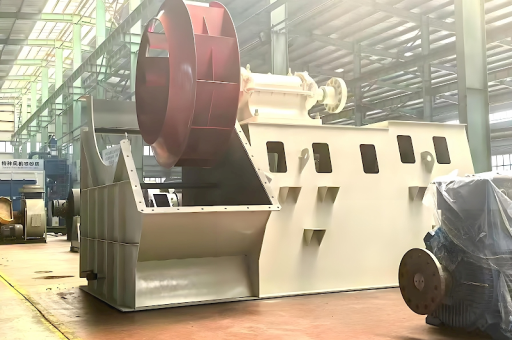
It appears you are describing a specific type of industrial fan: a Stainless Steel, Medium Pressure, Centrifugal Ventilation Fan with Backward-Curved or Backward-Inclined blades, intended for Foundry applications.
Here is a detailed breakdown of what this specification means, why it is used in foundries, and the key selection considerations.
Key Terminology Breakdown
- Centrifugal Fan: Air enters axially (along the shaft) and is discharged radially. This design is ideal for overcoming system resistance (ductwork, filters).
- Medium Pressure: Typically refers to a pressure range of roughly 2 to 15 inches of water gauge (500 to 3700 Pa). This is suitable for pushing air through dust collectors, scrubbers, and long duct runs common in foundries.
- Backward-Curved/Backward-Inclined Blades:
- The blades lean away from the direction of rotation.
- Benefits: Highest efficiency of all centrifugal fan types, lower noise, and a non-overloading power curve (motor won't burn out if the duct is left open).
- Foundry benefit: They are self-cleaning relative to dust and have less tendency to clog compared to forward-curved blades (squirrel cage fans).
- Stainless Steel (SS): Usually SS304 or SS316L.
- Foundry benefit: Resists corrosion from humidity, heat, and reactive gases (sulfur, chlorine) released during casting and sand processing.
- Foundry Environment: Extreme heat, heavy particulate (sand, metal dust), chemicals from binders and resins, and sparks.
Why This Fan is Used in Foundries
Foundries require robust ventilation for:
- Core making & molding: Removing fumes from resin binders and curing ovens.
- Melting & pouring: Extracting heat, smoke, and metal oxides from furnaces, ladles, and pouring areas.
- Shot blasting & grinding: Conveying heavy dust loads through a dust collector.
- General building ventilation: To maintain air quality and temperature.
A standard galvanized or painted steel fan would corrode rapidly in this environment. The Stainless Steel construction is critical for longevity.
Typical Specifications for a "Foundry" Fan
If you are sourcing this fan, you would typically look for:
| Feature | Specification | Reason |
|---|---|---|
| Material | SS304 (Sulfuric/Nitric) or SS316L (Chlorine/Salt) | Corrosion resistance against foundry gases. |
| Blade Type | Backward Inclined or Airfoil | High efficiency, stable operation, handling dust. |
| Housing | Heavy Gauge SS (10-14 ga) | Withstands potential spark impact and heat. |
| Shaft | Stainless Steel (e.g., 17-4PH or 416SS) | Strength and corrosion resistance at high RPM. |
| Bearing | Heavy Duty, Pillow Block, Greased | Handles high belt tension and heat radiated from the fan shaft. |
| Drive | Belt Driven (Preferred) | Allows speed changes to adjust airflow/pressure. |
| Motor | TEFC, Inverter Duty (if VFD), on Slide Base | TEFC prevents dust ingress; VFD allows energy savings. |
| Spark Resistant | Construction "Type A" (Non-ferrous impeller & housing) OR "Type B" (Non-ferrous impeller only) | Critical if handling flammable gases or metal dusts. Note: SS alone is not spark-proof. |
| Drain | Included at fan housing bottom | Allows removal of moisture or condensed fumes. |
| Paint (exterior) | High Temp / Epoxy (if not full SS) | Protects motor and drive components. |
Common Models / Search Terms
To find a commercial product, search for these common fan designations combined with "Stainless Steel" and "Foundry":
- Rear Wall Fan / Radial Paddle Wheel: A heavier-duty option often used for conveying sticky or heavy materials (e.g., wood chips, large sand grains). The "Backward Curved" fan is more efficient for fine dust and fumes.
- AHU (Air Handling Unit) Plug Fan: A backward-curved centrifugal wheel directly mounted into a housing, often used for large building ventilation.
- Vaneaxial / Tubeaxial: (Not centrifugal) but also common for lower pressure, high flow in tunnels.
- High-Temperature Fan: For fans mounted after an exhaust hood but before the scrubber/cooling, you need fans rated for 200°C - 500°C.
Selection Considerations
- Airflow (CFM/m³/h) & Static Pressure (SP/in w.g.):
- Cleaning hoods: Medium SP (2-4 in w.g.)
- Dust collection convey lines: High SP (8-15+ in w.g.)
- Temperature:
Standard SS fans are usually rated for ~300°F (150°C) continuous. For pouring decks, you may need a high-temp shaft cooling disc or a direct-drive motor on a heat slinger.
- Spark Resistance:
- Crucial. SS inlet bells and a SS impeller hitting a SS housing can create a spark if contact occurs. You must specify "Spark Resistant Construction" (Type A or B per AMCA Standard 99-0401) which often adds a brass or monel strike plate on the inlet cone.
- Dust Loading:
- If the fan is used for "clean air" (general ventilation), a standard backward curved wheel is fine.
- If it handles sand return or heavy grinding dust, you need a Radial Paddle Wheel (which is less efficient but stronger and self-cleaning), not a backward-curved airfoil.
Summary
A Backward-Curved Centrifugal Fan in Stainless Steel is the best-in-class choice for duty-cycle ventilation in foundries. It offers the highest efficiency, non-overloading horsepower, and corrosion resistance. When purchasing, focus on the temperature rating and spark resistance specifications to ensure safety and longevity in the harsh foundry environment.





