
This article's table of contents introduction:
- What is HG785 Alloyed Steel?
- Heavy Duty Centrifugal Ventilation Fan: The Core Components
- Specific Challenges for Materials Drying
- Engineering Considerations for the Fan Design
- Application Examples
- Summary Checklist for Your Fan
- Final Recommendation
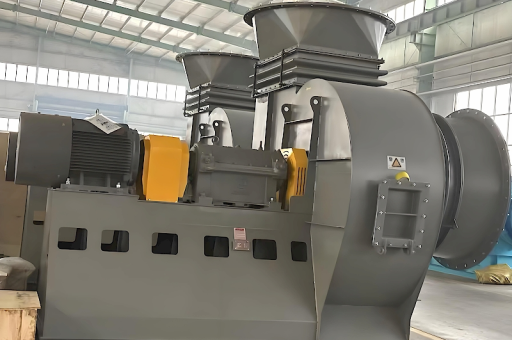
It looks like you're searching for engineering specifications, material properties, and application suitability for a HG785 alloyed steel heavy-duty centrifugal fan used in materials drying processes.
Here is a detailed breakdown of how these components interact, the material's relevance, and what you need to consider for this application.
What is HG785 Alloyed Steel?
HG785 is a high-strength, low-alloy (HSLA) structural steel, primarily produced by Chinese steel mills (equivalent to Q690D or S690QL in European standards).
- Yield Strength: ≈ 690 MPa (100,000 psi)
- Tensile Strength: 770 – 940 MPa
- Key Characteristics: High strength-to-weight ratio, good weldability (with pre-heat), excellent wear resistance under moderate impact.
Why use it for a fan? In heavy-duty centrifugal fans, HG785 allows for:
- Thinner impeller blades: Reduces rotational mass (lower inertia), making the fan easier to start/stop and reducing bearing loads.
- Higher RPM capability: Ideal for high-pressure drying systems.
- Resistance to fatigue: Critical for fans running 24/7 in industrial drying.
Heavy Duty Centrifugal Ventilation Fan: The Core Components
For a materials drying application, the fan must handle hot, sometimes abrasive, and often corrosive air. The HG785 steel is typically used for specific parts:
| Component | Material Choice (Typical) | Why HG785 is Used |
|---|---|---|
| Impeller (Wheel) | HG785 or Hardox 450 | Primary use. High centrifugal stress. Thinner section reduces stress on shaft. |
| Backplate / Shroud | HG785 | Must withstand the pressure differential created by the spinning wheel. |
| Shaft | 45# Steel (1045) or 40Cr | Usually not HG785; needs high fatigue strength and machinability. |
| Housing (Scroll) | Q235B (Mild Steel) or HG785 | Only use HG785 if the housing is highly pressurized or supporting heavy components. Mild steel is cheaper for this static part. |
| Inlet Cone | Stainless Steel 304/316 or HG785 | If drying corrosive materials (e.g., chemicals, wet salt), use SS. If drying sand/cement, use HG785 for wear. |
Specific Challenges for Materials Drying
Using HG785 for a drying fan is excellent, but you must account for the process environment:
A. High Temperature (Thermal Fatigue)
- The Problem: Dryers often use hot air (80°C to 250°C). HG785 loses strength at high temperatures. Above 300°C, it de-rates significantly.
- The Fix: If the inlet air is >200°C, you may need a Stainless Steel (310S) or Creep-Resistant Steel impeller. HG785 is best for moderate to warm drying (<150°C).
B. Abrasion (Material being dried)
- The Problem: Drying sand, limestone, biomass, or minerals creates abrasive dust that erodes the HG785 impeller blades.
- The Fix: After fabrication, the HG785 impeller is often:
- Hard-faced with a wear-resistant weld overlay (e.g., tungsten carbide).
- Ceramic-lined on the leading edge of the blades.
- Balanced precisely to avoid vibration caused by uneven wear.
C. Corrosion
- The Problem: Drying of certain chemicals, food products (salt), or waste materials can create acidic condensation on the cold fan casing.
- The Fix: If condensation is possible, switch to SS304 or SS316L. HG785 is not corrosion-resistant; it will rust.
Engineering Considerations for the Fan Design
If you are specifying or designing this fan, these parameters are critical:
| Parameter | Value / Guidance for HG785 Fan |
|---|---|
| Max Operating Temperature | < 200°C (ideal < 150°C) |
| Weld Pre-Heat | Required (typically 100-150°C) to prevent cracking. |
| Fatigue Limit | Excellent (10^7 cycles), but weld toes must be ground smooth. |
| Balancing Grade | G6.3 (Standard) or G2.5 (High-speed drying) |
| Shaft Connection | Keyway or Hydraulic. Taper-lock bushing recommended for ease of maintenance. |
| Housing Seals | Teflon or Carbon Labyrinth seals to prevent dust leakage. |
Application Examples
This fan is best suited for:
- Biomass Drying Plants (sawdust, wood chips, pellets)
- Cement & Mineral Processing (raw meal pre-heater fans, clinker cooler fans)
- Wastewater Sludge Drying (low corrosion, high abrasion)
- Abrasive Material Handling (sand, gravel, crushed ore)
- Textile & Pharmaceutical Drying (if the atmosphere is clean and warm, not hot)
Summary Checklist for Your Fan
Yes = Correct Application
- [ ] Is the material being dried non-corrosive (sand, wood, cement)?
- [ ] Is the maximum continuous temperature below 150°C?
- [ ] Do you need a high pressure fan working at high RPM?
- [ ] Is the fan running 24/7 (fatigue resistance needed)?
No = Consider Alternative Material
- [ ] Is the inlet temperature routinely >250°C? (Use SS310)
- [ ] Is the atmosphere acidic or wet? (Use SS316L)
- [ ] Is weight not a concern? (Use standard mild steel)
Final Recommendation
The HG785 alloyed steel heavy-duty centrifugal fan is an excellent choice for high-pressure, abrasive drying applications where temperature is moderate. It offers a superior strength-to-weight ratio, reducing startup torque and bearing loads. However, do not use it for high-temperature (>200°C) or corrosive drying without hard-facing or a protective coating.
Would you like specific guidance on balancing class for this fan or weld repair procedures for the HG785 impeller?





