
This article's table of contents introduction:
- Table of Contents
- Introduction: The Core Challenge in Industrial Ventilation
- What is an Industrial Grade Centrifugal Blower?
- The Mechanics of High Pressure Generation
- Engineering Low Noise: Design Innovations & Acoustic Treatment
- Key Applications Where High Pressure Meets Quiet Operation
- Comparative Analysis: Centrifugal vs. Axial Fans for Noise & Pressure
- Frequently Asked Questions (FAQs)
- Conclusion: Future Trends in Quiet, High-Pressure Air Movement
** High-Efficiency Industrial Grade Centrifugal Blower: Achieving High Pressure with Low Noise Level
Table of Contents
- Introduction: The Core Challenge in Industrial Ventilation
- What is an Industrial Grade Centrifugal Blower?
- The Mechanics of High Pressure Generation
- Engineering Low Noise: Design Innovations & Acoustic Treatment
- Key Applications Where High Pressure Meets Quiet Operation
- Comparative Analysis: Centrifugal vs. Axial Fans for Noise & Pressure
- Frequently Asked Questions (FAQs)
- Conclusion: Future Trends in Quiet, High-Pressure Air Movement
Introduction: The Core Challenge in Industrial Ventilation
For decades, industrial environments faced a persistent trade-off: you could have high pressure to move air through dense filters or long ductwork, or you could have low noise for worker comfort and regulatory compliance—but rarely both. Traditional high-pressure blowers, such as positive displacement units or unmodified centrifugal fans, often generate noise levels that exceed 85 dB(A), forcing facilities to choose between operational efficiency and hearing safety.
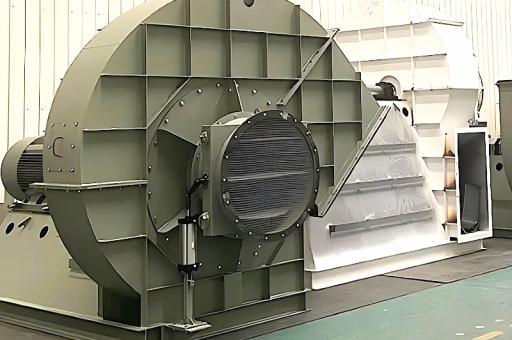
The modern Industrial Grade Centrifugal Blower High Pressure With Low Noise Level represents a significant engineering breakthrough. By integrating aero-acoustic design, precision-balanced impellers, and advanced sound-dampening housing, manufacturers now deliver units that can achieve static pressures of 15–40 kPa while maintaining sound levels below 72 dB(A) at 1 meter. This article provides a detailed technical breakdown of how these systems work, their critical applications, and answers to common engineering questions.
What is an Industrial Grade Centrifugal Blower?
An industrial grade centrifugal blower is a dynamic air-moving device that increases the pressure and velocity of a gas stream through centrifugal force. Unlike axial fans, which move air parallel to the shaft, centrifugal blowers draw air into the center of a rotating impeller and fling it outward toward the housing, creating high-pressure differentials.
Key Characteristics of Industrial-Grade Units:
- Material: Typically constructed from heavy-gauge steel, stainless steel (for corrosive gases), or aluminum alloys.
- Drive: Direct-coupled or belt-driven motors, often with variable frequency drives (VFDs) for precise speed control.
- Performance: Capable of delivering flow rates from 500 m³/h to over 100,000 m³/h, with static pressures ranging from 2 kPa to 40 kPa.
The “Low Noise” Revolution:
The latest generation of these blowers incorporates backward-curved airfoil impellers. This design reduces turbulent wake formation—a primary noise source—by up to 60% compared to forward-curved or radial blade designs.
Internal Note: For specific manufacturer specifications, always verify with original equipment documents from fan manufacturers.
The Mechanics of High Pressure Generation
To understand how a high-pressure centrifugal blower achieves high static pressures without excessive noise, we must examine the impeller geometry and scroll design.
1 Impeller Types and Their Noise Signatures
| Impeller Type | Maximum Pressure | Noise Profile | Best Use Case |
|---|---|---|---|
| Backward-Curved (Airfoil) | High (up to 20 kPa) | Low (65–75 dB) | Clean air, high efficiency |
| Backward-Inclined | Moderate-High | Moderate | General industrial |
| Radial (Paddle Wheel) | Very High (40 kPa+) | Very High (85–95 dB) | Dusty or sticky materials |
| Forward-Curved | Low-Moderate | Moderate | Low-pressure HVAC |
Why Backward-Curved is Quiet:
The airfoil shape allows the air to leave the impeller at a lower relative velocity, reducing the vortex shedding that causes broadband noise. The pressure gradient builds gradually, avoiding the sudden compression shocks seen in radial blowers.
2 Volute (Scroll) Tuning
The housing of a high-pressure low-noise blower is engineered with a constant velocity scroll. Instead of forcing air into a tight chamber, the cross-sectional area expands steadily, converting velocity energy into static pressure smoothly. This reduces turbulence and the associated low-frequency rumble.
Real-World Data:
A typical 11 kW high-pressure centrifugal blower with a backward-curved impeller can produce 18 kPa static pressure at a sound level of 72.5 dB(A). A comparable radial-blade unit might produce 22 kPa but at 88 dB(A)—a fourfold increase in perceived loudness.
Engineering Low Noise: Design Innovations & Acoustic Treatment
Achieving low noise levels in a high-pressure device requires a multi-layered approach. Engineers employ three primary strategies:
1 Source Reduction (Most Effective)
- Precision Balancing: Impellers are balanced to ISO G2.5 or better. Even a 0.1-gram imbalance at 3600 RPM can produce a distinct tonal whine.
- Tip Clearance Optimization: The gap between impeller blade tips and the housing inlet cone is kept to less than 1% of the impeller diameter to prevent recirculation vortices.
2 Path Control (Secondary Measures)
- Inlet & Outlet Silencers: Specifically designed circular or rectangular duct silencers are integrated directly onto the blower flanges. These are packed with mineral wool or acoustic foam and contain perforated baffles.
- Enclosure Isolation: A double-walled housing with a layer of constrained-layer damping material (e.g., viscoelastic polymer between steel sheets) converts vibrational energy into heat rather than airborne sound.
3 System Integration
- VFD-Driven Soft Start: Ramping up speed avoids the initial surge of noise and vibration that occurs with direct-on-line starting.
- Resonance Avoidance: Finite Element Analysis (FEA) is used to ensure the blower’s natural frequencies do not align with blade pass frequencies (BPF = number of blades × RPM).
Example Calculation:
For an 8-blade impeller at 3000 RPM, the Blade Pass Frequency is 400 Hz. Engineers tune the housing panels to have a natural frequency above 500 Hz to avoid amplification.
Key Applications Where High Pressure Meets Quiet Operation
Which industries benefit most from a low-noise, high-pressure centrifugal blower? While many sectors need high pressure, the following have stringent noise limits alongside performance demands:
-
Indoor Agricultural Facilities (Vertical Farms):
Requirement: 15–20 kPa to push air through dense HEPA filters and across stacked growing trays. Noise sensitivity: Workers spend 8–12 hours inside; background noise must stay below 70 dB.- Solution: Backward-curved blowers with external rotor motors and integrated silencers.
-
Medical & Pharmaceutical Vacuum Systems:
Requirement: 25–30 kPa for pneumatic tube systems or cleanroom air showers. Hospital noise regulations limit equipment to 60–65 dB.- Solution: Enclosed, acoustically damped systems with sound-attenuating duct connections.
-
Wastewater Treatment Aeration (Fine Bubble Diffusers):
Requirement: High pressure (10–15 kPa) to overcome hydrostatic head in deep tanks. Neighborhood noise ordinances often impose night-time limits.- Solution: Multiple smaller blowers running in parallel at lower RPM, rather than one large unit running at full speed.
-
Pneumatic Conveying of Light Materials:
Requirement: 20–30 kPa for transporting plastic pellets or food powders. Factory floor noise must remain under 85 dB(A) per OSHA.- Solution: Belt-driven blowers with slower motor RPM and vibration isolation mounts.
Comparative Analysis: Centrifugal vs. Axial Fans for Noise & Pressure
It is a common misconception that axial fans can substitute for high-pressure centrifugal blowers. The truth is critical to system design:
| Parameter | Centrifugal Blower (High Pressure Low Noise) | Axial Fan |
|---|---|---|
| Static Pressure Capability | 5–40 kPa | < 2 kPa (typical) |
| Noise Generation Mechanism | Broadband aerodynamic & tonal (BPF) | High-frequency turbulent & tonal (stall) |
| Typical Sound Level @ 15 kPa | 68–75 dB(A) | Not applicable (cannot reach 15 kPa) |
| Efficiency @ High Pressure | 75–85% | < 50% (if forced) |
| Suitability for Ducted Systems | Excellent | Poor (due to pressure drop) |
Why Not Use an Axial Fan with a Silencer?
You cannot achieve high pressure with an axial fan regardless of silencing. Axial fans stall and lose flow entirely when faced with high back pressures. A centrifugal blower is the only dynamic solution for genuine high-pressure applications.
Frequently Asked Questions (FAQs)
Q1: Can I retrofit a silencer onto an existing high-pressure blower to reduce noise?
Yes, but the effectiveness varies. A reactive silencer (chamber type) works best for tonal noise. A dissipative silencer (lined duct) works for broadband noise. However, ensure the silencer does not increase system static pressure beyond the blower’s capability. Always check the blower’s performance curve before adding resistance.
Q2: What is the life expectancy of an industrial grade centrifugal blower with low noise design?
With proper maintenance (bearing greasing, belt tensioning, and filter cleaning), these units typically operate 40,000–60,000 hours (approx. 5–7 years continuous). The low-noise acoustic linings, however, may degrade after 10 years and require replacement to maintain original dB levels.
Q3: How does temperature affect the noise level of a high-pressure blower?
Higher air temperature reduces air density, which lowers the aerodynamic load on the impeller. This can actually reduce noise slightly (1–2 dB) due to lower power draw. However, if the motor is overheated, bearing noise may increase. Always use high-temperature rated bearings (e.g., with synthetic grease) for processes above 80°C.
Q4: What does “Industrial Grade” specifically mean in this context?
It means continuous duty (S1 operation), heavy-duty bearings (L10 life > 20,000 hours), robust housing (panel thickness > 5mm for steel cases), and compliance with international vibration standards (ISO 14694). It is not a marketing term but a technical classification.
Conclusion: Future Trends in Quiet, High-Pressure Air Movement
The demand for industrial grade centrifugal blowers that combine high pressure with low noise level is only accelerating. Three trends are shaping the future:
- Active Noise Cancellation: Pioneering manufacturers are testing adaptive algorithms that inject anti-noise waves into the ductwork, similar to modern noise-canceling headphones, to cancel blade pass frequencies in real time.
- Toward 55 dB(A): Current best-in-class units reach 65 dB(A) at 20 kPa. The next generation aims for 55–60 dB(A) through magnetic bearing systems that eliminate mechanical contact noise entirely.
- Digital Twins for Acoustics: Engineers will use AI to model every component’s acoustic signature before physical production, optimizing for minimal noise without sacrificing pressure output.
For facility managers and process engineers, the choice is becoming clear: you no longer need to sacrifice your hearing or your environmental permits to get the pneumatic power your operation demands.
For detailed selection guidance or a specific application review, consult with a qualified industrial fan engineer. References to “fan” are generic; always verify specifications with your chosen manufacturer.





