
This article's table of contents introduction:
- What is it?
- Key Features of an Efficient Stainless Steel High-Pressure Fan
- Typical Applications
- How to Specify & Select One
- Example: A Leading Manufacturer
- Key Considerations & Warnings
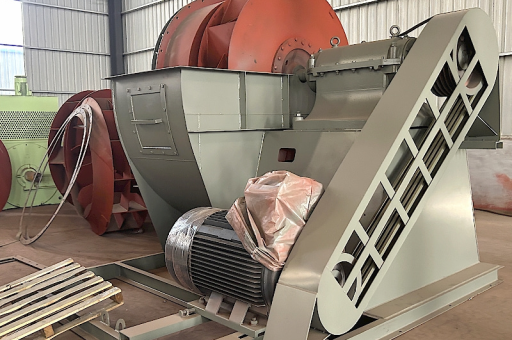
It appears you are looking for a highly efficient, high-pressure centrifugal fan made of stainless steel. This type of equipment is a specialized piece of industrial machinery used for moving air or gases against significant resistance (high static pressure) in corrosive or hygienic environments.
Here is a detailed breakdown of what this product entails, its key features, typical applications, and how to specify one.
What is it?
A High-Pressure Centrifugal Fan uses a rotating impeller to increase the velocity of air. The air enters axially and is expelled radially, creating pressure. "High Pressure" typically refers to static pressures above 2,000 Pa (8 in w.g.) and up to 15,000+ Pa (60+ in w.g.) depending on the design.
The Stainless Steel construction (usually 304 or 316L) provides excellent corrosion resistance, making it suitable for:
- Wet or humid environments.
- Handling corrosive fumes, vapors, or gases.
- Applications requiring high hygiene standards (e.g., food processing).
Key Features of an Efficient Stainless Steel High-Pressure Fan
-
Material (SS 304 vs. SS 316L):
- SS304: Good for general corrosion resistance (water, mild acids, food processing).
- SS316L: Superior resistance to chlorides, strong acids, and saltwater (marine, chemical plants).
-
Impeller Design (for High Pressure & Efficiency):
- Backward-Curved / Backward-Inclined Blades: The most efficient design for high-pressure applications. They offer non-overloading power characteristics (motor won't burn out if airflow is restricted).
- Airfoil Blades: Hollow, aerodynamic blade shape. The most efficient, but more expensive to manufacture in stainless steel.
- Radial Blades (Paddlewheel): For very high pressure or handling sticky materials, but less efficient.
-
Housing & Construction:
- Scroll Design: Optimized volute shape to convert velocity energy into pressure energy with minimal loss.
- Welded Construction: Continuous, full-penetration welds are essential for strength and leak-tightness.
- Reinforced Base & Inlet Cone: A bell-mouth inlet cone ensures smooth airflow into the impeller eye, reducing turbulence and noise.
-
Drive System:
- Direct Drive (D-Line): Impeller mounted directly on the motor shaft. Most efficient, compact, and requires no belt maintenance. Used when RPM requirements align with standard motor speeds.
- Belt Drive (B-Line): Allows for precise speed adjustment (RPM) to dial in the exact required pressure and flow. Better for variable operating conditions.
- Variable Frequency Drive (VFD): Highly recommended for maximizing efficiency. Allows the fan to run at the exact speed needed for the process, saving significant energy.
Typical Applications
- Pharmaceuticals: Exhaust for tablet coating, powder handling, cleanroom ventilation.
- Chemical Processing: Moving corrosive vapors from scrubbers, reactors, and storage tanks.
- Food & Beverage: Exhaust for ovens, fryers, and dryers; dust collection in grain processing.
- Wastewater Treatment: Air supply for aeration basins (corrosion-resistant coating or SS is mandatory).
- Power Generation: Induced draft fans in biomass plants handling corrosive flue gases.
- Marine & Offshore: Ventilation of engine rooms, pump rooms, and cargo holds.
How to Specify & Select One
To find the right fan, you need to provide these parameters to a manufacturer:
- Required Airflow (CFM or m³/hr): How much air needs to be moved.
- Required Static Pressure (in. w.g. or Pa): The resistance the fan must overcome (ductwork, filters, scrubbers).
- Air/Gas Temperature: Standard (up to 140°F / 60°C) or high-temperature (up to 600°F / 315°C) construction.
- Gas Composition: Is the air clean, or does it contain moisture, dust, or corrosive chemicals? This dictates SS grade (304 vs 316L).
- Mounting Location: Indoor or outdoor? (Need a weather cover? Spark-resistant construction?)
- Motor & Power Supply: Voltage (e.g., 460V, 3-phase, 60Hz) and desired enclosure (TEFC, Explosion-Proof).
Example: A Leading Manufacturer
The New York Blower Company (NYB) is a premier US manufacturer of high-quality, engineered fans. They offer a line like the DH (Double Width, Double Inlet) High Pressure Fan which can be constructed in Stainless Steel. Their General Industrial Fans and High Pressure Fans are known for efficiency and durability.
Other top global brands include:
- Howden
- Cincinnati Fan
- Chicago Blower
- Greenheck (for commercial/light industrial)
Key Considerations & Warnings
- Cost: Stainless steel fans are significantly more expensive than carbon steel (2x-5x). Ensure the corrosion environment truly warrants the investment.
- Spark Resistance: If handling flammable gases/vapors, you MUST specify spark-resistant construction (including an aluminum or non-ferrous impeller and a conductive shaft seal). Even in SS, the impeller may need to be a different alloy for safety.
- Fabrication Quality: Not all cheap imports are created equal. Look for manufacturers who use inert gas (TIG) welding on the impeller blades and housing joints to prevent weld decay and crevice corrosion.
- Noise: High-pressure fans are inherently loud. Always consider a sound attenuator (silencer) on the inlet and/or outlet, especially for indoor installations.
In summary: You are looking for a premium, industrial-grade fan. For the best balance of efficiency, pressure capability, and corrosion resistance, prioritize backward-curved impeller fans in 316L stainless steel, specified by CFM and static pressure from an established manufacturer like NYB or Cincinnati Fan.





