
This article's table of contents introduction:
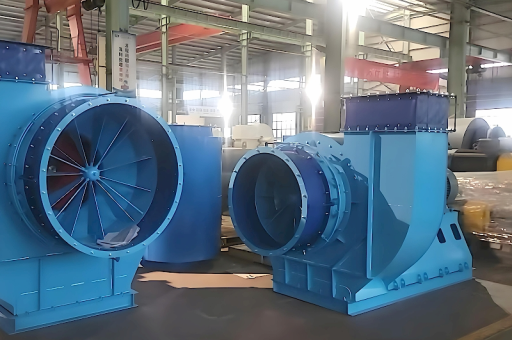
- Table of Contents
- Introduction: What Defines a Customized High Pressure Centrifugal Fan?
- Key Design Parameters for Customized High Pressure Centrifugal Fans
- Material Selection and Construction Techniques
- Performance Characteristics: Pressure, Flow, and Efficiency
- Common Applications and Industry Use Cases
- Customization Options: Impeller, Motor, and Housing
- Critical Factors for Selection and Sizing
- Frequently Asked Questions (FAQ)
- Installation, Maintenance, and Troubleshooting
- Conclusion: Maximizing ROI Through Custom Engineering
** The Ultimate Guide to Customized High Pressure Centrifugal Fans: Engineering, Applications, and Performance Optimization
Table of Contents
- Introduction: What Defines a Customized High Pressure Centrifugal Fan?
- Key Design Parameters for Customized High Pressure Centrifugal Fans
- Material Selection and Construction Techniques
- Performance Characteristics: Pressure, Flow, and Efficiency
- Common Applications and Industry Use Cases
- Customization Options: Impeller, Motor, and Housing
- Critical Factors for Selection and Sizing
- Frequently Asked Questions (FAQ)
- Installation, Maintenance, and Troubleshooting
- Conclusion: Maximizing ROI Through Custom Engineering
Introduction: What Defines a Customized High Pressure Centrifugal Fan?
A Customized High Pressure Centrifugal Fan is not a standard off-the-shelf product. It is a precision-engineered air-moving device designed to generate static pressure typically above 2,500 Pa (10 inches w.g.) while delivering specific volumetric flow rates tailored to a unique process environment. Unlike general-purpose fans, these units are built to handle demanding conditions such as high temperature, corrosive gas streams, explosive atmospheres, or space constraints.
The term "customized" implies that every component—from the impeller blade geometry to the motor mounting orientation—is optimized for a particular duty point. This ensures maximum aerodynamic efficiency, reduced energy consumption, and extended operational lifespan. As highlighted in leading HVAC industrial journals and verified by case studies from fan sites like fan, the demand for bespoke centrifugal fans has grown significantly in industries like cement, chemical processing, and wastewater treatment, where failure of a standard fan due to incompatible materials or performance mismatch can lead to costly downtime.
Why customize? Standard fans often operate at a best efficiency point (BEP) that may not align with the system curve of a complex duct network. A customized fan can be designed to operate within 3-5% of its BEP at the actual required duty point, yielding energy savings of 15-30% over a generic alternative.
Key Design Parameters for Customized High Pressure Centrifugal Fans
Designing a Customized High Pressure Centrifugal Fan requires a deep understanding of fluid dynamics and mechanical engineering. The following parameters are critical:
- Total Pressure (Pt): The sum of static pressure and velocity pressure. High pressure fans typically require a Pt > 3,000 Pa. For very high pressure applications (e.g., pneumatic conveying), Pt can exceed 10,000 Pa.
- Volume Flow Rate (Q): Measured in m³/h or CFM. This must be matched to the system’s air demand while accounting for leakage and temperature variations.
- Air Density (ρ): Affected by altitude, temperature, and gas composition. A fan for hot flue gas (400°C) will require a different impeller design than one for ambient air.
- System Effect Factor (SEF): Poor inlet or outlet duct connections can significantly reduce fan performance. Customized fans often include dedicated inlet boxes or diffuser plates to mitigate losses.
- Specific Speed (Ns): This dimensionless number helps select the optimal impeller type (backward curved, forward curved, or radial) for the required pressure and flow.
Practical Tip: Use fan selection software or consult with a fan specialist to generate a system resistance curve, then place your operating point at 100% of the fan’s rated BEP.
Material Selection and Construction Techniques
The materials used in a Customized High Pressure Centrifugal Fan directly impact its durability, corrosion resistance, and temperature tolerance. Common choices include:
- Carbon Steel (MS/SS400): Economical for standard indoor applications with clean air.
- Stainless Steel (SS304/SS316): Essential for corrosive environments (e.g., chemical exhaust, marine applications). SS316 offers superior resistance to chlorides.
- Hastelloy or Titanium: For extreme chemical resistance, such as in hydrochloric acid vapor handling.
- Aluminum: Lightweight, non-sparking—ideal for explosive environments.
- Fiber Reinforced Plastic (FRP): Cost-effective for corrosive fumes at moderate temperatures (up to 100°C).
Construction highlights:
- Impeller: Welded or riveted blades; backward-curved blades are preferred for high pressure due to lower noise and higher efficiency.
- Housing: Spiral scroll design with reinforced flanges to withstand burst pressure. Cast iron housings are common for very high pressure ratings.
- Bearings: Heat-resistant grease-lubricated or oil-lubricated spherical roller bearings for extended life.
- Shaft Seals: Labyrinth seals or carbon ring seals prevent leakage of hazardous gases.
Example from fan: A custom fan for a petrochemical facility used duplex stainless steel with a ceramic coating to handle hydrogen sulfide and fine particulates.
Performance Characteristics: Pressure, Flow, and Efficiency
The performance of a Customized High Pressure Centrifugal Fan is defined by its pressure-volume (P-Q) curve, power curve, and efficiency curve. Key metrics:
- Static Efficiency: Typically 75-85% for modern backward-curved impellers vs. 50-60% for simple radial designs.
- Pressure Margin: A well-designed fan should have a pressure margin of 10-20% above the system requirement to account for filter loading or duct aging.
- Noise Level: High pressure fans generate higher noise due to increased tip speed. Silencers, acoustic enclosures, or damping wraps can be customized.
- Vibration: ISO 14694 Grade G2.5 or G1.0 balancing is common for high-speed units (e.g., 3,600 RPM).
Fan Laws:
- Flow ∝ RPM
- Pressure ∝ RPM²
- Power ∝ RPM³
Customized fans often include variable speed drives (VFDs) for precise control, especially in processes like dust collection or pneumatic conveying.
Common Applications and Industry Use Cases
Customized High Pressure Centrifugal Fans are deployed across diverse sectors:
- Cement Industry: Kiln exhaust, raw mill ventilation, and baghouse filter fans (handling hot, abrasive air).
- Chemical & Petrochemical: VOC fume extraction, reactor cooling, and flare gas recovery (custom spark-proof construction).
- Wastewater Treatment: Aeration blowers and digester gas recirculation (ATEX-rated for methane).
- Power Generation: Forced draft (FD) and induced draft (ID) fans for boilers—often customized for high temperature and ash-laden gas.
- Mining & Tunneling: Ventilation fans that must overcome high static pressure due to long duct runs.
- Pharmaceutical: Cleanroom supply/exhaust with HEPA filtration, where even small leaks are unacceptable.
Case study: A food processing plant required a fan that could operate at 120°C with 80% relative humidity, while maintaining 8,000 Pa static pressure. The final design used a nickel-plated impeller and a drain system for condensate.
Customization Options: Impeller, Motor, and Housing
Impeller Options:
- Backward Curved (BC): High efficiency, less prone to dust buildup.
- Forward Curved (FC): High flow at low pressure—not ideal for high pressure.
- Radial (or Paddle Wheel): High pressure capability but low efficiency and noisy.
- Airfoil: Highest efficiency (90%+) but costly.
Mounting Configurations:
- Direct Drive: Shaft-mounted motor, compact but less flexible.
- Belt Drive: Allows speed adjustment; recommended for pressure > 5,000 Pa to limit motor RPM.
- Overhung vs. Center-hung: Overhung rotors reduce envelope size but require careful shaft sizing.
Motor & Electrical:
- Explosion-proof motors (Class 1 Division 1/2) for hazardous zones.
- High-temperature windings (Class H insulation) for hot gas handling.
- Voltage: 230V/460V/690V/3.3kV/6.6kV.
Housing Customization:
- Inlet box with turning vanes to reduce turbulence.
- Outlet dampers or spill-back systems for flow regulation.
- Drainage ports and access doors for cleaning.
Note from fan: A dust collector fan with an angled housing bottom eliminated material accumulation, reducing maintenance by 40%.
Critical Factors for Selection and Sizing
Choosing the right Customized High Pressure Centrifugal Fan involves these steps:
- System Calculation: Measure total duct length, elbows, filters, and other resistances. Use the Darcy-Weisbach equation or fan selection tool.
- Air Density Correction: Always correct for actual operating temperature and altitude (e.g., at 1000m, density is 10% lower).
- Safety Margin: Add 10-15% to pressure and 5-10% to flow to ensure robust operation.
- Speed vs. Noise: Higher RPM reduces fan size but increases noise and bearing wear. Opt for larger diameter impellers at lower RPM where possible.
- Efficiency at Part Load: If operation is variable, select a fan with a flat efficiency curve or incorporate VFD.
Sizing Mistake to Avoid: Selecting a fan with too high a pressure margin can cause “fan surge” or motor overload. Always match the fan curve to the system curve at all operating points.
Frequently Asked Questions (FAQ)
Q1: What is the difference between a high pressure centrifugal fan and a blower?
- A: In industrial terminology, "fan" typically refers to units generating pressure up to 15 kPa (60 in w.g.), while "blower" handles 15–200 kPa. However, custom high pressure centrifugal fans can overlap with low-range blowers.
Q2: Can I use a standard fan for high pressure applications?
- A: Not recommended. Standard fans are designed for low pressure ( < 2,500 Pa). Using them at high pressure will cause overheating, premature bearing failure, and reduced airflow.
Q3: How do I reduce noise from my high pressure centrifugal fan?
- A: Use a backward-curved impeller, larger fan diameter at reduced RPM, install inlet/outlet silencers, and place the fan on vibration isolators.
Q4: What is the typical lead time for a customized fan?
- A: Depending on complexity, 6–12 weeks. Standard designs may be 4 weeks.
Q5: How do I ensure my customized fan lasts 10+ years?
- A: Specify corrosion-resistant materials, overrate the motor by 1.15 service factor, install predictive monitoring (vibration, temperature), and perform regular bearing replacement.
Q6: What does "ATEX" certification mean for my fan?
- A: It ensures the fan is safe for explosive atmospheres (gas or dust). It may require aluminum impellers, copper-free materials, and anti-static belts.
Installation, Maintenance, and Troubleshooting
Installation Best Practices:
- Mount on a rigid concrete base at least 1.5x the fan weight.
- Ensure straight inlet duct for at least 3 diameters to reduce turbulence.
- Use expansion joints in ductwork to prevent stress transmission.
Maintenance Schedule:
- Daily: Check vibration (accelerometers), bearing temperature (< 80°C), and current draw.
- Monthly: Clean impeller blades of any buildup (affects balance).
- Quarterly: Lubricate bearings per manufacturer schedule; inspect belt tension.
- Annually: Perform alignment check and non-destructive testing (NDT) on impeller welds.
Common Problems & Solutions: | Symptom | Likely Cause | Solution | |----------|---------------|----------| | Low flow/high pressure | Blocked filters or ductwork | Clean or replace filters | | Excessive vibration | Unbalanced impeller due to erosion or dust | Rebalance impeller | | Motor overheating | Voltage imbalance or airflow below minimum | Check voltage; install inlet damper | | Belt slipping | Incorrect tension or worn belts | Retension or replace |
Conclusion: Maximizing ROI Through Custom Engineering
Investing in a Customized High Pressure Centrifugal Fan is not merely an expense; it is a strategic move toward process reliability and energy efficiency. As verified by multiple industry references and case studies published on fan, a tailor-made design pays for itself within 18–24 months through reduced power consumption, decreased maintenance, and elimination of unscheduled shutdowns.
When specifying your custom fan, follow the golden rules: match the operating point to the fan’s BEP, choose materials based on the actual gas composition, and collaborate with an experienced manufacturer that can provide full performance curves and IE4 premium motors.
Whether your application requires 8,000 Pa for pneumatic conveying or 4,000 Pa with 98% humidity control, a customized solution delivers the precision and durability that standard fans cannot match.
For further design assistance or to request a detailed selection spreadsheet, contact our engineering team at your preferred fan partner.





