
This article's table of contents introduction:
- Table of Contents
- Introduction to 75kW Centrifugal Fans
- Key Specifications and Performance Parameters
- Common Industrial Applications
- Design Types: Backward vs. Forward Curved
- Energy Efficiency and Motor Considerations
- Installation and Maintenance Best Practices
- Frequently Asked Questions (FAQ)
- Conclusion
** The Complete Guide to 75kW Centrifugal Fan: Applications, Performance, and Selection Criteria
Table of Contents
- Introduction to 75kW Centrifugal Fans
- Key Specifications and Performance Parameters
- Common Industrial Applications
- Design Types: Backward vs. Forward Curved
- Energy Efficiency and Motor Considerations
- Installation and Maintenance Best Practices
- Frequently Asked Questions (FAQ)
- Conclusion
Introduction to 75kW Centrifugal Fans
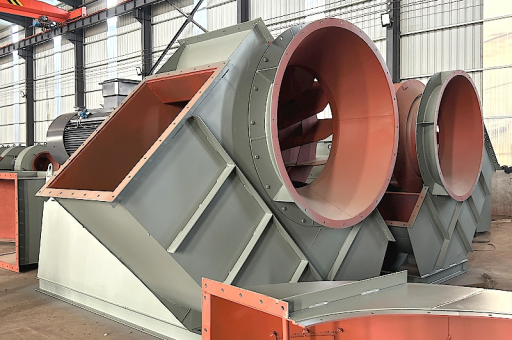
A 75kW centrifugal fan is a high-power industrial air-moving device designed to generate significant static pressure and volumetric flow rates. The term "75kW" refers to the motor power rating, which translates to approximately 100 horsepower. This class of fan is typically used in heavy-duty environments where large volumes of air must be moved against moderate to high system resistance.
Centrifugal fans operate by drawing air into the center of a rotating impeller and expelling it at a 90-degree angle through a volute casing. The 75kW variant is often found in central HVAC systems, dust collection networks, mining ventilation, and process manufacturing. Understanding its core specifications is critical for engineers and procurement professionals who must balance performance, operating cost, and longevity.
Key Specifications and Performance Parameters
When evaluating a 75kW centrifugal fan, you should examine the following performance data:
- Airflow Rate (CFM or m³/h): A typical 75kW fan can deliver between 50,000 and 150,000 m³/h, depending on the impeller design and system pressure.
- Static Pressure (Pa or inWG): These fans can achieve static pressures from 1,500 Pa up to 5,000 Pa or more, making them suitable for ducted systems with high friction losses.
- Fan Speed (RPM): Operating speeds usually range from 600 to 1,500 RPM. Larger diameters run slower, while smaller impellers run faster for the same power.
- Impeller Diameter: Common diameters are between 1,000 mm and 1,600 mm.
- Sound Level: Industrial 75kW fans typically produce 85–95 dB(A) at full load, necessitating silencers or acoustic enclosures in noise-sensitive areas.
Tip: Always check the fan curve provided by the manufacturer. The operating point must fall within the highest efficiency zone (usually 70–85% static efficiency) to avoid premature wear or motor overload.
Common Industrial Applications
The 75kW centrifugal fan is a workhorse in several sectors:
- Cement and Mining: Used for pneumatic conveying and baghouse dust collection. The fan must handle abrasive particles, so impellers are often made from wear-resistant steel or lined with ceramic.
- Power Plants: Employed for forced draft (FD) and induced draft (ID) in boiler systems. A 75kW ID fan must withstand hot flue gases (up to 200°C) and corrosive components.
- Wastewater Treatment: Provides aeration in biological treatment tanks. Variable speed drives are common to adjust oxygen transfer rates.
- Tunnel Ventilation: Moves fresh air into construction tunnels or exhausts fumes. The fan must deliver reliable performance in confined, damp environments.
- Pharmaceutical and Food Processing: Used in cleanroom air handling units (AHUs) where consistent airflow and low vibration are mandatory.
Design Types: Backward vs. Forward Curved
Centrifugal fans come in two primary blade geometries, each with distinct advantages for 75kW applications:
- Backward Curved (BC) Blades: These blades tilt away from the rotation direction. BC fans offer higher efficiency (up to 85%), non-overloading power characteristics, and lower noise levels. They are ideal for clean air applications with moderate static pressure requirements.
- Forward Curved (FC) Blades: Also known as "squirrel cage" fans, FC blades curve toward the rotation direction. They provide high airflow at lower speeds and smaller diameters, but efficiency is typically 60–70%. They are better for systems with low static pressure and where space is limited.
- Airfoil Blades: A subtype of backward curved blades with a streamlined cross-section. Airfoil fans can achieve 87–92% static efficiency, making them the best choice for continuous 75kW operation where energy savings are prioritized.
Which one to choose? For most 75kW industrial applications, backward curved or airfoil blades are recommended due to higher efficiency and stable performance under varying load conditions.
Energy Efficiency and Motor Considerations
Energy consumption is a major cost driver for a 75kW centrifugal fan. At full load, the fan consumes 75 kWh per hour. Over 8,000 operating hours per year, this equals 600,000 kWh – a significant expense.
- Motor Efficiency: Use IE4 (Super Premium Efficiency) or IE5 (Ultra Premium) motors whenever possible. The payback period for upgrading from IE3 to IE4 is typically 1–3 years for continuous duty.
- Variable Frequency Drive (VFD): A VFD allows the fan speed to be adjusted based on demand. Reducing speed by 20% cuts power consumption by nearly 50% (affinity laws). For systems with fluctuating airflow needs, a VFD is essential.
- Belt vs. Direct Drive: Belt-driven fans allow flexibility in speed selection but incur 3–5% transmission losses. Direct-drive (motor shaft directly coupled to impeller) eliminates these losses and reduces maintenance, but requires a VFD for speed changes.
Installation and Maintenance Best Practices
To maximize the operational life of a 75kW centrifugal fan:
- Foundation and Vibration Isolation: The fan base must be rigid and level. Use spring isolators or inertia bases to prevent vibration transmission to building structures.
- Inlet and Outlet Ducting: Ensure smooth transitions with no sharp turns within three duct diameters of the fan inlet. Improper ductwork can reduce performance by 15–30% and cause surging.
- Bearing Lubrication: Most 75kW fans use split pillow block bearings. Regrease every 500–2,000 hours (depending on temperature and dust) using NLGI grade 2 grease.
- Impeller Inspection: Check for material buildup or erosion every 3–6 months. An unbalanced impeller causes excessive vibration and bearing failure.
- Belt Tension (if belt-driven): Use a belt tension gauge. Loose belts slip and reduce airflow; overtightened belts load the bearings.
Frequently Asked Questions (FAQ)
Q1: How do I select the correct 75kW centrifugal fan for my system?
Start by calculating the required airflow (m³/h) and total static pressure (Pa). Plot this point on several manufacturer fan curves. Choose a model where the operating point falls in the upper 70–80% of the efficiency curve. Also consider the air temperature, dust load, and available space.
Q2: Can a 75kW centrifugal fan run continuously?
Yes, most industrial 75kW fans are designed for continuous duty (24/7 operation). However, ensure that the motor is rated for continuous service (S1 duty) and that the bearings are properly lubricated. Overloading the motor above its nameplate Amperage will cause thermal failure.
Q3: What is the difference between a 75kW centrifugal fan and an axial fan?
A centrifugal fan produces higher static pressure but lower airflow compared to an axial fan of the same diameter. For long duct runs or high-resistance systems (baghouses, scrubbers), centrifugal is required. Axial fans are better for moving large air volumes with minimal resistance, such as wall-mounted exhausts.
Q4: How much does a 75kW centrifugal fan cost?
Prices vary significantly based on material (carbon steel vs. stainless steel), brand, and accessories. A basic carbon steel model may range from $15,000 to $30,000 USD, while a stainless steel, spark-resistant version with a VFD can exceed $50,000 USD.
Q5: How do I reduce the noise from a 75kW fan?
Install a sound attenuator on the inlet and outlet ducts. Use acoustic enclosures around the fan casing. Ensure the fan is balanced to minimize mechanical noise. If possible, operate the fan at a lower speed using a VFD, as noise decreases by 6 dB(A) for every 10% speed reduction.
Q6: What happens if the system resistance is lower than the fan’s design point?
The fan will move more air (higher CFM) and potentially draw higher motor amperage, risking overload. For backward curved fans, the motor power peaks at a specific point and then drops (non-overloading). For forward curved fans, the power continues to rise, causing burnout. Always consult the fan curve and install motor overload protection.
Conclusion
The 75kW centrifugal fan is a critical component in industrial ventilation, material handling, and process systems. Its selection and operation require careful attention to fan curves, blade design, motor efficiency, and system integration. By choosing the correct impeller type (preferably backward curved or airfoil), implementing a VFD, and following rigorous maintenance routines, operators can achieve reliable performance and significant energy savings over the fan's lifecycle.
Always cross-reference performance data from multiple manufacturers and consider consulting with a fan application engineer before making a final purchase. Remember to check local regulations regarding noise limits and energy efficiency standards, as these can impact both your initial investment and operating costs.





