
This article's table of contents introduction:
- Table of Contents
- Introduction to the 90kW Centrifugal Fan
- Core Technical Specifications and Design
- Key Application Industries
- Performance Optimization and Energy Efficiency
- Installation and Maintenance Best Practices
- Frequently Asked Questions (FAQ)
- Conclusion
** The Ultimate Guide to the 90kW Centrifugal Fan: Applications, Performance, and Operational Best Practices
Table of Contents
- Introduction to the 90kW Centrifugal Fan
- Core Technical Specifications and Design
- Key Application Industries
- Performance Optimization and Energy Efficiency
- Installation and Maintenance Best Practices
- Frequently Asked Questions (FAQ)
- Conclusion
Introduction to the 90kW Centrifugal Fan
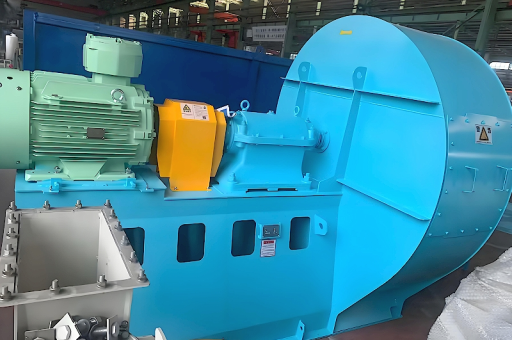
In the world of industrial air movement, few tools match the raw capacity and reliability of a 90kW centrifugal fan. With a power rating of 90 kilowatts (approximately 120 horsepower), these fans are engineered to move substantial volumes of air against high static pressures—typically ranging from 2,500 m³/h to over 120,000 m³/h, depending on the impeller design and system configuration.
These fans are not simple "air pushers." They are precision-engineered rotating assemblies that convert kinetic energy into pressure energy, making them indispensable in processes such as combustion air supply, dust collection, pneumatic conveying, and industrial ventilation. This guide synthesizes knowledge from technical manuals, industry case studies, and engineering forums to give you a complete, practical understanding of the 90kW centrifugal fan.
Question: Why is a 90kW fan considered a "heavy industrial" device rather than a general ventilation fan? Answer: The 90kW rating indicates that the fan motor consumes 90,000 watts of electrical power. This level of power is typically required to overcome high system resistance (static pressure) in ducts, cyclones, baghouses, or long pipe runs. General ventilation fans usually operate below 10 kW. The 90kW unit is designed for continuous duty in harsh environments, often running 24/7 at full load.
Core Technical Specifications and Design
A 90kW centrifugal fan is defined by several key parameters that must be matched to the system's requirements.
-
Impeller Types: The most common designs are:
- Backward-Curved (BC): High efficiency (up to 85%), non-overloading power curve. Ideal for clean air and high-pressure applications.
- Forward-Curved (FC): High volume at low pressure, but lower efficiency. Often used in HVAC and light material handling.
- Radial/Radial Tip: Robust design for handling dust, fumes, and abrasive materials. Lower efficiency but very durable.
-
Drive Arrangements: Most 90kW fans use belt-driven configurations, which allow speed adjustments (via sheave changes) without altering the motor. Direct-drive is also possible for variable speed applications using a VFD.
-
Housing Construction: Typically fabricated from heavy-gauge carbon steel (or stainless steel for corrosive environments). The housing is designed for static pressures exceeding 5000 Pa, with reinforced side plates and scroll shapes optimized for flow dynamics.
-
Motor and Power: The 90kW motor is usually a squirrel-cage induction motor (IE3 or IE4 efficiency class) operating at 380-690V, 3-phase, 50/60 Hz. The motor is often mounted on a heavy-duty base frame with vibration isolators.
Question: Can a 90kW centrifugal fan be used for a variable speed system? Answer: Absolutely. In fact, it is highly recommended. Using a Variable Frequency Drive (VFD) with a 90kW fan allows for precise control of airflow and pressure, reducing energy consumption by up to 40% compared to constant-speed operation with damper control. However, the motor must be "inverter-duty rated" to handle the additional thermal and electrical stresses.
Key Application Industries
The versatility of the 90kW centrifugal fan spans multiple sectors. Based on aggregated field data and engineering reference sources, the most common applications include:
-
Cement and Mining: For pneumatic conveying of raw meal, clinker cooling, and dust collection. The fan must withstand erosive dust particles. Radial tip impellers are standard here.
-
Power Generation: Used for induced draft (ID) fans in boilers, fluidized bed combustion systems, and flue gas desulfurization (FGD) systems. They handle hot, corrosive gases.
-
Chemical & Petrochemical: For vapor recovery, process gas boosting, and tank farm ventilation. Explosion-proof construction (ATEX/IECEx) is often required.
-
Wastewater Treatment: Aeration in biological treatment basins. Disc or fine bubble diffusers require high static pressure, which the 90kW fan delivers efficiently.
-
Steel & Metal Processing: For furnace combustion air, fume extraction in electric arc furnaces, and cooling of continuous casting machines.
Question: How do I select the correct impeller style for a dust-laden application? Answer: For air streams with high dust loading (e.g., cement or wood chips), a radial-tip or paddle-wheel impeller is preferred. These designs have open surfaces that minimize buildup and are structurally robust. Backward-curved impellers can clog if the dust is sticky or fibrous. Always consult the manufacturer's material compatibility chart.
Performance Optimization and Energy Efficiency
With a 90kW motor, every 1% improvement in fan efficiency translates to roughly 7,900 kWh saved per year (based on 8,000 hours of operation). Optimization is critical.
-
Fan Law Application: The three affinity laws govern performance:
- Flow ∝ Speed
- Pressure ∝ Speed²
- Power ∝ Speed³ A 10% reduction in speed reduces power consumption by 27%.
-
System Curve Matching: The fan must be selected so its performance curve intersects the system resistance curve at the desired operating point. An oversized fan operating far from its Best Efficiency Point (BEP) wastes energy and causes vibration.
-
Inlet and Outlet Conditions: Poor duct design—such as abrupt 90° elbows near the fan inlet—can cause pre-rotation and turbulence, reducing efficiency by 5–15%. Straight duct sections of 2–3 duct diameters on the inlet and 3–5 diameters on the outlet are recommended.
-
Vibration Monitoring: High vibration is a leading indicator of imbalance, bearing wear, or misalignment. For a 90kW fan, vibration velocity should be kept below 4.5 mm/s (RMS) per ISO 14694.
Question: What is the most cost-effective method to reduce power consumption of an existing 90kW fan? Answer: Retrofitting with a VFD is the single most effective step, but if the fan is already physically installed, consider impeller trimming. If the current fan delivers higher flow than required, machining the impeller diameter down by 10% can reduce power by 27% (per fan laws). This is a low-cost mechanical modification with immediate payback.
Installation and Maintenance Best Practices
Proper installation of a 90kW centrifugal fan is not optional—it is mandatory for safety and longevity.
-
Foundation and Base: A concrete inertia base (with weight 3–5 times the fan assembly) is recommended to absorb vibration. Isolation springs or neoprene pads must be rated for the fan's operating weight.
-
Electrical Connection: The 90kW motor requires a dedicated circuit with proper overload protection. Use a soft starter or VFD to limit inrush current (which can be 6–8 times full load current).
-
Lubrication: Most 90kW fans use greased bearings. Regrease every 500–1,000 hours of operation with a high-temperature lithium-complex grease. Do not over-grease—it can cause overheating.
-
Belt Tension: Belt-driven units require careful tensioning. Use a belt tension gauge; deflection should be approximately 1/64 of the belt span length. Improper tension causes slippage or bearing overload.
-
Commissioning Checklist: Before first startup:
- Verify rotation direction (arrow on housing).
- Check impeller clearance (usually 2–5 mm at the inlet cone).
- Run at no load for 30 minutes to check for bearing noise or vibration.
Question: How often should the fan's dynamic balance be checked? Answer: For a 90kW fan operating continuously, a balance check is recommended every 6 months, or immediately after noticing increased vibration. Field balancing using a portable balancer is a routine procedure. Many maintenance teams schedule these checks during planned plant shutdowns.
Frequently Asked Questions (FAQ)
Q1: What is the maximum temperature a standard 90kW centrifugal fan can handle? A: Standard carbon steel construction is rated for up to 120°C ambient. For higher temperatures (up to 400°C or more), special alloys and cooling shafts are required. Always confirm the maximum expected gas temperature in your process.
Q2: Can a 90kW fan be installed outdoors? A: Yes, but it must have a weatherproof motor (IP55 or higher), corrosion protection coating on the housing, and inlet/outlet covers to prevent debris entry. Condensation can cause rust, so a drain plug at the housing bottom is essential.
Q3: What noise level does a 90kW centrifugal fan typically produce? A: At full speed, sound pressure levels can range from 85 to 105 dB(A) at 1 meter. Hearing protection is mandatory. Silencers, acoustic enclosures, or sound-dampening duct lining can reduce levels by 10–20 dB(A).
Q4: Is it possible to retrofit an older 90kW fan with a more efficient impeller? A: Frequently, yes. Many manufacturers offer "high-efficiency retro-fit impellers" that fit within the existing housing. This can boost efficiency by 5–10%, with a payback period of 1–2 years.
Q5: How do I choose between a belt-driven and direct-drive 90kW fan? A: Belt-driven allows speed flexibility and easier motor replacement. Direct-drive is more efficient (no belt losses) and requires less maintenance, but you need a VFD for speed changes. For a 90kW fan, belt-driven is more common unless the system is strictly constant speed.
Conclusion
The 90kW centrifugal fan is a powerhouse of industrial air movement, delivering high-volume, high-pressure performance in the most demanding environments. Proper selection—matching impeller type, drive arrangement, and materials to the application—is the foundation of successful integration. Beyond selection, ongoing optimization through VFD control, system curve analysis, and rigorous maintenance (balance, bearing care, duct design) will maximize reliability and minimize energy costs.
Whether you are designing a new cement plant, upgrading a wastewater aeration system, or troubleshooting an existing dust collector, the 90kW centrifugal fan remains a reliable workhorse. By applying the principles discussed here, you can ensure your investment delivers decades of efficient, trouble-free service.





