
This article's table of contents introduction:
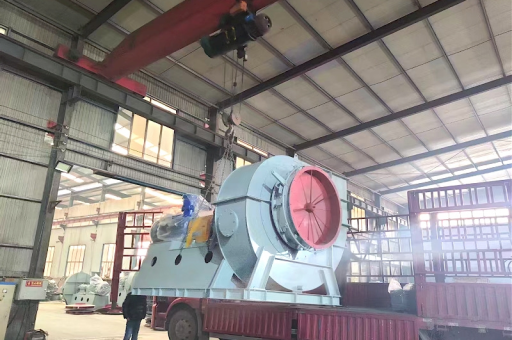
- Introduction: Defining the 200kW Centrifugal Fan
- Core Technical Parameters – Why 200kW Matters
- Primary Industrial Applications
- Aerodynamic Design: Impeller, Housing, and Drive Systems
- Performance Curves, Efficiency, and Power Consumption
- Common Selection Pitfalls and How to Avoid Them
- Maintenance & Lifecycle Considerations
- Frequently Asked Questions (FAQs)
- Conclusion – Choosing the Right Fan for Your Operation
** The Engineering Guide to 200kW Centrifugal Fans: Performance, Applications, and Selection
Table of Contents (TOC)
- Introduction: Defining the 200kW Centrifugal Fan
- Core Technical Parameters – Why 200kW Matters
- Primary Industrial Applications
- Aerodynamic Design: Impeller, Housing, and Drive Systems
- Performance Curves, Efficiency, and Power Consumption
- Common Selection Pitfalls and How to Avoid Them
- Maintenance & Lifecycle Considerations
- Frequently Asked Questions (FAQs)
- Conclusion – Choosing the Right Fan for Your Operation
Introduction: Defining the 200kW Centrifugal Fan
A 200kW centrifugal fan is a high-power industrial air-moving device designed to generate substantial pressure differentials (typically 3,000–15,000 Pa) while moving large volumes of air (50,000–150,000 m³/h, depending on system resistance). The “200kW” rating refers to the nominal motor shaft power required to drive the impeller under design conditions. These fans are not off-the-shelf units; they are engineered solutions for heavy-duty continuous processes such as mine ventilation, cement plant baghouse filtration, steel mill combustion air, and large-scale HVAC systems.
Unlike low-power fans, a 200kW centrifugal fan demands careful system matching: if the ductwork resistance is underestimated by even 10%, the fan may operate far from its Best Efficiency Point (BEP), leading to excessive energy waste or motor failure.
Core Technical Parameters – Why 200kW Matters
The 200kW power class sits in the upper-mid range of industrial centrifugal fans. Key parameters include:
| Parameter | Typical Range for 200kW Fans |
|---|---|
| Airflow (Q) | 80,000 – 150,000 m³/h |
| Static Pressure (Ps) | 4,000 – 12,000 Pa |
| Impeller Diameter | 1,800 – 2,800 mm |
| Speed | 400 – 1,200 RPM (direct drive) |
| Specific Speed (Ns) | 20 – 80 (radial/mixed flow) |
| Noise Level | 85 – 105 dB(A) at 1 m |
At 200kW, the fan typically uses a backward-curved or airfoil blade design for higher efficiency (η > 82%). Radial blade designs (used for dust-laden air) exhibit efficiency closer to 70%, requiring more power for the same duty.
Why 200kW is a threshold: Motors rated above 200kW (especially at 415V or 690V) require soft starters, VFDs, or star-delta switching to limit inrush current. This adds capital cost but enables fine flow control.
Primary Industrial Applications
A 200kW centrifugal fan is commonly found in:
A. Cement Industry: Baghouse Dust Collection
In a cement plant, a single baghouse may require 150,000 m³/h at 6,000 Pa. A 200kW backward-curved fan, running 24/7, consumes roughly 1,750 MWh annually. Replacing standard blades with high-efficiency airfoils can save 5–8% energy, translating to ~$12,000 savings at $0.10/kWh.
B. Steel Mills: Combustion Air Supply
Electric arc furnaces (EAF) require forced combustion air at high pressure (8,000–10,000 Pa). A 200kW fan supplies oxygen-enriched air through lances. Here, the fan must handle gas temperatures up to 150°C, requiring a carbon steel housing with thermal expansion joints.
C. Mine Ventilation: Main Fans
Underground mines use 200kW axial fans for primary ventilation, but centrifugal fans are preferred where space is constrained and high pressure is required for long drifts. A typical 200kW mine fan moves 100,000 m³/h against 5,000 Pa, sufficient for 2–3 km of tunnel.
D. Tunnel Ventilation: Emergency Smoke Extraction
Tunnel fans rated at 200kW must withstand 250°C for 2 hours per EN 12101-3. These are radial-type with belt-driven impellers for speed variation.
Aerodynamic Design: Impeller, Housing, and Drive Systems
Impeller Types:
- Backward-curved (BC): Efficiency 82–88%, self-limiting power curve, suitable for clean air. Preferred for 200kW applications.
- Radial (R): Lower efficiency (65–72%), but handles sticky dust and particles > 50 µm. Used in cement kilns and wood processing.
- Airfoil: Highest efficiency (89%), but sensitive to erosion. Common in HVAC and clean processes.
Housing Design:
For a 200kW fan, the housing must have a reinforced flange to prevent vibration at high pressure. Volute clearance is critical: a design gap of 5–7% of impeller diameter minimizes recirculation losses. A 2,200 mm impeller should have volute clearance of 110–150 mm.
Drive Options:
- Direct drive (motor shaft coupling) eliminates belt losses and reduces maintenance. However, speed is fixed at motor RPM, limiting flexibility.
- Belt drive allows speed changes by altering pulley ratio, enabling the same fan to service different system curves. Belt losses are 2–5%.
Bearings and Shaft:
At 200kW, shaft diameter is typically 80–120 mm. Spherical roller bearings with oil bath lubrication are standard. A shaft deflection limit of 0.05 mm at the impeller is necessary to prevent fatigue failure.
Performance Curves, Efficiency, and Power Consumption
A 200kW fan’s performance curve must be matched to the system curve at the desired flow. Power consumption (P) is given by:
[ P = \frac{Q \times \Delta p}{\eta{fan} \times \eta{motor} \times 1000} ]
Example Calculation:
- Q = 120,000 m³/h = 33.3 m³/s
- Δp = 6,000 Pa
- η_fan = 0.82
- η_motor = 0.95
[ P = \frac{33.3 \times 6000}{0.82 \times 0.95 \times 1000} \approx 256 \text{ kW} ]
Thus, the 200kW motor is undersized—actual power requirement is 256 kW. This is a common error: engineers often select a 200kW fan for 120,000 m³/h at 6,000 Pa without checking the actual shaft power at the duty point. A 250kW or 280kW motor may be required.
Efficiency optimization: To operate near BEP, install a VFD. At 80% speed, power consumption drops to 0.512 of full load (cube law), allowing a 200kW motor to handle reduced flow that would otherwise require 180kW.
Common Selection Pitfalls and How to Avoid Them
Pitfall 1: System Resistance Mismatch
Selecting a 200kW fan for a system curve that requires 8,000 Pa when the fan’s peak efficiency is at 6,000 Pa will cause the motor to overload, potentially tripping thermal protection. Solution: Conduct a full ductwork pressure drop calculation including filters, dampers, and silencers.
Pitfall 2: Ignoring Air Density
A fan rated at 200kW at 20°C and 1.2 kg/m³ will require only ~180kW at 50°C (0.9 kg/m³) but may draw 240kW at 0°C. Solution: Density-correct your power calculation for the worst-case temperature.
Pitfall 3: Oversizing the Motor Without VFD
If the motor is oversized (e.g., 250kW for a 200kW duty), the fan may operate near surge at low flow. Solution: Use a VFD only if flow variation exceeds 30% of design.
Maintenance & Lifecycle Considerations
A properly maintained 200kW centrifugal fan operates for 20–25 years. Critical maintenance tasks:
- Vibration monitoring: ISO 10816-3 limits for a 200kW fan: < 4.5 mm/s RMS for “acceptable.” Above 7.1 mm/s requires immediate investigation (blade fouling or bearing wear).
- Bearing replacement: At 1,200 RPM, grease-lubricated bearings should be replaced every 8,000–12,000 hours. Oil-lubricated types last 15,000–20,000 hours.
- Impeller cleaning: Dust buildup on blades (especially backward-curved) shifts the performance curve left, reducing flow by 5–15%. Wash schedule: every 3 months for dirty processes.
- Balance check: Rebalance after any blade repair. An imbalance of 10 g at 1,000 RPM on a 2,200 mm impeller creates a centrifugal force of ~110 N, causing bearing fatigue.
Frequently Asked Questions (FAQs)
Q1: Can a 200kW centrifugal fan handle explosive gases?
Yes, but it must be ATEX or IECEx certified. The impeller must be non-sparking (aluminum or stainless steel), and the housing must include explosion relief panels.
Q2: How much does a 200kW centrifugal fan weigh?
Typically 3,500–6,000 kg for a complete fan with motor and baseplate. Shipping requires heavy-haul trucks.
Q3: What is the difference between 200kW and 200hp fans?
1 hp = 0.746 kW. A 200 hp fan is ~149 kW. A 200kW fan is equivalent to 268 hp. Ensure you use consistent units for specifications.
Q4: Can I retrofit an existing 160kW system to 200kW?
Only if the motor, electrical cables, switchgear, and ductwork are rated for the increased power. The fan housing may also need stiffening for higher pressure. Always consult the original manufacturer.
Q5: How do I calculate the payback period for a high-efficiency 200kW fan?
Savings = Power reduction (kW) × Hours/year × $/kWh. A 4% efficiency gain (from 82% to 86%) saves 8 kW × 8,000 hrs × $0.10 = $6,400/year. If the premium fan costs $15,000 more, payback is 2.3 years.
Conclusion – Choosing the Right Fan for Your Operation
A 200kW centrifugal fan is a significant capital investment (typically $40,000–$80,000 for the fan alone, plus motor, VFD, and installation). To ensure reliability and ROI:
- Define your system curve accurately—include filter loading changes, duct friction, and altitude effects.
- Select the blade type based on air cleanliness: airfoil for clean, BC for moderate, radial for dirty.
- Use a VFD if flow control >30% is required; consider bypass dampers only for fixed-speed start-up scenarios.
- Specify a motor with 10–15% service factor to handle density variations.
- Install vibration sensors and schedule bearing replacements at half the manufacturer’s recommended interval if the fan runs 24/7.
By following these guidelines, your 200kW centrifugal fan will operate at peak efficiency for decades, delivering lower total cost of ownership and uninterrupted process airflow. For specialized configurations (high temperature, corrosive gases, explosion-proof), contact the fan manufacturer with your fully defined duty point.





