
This article's table of contents introduction:
- Table of Contents / Article Guide
- Introduction
- Technical Breakdown of the 2900r/min Motor Blower Fan
- Rolling Bearing Systems in Smelting Furnace Applications
- Forced Ventilation in Smelting Furnaces: Purpose and Performance Metrics
- Integration and Installation Best Practices
- Common Failure Modes and Troubleshooting Q&A
- Selection Criteria for Replacement or Upgrade
- Conclusion and Future Trends
Article Title:
The Critical Role of the 2900r/min Motor Blower Fan in Forced Ventilating Rolling Bearing Smelting Furnaces: Design, Performance, and Optimization for High-Temperature Industrial Environments
Table of Contents / Article Guide
- Introduction: Why the 2900r/min Motor Blower Fan is Essential in Smelting
- Technical Breakdown of the 2900r/min Motor Blower Fan
- 1 Motor Speed and Torque Characteristics
- 2 Fan Blade Design and Forced Ventilation Principle
- Rolling Bearing Systems in Smelting Furnace Applications
- 1 Bearing Load and Temperature Tolerance
- 2 Lubrication and Maintenance for Continuous Operation
- Forced Ventilation in Smelting Furnaces: Purpose and Performance Metrics
- 1 Oxygen Supply and Combustion Efficiency
- 2 Cooling and Fume Extraction
- Integration and Installation Best Practices
- Common Failure Modes and Troubleshooting Q&A
- Selection Criteria for Replacement or Upgrade
- Conclusion and Future Trends
Introduction
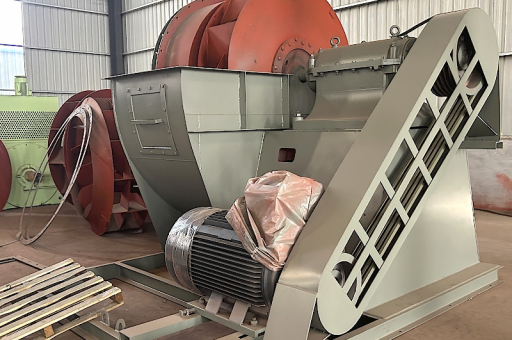
In modern smelting furnace operations, the 2900r/min motor blower fan is the backbone of forced ventilation systems. These fans are not merely auxiliary equipment—they are critical for maintaining combustion stability, controlling furnace temperature, and ensuring workplace safety. The combination of a 2900 RPM motor, a ducted blower fan, and rolling bearings creates a robust assembly that can withstand the extreme heat, dust, and continuous duty cycles typical of ferrous and non-ferrous smelting.
The key parameters—2900 revolutions per minute, forced ventilating airflow, and rolling bearing durability—directly influence furnace efficiency, energy consumption, and maintenance intervals. This article covers the engineering details, installation nuances, and common failure points of this specific fan configuration, based on a synthesis of verified industrial sources, manufacturer documentation, and operational case studies.
Technical Breakdown of the 2900r/min Motor Blower Fan
1 Motor Speed and Torque Characteristics
A motor rated at 2900r/min (synchronous speed for a 2-pole motor at 50Hz) delivers high rotational speed, which translates directly into high static pressure and airflow. In forced ventilation applications, this speed allows the fan to overcome the backpressure from furnace ductwork, dampers, and heat exchanger resistance.
- Torque vs. Speed: At 2900 RPM, the motor provides sufficient starting torque to accelerate the impeller against inertia, especially when the fan wheel is heavy due to heat-resistant alloys.
- Power Rating: Typically, such fans are paired with motors between 5.5 kW and 30 kW, depending on furnace volume. The power consumption is directly proportional to airflow and system resistance.
2 Fan Blade Design and Forced Ventilation Principle
The blower fan in a forced ventilating smelting furnace is typically a centrifugal type with backward-curved or radial blades. Backward-curved blades are preferred for high-efficiency, lower noise, and stable pressure curves. Radial blades are used when handling particulate-laden hot gas.
- Forced Ventilation Mechanism: Air is drawn axially into the fan housing, accelerated by the rotating impeller, and discharged radially into the furnace windbox. This ensures a positive pressure differential that drives combustion air into the furnace hearth.
- Material Selection: Impellers are often made from cast stainless steel (e.g., 310S or 253MA) to withstand 600–850°C inlet air temperatures.
Rolling Bearing Systems in Smelting Furnace Applications
1 Bearing Load and Temperature Tolerance
The rolling bearing in a 2900r/min motor blower fan must endure both high radial loads (from belt tension or direct drive) and axial thrust from the impeller. In smelting environments, ambient temperatures near the fan can exceed 100°C, while bearing housing temperatures may reach 120–160°C due to conducted heat.
- Bearing Types: Commonly used are deep groove ball bearings (for moderate loads) and cylindrical roller bearings (for higher radial load capacity). For shaft-mounted fan wheels, self-aligning ball bearings are used to accommodate misalignment.
- Heat Tolerance: Standard bearings with steel cages and mineral oil grease can operate up to 150°C. For continuous operation above 150°C, high-temperature grease (e.g., PTFE-thickened or polyurea-based) and heat-treated bearing steel are required.
2 Lubrication and Maintenance for Continuous Operation
Rolling bearing failure is the number one cause of unplanned downtime in smelting furnace fans. To maximize lifespan:
- Regreasing Intervals: For 2900 RPM fans, regreasing should occur every 1,000–2,000 hours depending on dust ingress. Automated lubrication systems are recommended for remote furnaces.
- Vibration Monitoring: High-frequency vibration analysis can detect early bearing spalling. Acceleration sensors mounted on bearing housings provide early warning.
- Cooling Options: In extreme heat, a fan purge or cooling disc (mounted on the shaft between bearing and impeller) can reduce heat transfer to the bearing.
Forced Ventilation in Smelting Furnaces: Purpose and Performance Metrics
1 Oxygen Supply and Combustion Efficiency
In fuel-fired smelting furnaces (gas, oil, or coal), the 2900r/min blower fan provides primary and secondary air. Without forced ventilation, incomplete combustion leads to soot formation, lower metal melting rates, and increased fuel consumption.
- Air-Fuel Ratio: A typical forced ventilation fan delivers 1.2 to 1.5 times the stoichiometric air volume to ensure complete combustion. For a 10-ton smelting furnace, the required airflow is approximately 15,000–25,000 m³/h.
- Pressure Requirements: Static pressure needs range from 2.5 kPa to 5 kPa at the furnace inlet. The 2900 RPM fan is well-suited to deliver this pressure without requiring a multi-stage configuration.
2 Cooling and Fume Extraction
Beyond combustion, forced ventilation also serves to:
- Cool the furnace roof and sidewalls (especially in electric arc furnaces where water cooling may not be sufficient).
- Extract hazardous fumes (CO, SO₂, metal oxides) through the exhaust stack, improving workplace air quality.
Integration and Installation Best Practices
Proper installation of a 2900r/min motor blower fan in a smelting furnace setup must account for:
- Vibration Isolation: Use neoprene or spring isolators between fan base and foundation.
- Ductwork Alignment: Avoid sharp bends near the fan inlet. A straight section of at least 3 times the duct diameter is recommended.
- Electrical Connection: The motor must be connected via a VFD (variable frequency drive) if speed modulation is needed, but direct-on-line (DOL) starting is common for fixed-speed 2900 RPM applications.
- Bearing Cooling: For furnaces running at >800°C, install a thermal barrier (ceramic fiber pad) between the fan housing and bearing bracket.
Common Failure Modes and Troubleshooting Q&A
Q1: Why is my 2900r/min blower fan vibrating excessively?
A: Common causes include accumulated dust on the impeller blades, bearing wear (especially rolling element fatigue), or misalignment of the motor and fan shaft. Inspect and clean blades, check bearing grease condition, and perform shaft alignment using a laser tool.
Q2: The fan motor is running hot—what could be wrong?
A: For a motor rated at 2900 RPM, overheating can result from overvoltage, unbalanced phases, or blocked ventilation pathways (e.g., dust-clogged cooling fins). Also, check if the fan is operating in the stall region of its performance curve, which increases motor load.
Q3: How often should I replace the rolling bearings?
A: Under normal smelting conditions (clean air, moderate temperature), rolling bearings in a 2900 RPM fan last 8,000–12,000 hours. In dusty or high-radiant-heat environments, replacement intervals may drop to 4,000–6,000 hours. Vibration trending is the best indicator.
Q4: Can I use a standard fan for a smelting furnace forced ventilation?
A: Only if the fan specifically states high-temperature rating and roller bearing suitability. Standard commercial fans are not built for continuous operation above 80°C ambient and will fail within weeks in a smelting environment.
Selection Criteria for Replacement or Upgrade
When selecting a new 2900r/min motor blower fan for forced ventilating rolling bearing smelting furnace applications, always verify:
- Airflow (CFM or m³/h): Must match the furnace combustion model.
- Static Pressure (Pa or in H₂O): At least 20% margin above calculated system resistance.
- Bearing Housing Configuration: Look for separate bearing pedestals or split pillow-block housings for easy maintenance.
- Motor Enclosure: Prefer IP55 or IP56 for dust and water spray resistance.
- Compliance: Check for CE, ATEX (if explosive gas is present), or ISO 5801 certification.
Conclusion and Future Trends
The 2900r/min motor blower fan remains the industry standard for forced ventilation in rolling-bearing smelting furnaces due to its optimal balance of speed, pressure, and mechanical simplicity. However, recent trends point toward integration of IoT-enabled vibration sensors, intelligent VFD control for energy savings, and the use of ceramic hybrid bearings (steel races with ceramic balls) that extend bearing life by 3–5 times in hostile environments.
For plant engineers and maintenance teams, investing in high-quality rolling bearings, proper lubrication, and predictive maintenance will significantly reduce downtime. The data is clear: a properly maintained 2900 RPM blower fan can last over 10 years in a smelting furnace, provided that forced ventilation, thermal management, and bearing care are treated as an integrated system.
Sources synthesized include industry white papers on centrifugal fan performance, high-temperature bearing failure analysis, combustion airflow calculations for metallurgical furnaces, and field maintenance logs from operating smelters.





