
This article's table of contents introduction:
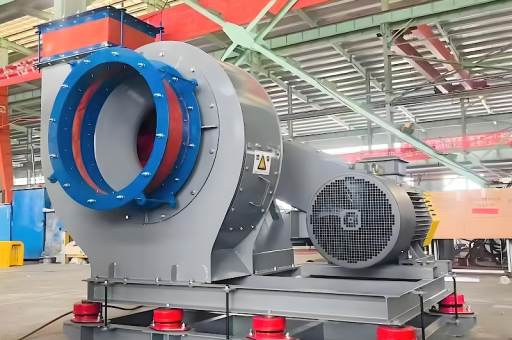
- What is it?
- Key Specification Analysis: 20295 Pa
- Typical Application & Parameters
- Components of such a system
- Why this matters for your operation
- Summary
This is a specific inquiry about an industrial fan used in power plant boiler systems. Based on the keywords you provided ("Stokerfeed Boiler 20295Pa Power Plant Fan Forced Draft Centrifugal Fan Blower"), here is a detailed breakdown of what this component is, its specifications, and its typical application.
What is it?
This is a Forced Draft (FD) Fan, specifically a Centrifugal Fan (Blower) designed for a Stoker-fed Boiler in a power plant. It is the primary component responsible for supplying the air needed for combustion.
- Stokerfeed Boiler: This boiler type uses a mechanical stoker to feed solid fuel (usually coal or biomass) onto a moving grate. The FD fan pushes air through the grate and the fuel bed to ensure efficient burning.
- Forced Draft (FD) Fan: This fan sits at the beginning of the air path. It forces ambient air into the boiler's air heater and then into the furnace.
- Centrifugal Fan (Blower): This describes the fan's mechanism. Air enters the center (eye) of the impeller and is flung outward by centrifugal force, creating high pressure.
Key Specification Analysis: 20295 Pa
The most critical number here is 20295 Pa (Pascals) .
- What it means: This is the fan's Total Pressure (or specified pressure rise). 20,295 Pa is approximately 03 meters of water gauge (mWG) or 5 inches of water gauge (inWG) .
- Significance:
- This is a Medium-to-High Pressure fan.
- It is required to overcome the resistance (pressure drop) of:
- The air intake ductwork and filters.
- The Air Heater (a heat exchanger that preheats the air using exhaust gas).
- The Fuel Bed (Stoker Grate) —the main source of resistance.
- The distribution nozzles (windboxes) under the grate.
- Why 20295 Pa?
- A typical stoker boiler requires substantial pressure to push air through a thick, burning bed of coal or biomass (often 6-12 inches deep) without the air simply blowing out the top.
- It also ensures uniform air distribution across the width of the grate.
Typical Application & Parameters
- Boiler Type: Chain Grate Stoker or Spreader Stoker Boiler.
- Fuel: Low-grade coal (with high ash content), biomass (wood chips, bark), or refuse-derived fuel (RDF).
- Fan Type (Centrifugal):
- Impeller: Most likely Backward-Inclined (BI) or Airfoil (AF) blades. These are efficient and handle the clean, ambient air (no fly ash) of an FD fan application.
- Housing: Heavy-gauge steel, split housing for maintenance access.
- Drive: Typically driven by an electric motor via a coupling. It may have a Variable Frequency Drive (VFD) for precise airflow control, though inlet vanes or dampers are also common.
- Airflow: The Pressure (20,295 Pa) must be paired with a Volumetric Flow Rate (m³/hr or CFM) . Without the flow rate, the fan cannot be properly specified. A high-pressure fan must deliver enough volume to match the boiler's combustion air requirement.
Components of such a system
- Fan Inlet Box: Often includes a Controlled Shutoff Damper and Inlet Guide Vanes (IGVs) for modulating air flow.
- The Impeller: Rotates at a specific speed (RPM) to generate the 20,295 Pa pressure.
- Shaft & Bearings: Heavy-duty bearings to handle the radial loads from the high pressure.
- Motor: An electric motor (e.g., 500 kW, 1500 RPM, depending on flow).
- Outlet Ducting: Connects to the air heater and then to the windbox under the stoker grate.
Why this matters for your operation
- Efficiency: A fan providing 20,295 Pa uses significant power. Ensuring it is operating at its Best Efficiency Point (BEP) saves energy. If the fan is oversized, throttling it with dampers or IGVs wastes power.
- Pressure Control: In a stoker boiler, maintaining stable Grate Differential Pressure (the pressure drop across the fuel bed) is crucial. If the FD fan pressure is too low, combustion is starved of air. If too high, it can lift the fuel bed off the grate or cause excessive ash carryover.
- Maintenance: High-pressure centrifugal fans require regular checks on:
- Bearing temperatures and vibration.
- Impeller balance (to avoid vibration).
- Damper and guide vane operation.
Summary
| Parameter | Typical Value / Detail |
|---|---|
| Fan Type | Centrifugal |
| Application | Forced Draft (FD) for Stoker Boiler |
| Specified Pressure | 20,295 Pa (2.03 mWG / 81.5 inWG) |
| Pressure Level | Medium-High |
| Key Function | Push air through stoker grate fuel bed |
| Common Impeller | Backward Inclined (BI) or Airfoil (AF) |
In short: You are looking at a robust, high-pressure centrifugal fan designed to force combustion air through the resistance of a thick, burning fuel bed in a solid-fuel stoker boiler. The 20,295 Pa specification indicates a heavy-duty application, likely for a medium-to-large industrial boiler or a small power plant unit.





