
This article's table of contents introduction:
- Table of Contents
- 1. Introduction
- 2. What Is a High Temperature Forward Anti Explosion Ventilation Blower Fan?
- 3. Core Technical Features: Temperature, Direction, and Explosion Protection
- 4. How It Differs from Standard Industrial Fans
- 5. Key Applications Across High-Risk Industries
- 6. Frequently Asked Questions (FAQ)
- 7. Selection Criteria for Industrial Buyers
- 8. Maintenance and Safety Best Practices
- 9. Conclusion
Article Title:
High Temperature Forward Anti Explosion Ventilation Blower Fan: The Ultimate Industrial Safety and Performance Solution
Table of Contents
- Introduction
- What Is a High Temperature Forward Anti Explosion Ventilation Blower Fan?
- Core Technical Features: Temperature, Direction, and Explosion Protection
- How It Differs from Standard Industrial Fans
- Key Applications Across High-Risk Industries
- Frequently Asked Questions (FAQ)
- Selection Criteria for Industrial Buyers
- Maintenance and Safety Best Practices
- Conclusion
Introduction
In hazardous industrial environments—where flammable gases, high ambient temperatures, and confined spaces converge—standard ventilation fans are not just inadequate; they are dangerous. The High Temperature Forward Anti Explosion Ventilation Blower Fan has emerged as a specialized solution engineered to move large volumes of air while withstanding thermal stress and preventing ignition sources from triggering catastrophic events.
This article provides a comprehensive, SEO-optimized guide covering the construction, functional principles, applications, and selection criteria of this critical equipment. It is designed for plant managers, safety engineers, procurement specialists, and industrial maintenance professionals who require reliable, high-performance ventilation under extreme conditions.
What Is a High Temperature Forward Anti Explosion Ventilation Blower Fan?
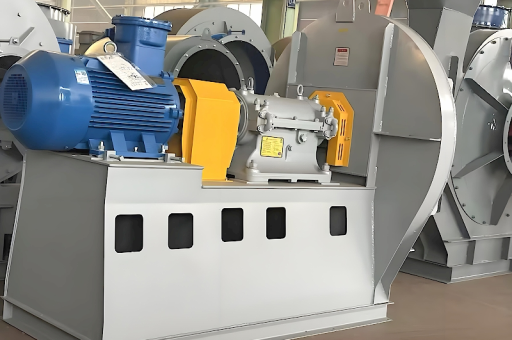
This fan type is a centrifugal blower that operates with a forward-curved blade design, constructed from high-temperature-resistant materials such as cast aluminum, stainless steel, or special alloys. It is certified for use in explosive atmospheres (e.g., ATEX, IECEx, or UL Class I Div 1), and can sustain continuous operation at ambient temperatures exceeding 150°C to 300°C, depending on the model.
Key identifier:
- High Temperature: Capable of moving hot gases or operating in hot environments without deformation or motor failure.
- Forward: Forward-curved impeller blades that provide high airflow at relatively low static pressure, making them ideal for ducted systems and confined space exhaust.
- Anti Explosion: Spark-proof construction using non-ferrous impellers, anti-static belts, and explosion-proof motors to eliminate ignition sources.
Core Technical Features: Temperature, Direction, and Explosion Protection
A deep understanding of the three defining characteristics helps engineers choose the correct unit.
High Temperature Tolerance
- Impellers are typically made of cast aluminum or 316 stainless steel to resist thermal creep.
- Motors are equipped with high-temperature grease and class H insulation (up to 180°C continuous).
- Some models incorporate heat-sink ducts or thermal barriers to protect bearings and electrical components.
Forward-Curved Blade Design
- Forward-curved blades resemble a squirrel-cage rotor.
- Advantages: Higher volumetric flow per rpm, lower noise, and compact size.
- Trade-off: Lower pressure capability compared to backward-curved blades, but ideal for ventilation and fume extraction at medium to high flow rates.
Anti Explosion Construction
- Non-sparking impeller: Aluminum or copper alloys prevent sparks from contact with housing.
- Explosion-proof motor enclosure: Certified to contain any internal explosion and prevent flame propagation.
- Grounding continuity: Anti-static belts and conductive joints eliminate static discharge.
How It Differs from Standard Industrial Fans
| Feature | Standard Centrifugal Fan | High Temp Forward Anti-Explosion Blower |
|---|---|---|
| Max operating temp | 50°C – 80°C | 150°C – 300°C+ |
| Spark protection | None | Non-ferrous impeller, anti-static belt |
| Motor enclosure | TEFC (Totally Enclosed) | Explosion-proof (Ex d / Ex e) |
| Blade material | Steel / coated steel | Cast aluminum / stainless steel |
| Certifications | CE, UL (general) | ATEX, IECEx, UL Class I Div 1 |
This comparison clarifies why standard fans cannot be substituted in environments like oil refineries, chemical plants, biogas facilities, or mining tunnels.
Key Applications Across High-Risk Industries
These fans are deployed in any setting where heat, gas, and flammable dust coexist. Common applications include:
- Oil & Gas Platforms: Ventilating compressor rooms and flare areas.
- Chemical Processing Plants: Exhausting hot corrosive fumes from reactors.
- Mining Tunnels: Forced ventilation in explosive methane environments.
- Marine & Shipbuilding: Engine room ventilation and cargo hold degassing.
- Waste-to-Energy Facilities: Moving high-temperature flue gases before scrubbing.
- Pharmaceutical Manufacturing: Dust extraction for flammable powders.
In each case, the fan is not optional—it is a mandated safety device per local fire codes and international explosion protection standards.
Frequently Asked Questions (FAQ)
Q1: Can I use a standard fan with an explosion-proof motor for high-temperature applications?
No. The explosion-proof motor alone does not protect against impeller sparking or material creep at high temperatures. The entire assembly—impeller, housing, seals, and motor—must be rated for both temperature and explosion resistance.
Q2: What is the typical lifespan of a High Temperature Forward Anti Explosion Ventilation Blower Fan?
With proper maintenance (bearing greasing, belt tension, filter cleaning), these fans can last 8–15 years in continuous operation, depending on the severity of thermal cycling and airborne particulate.
Q3: How do I verify the fan's temperature rating for my application?
Check the nameplate for maximum continuous operating temperature (often listed as "Max ambient temp"). Also review the motor insulation class (F or H) and the bearing grease specification (synthetic high-temp grease for >150°C).
Q4: Is forward-curved better than backward-curved for high-temperature explosion-proof use?
Both designs are valid. Forward-curved fans are better for high flow, low pressure applications like ducted exhaust. Backward-curved fans excel in high pressure systems. Choose based on your system static pressure requirements.
Q5: What certifications should I look for?
For North America: UL 705 (fans) and UL 674 (explosion-proof motors). For Europe: ATEX 2014/34/EU with category 2G (gas) or 2D (dust). For international: IECEx. Ensure the fan is certified for the specific gas group (e.g., IIB or IIC) and temperature class (e.g., T3, T4).
Q6: Can this fan be installed outdoors?
Yes, many models come with weatherproof enclosures (IP55 or higher) and corrosion-resistant coatings. However, direct exposure to rain or salt spray may require additional protective covers.
Selection Criteria for Industrial Buyers
To ensure the fan matches your process and safety requirements, evaluate the following parameters in your specification:
- Airflow (CFM or m³/h): Based on room volume and required air changes per hour.
- Static Pressure (Pa or inches WG): Resistance from ductwork, filters, and dampers.
- Gas Group & Temperature Class: Must match the flammable substances present (e.g., propane = IIA T2, hydrogen = IIC T1).
- Operating Temperature: Include both ambient temp and gas temp at the inlet.
- Material Compatibility: For corrosive gases, consider 304/316 SS or PVDF coatings.
- Mounting Configuration: Inline duct, wall-mounted, or roof-mounted.
- Motor Voltage & Phase: 230/460V 3-phase is typical for industrial.
- Accessories: Spark-resistant screens, vibration isolators, thermal cutoff switches.
Maintenance and Safety Best Practices
Even the most rugged fan requires periodic inspection to maintain its explosion-proof integrity. Recommended maintenance intervals:
- Weekly: Listen for abnormal noise; check belt tension and vibration.
- Monthly: Inspect impeller for cracks, erosion, or material buildup.
- Quarterly: Measure motor current and compare with nameplate amps.
- Annually: Replace grease in explosion-proof bearings; test ground continuity.
- Major Overhaul (every 3–5 years): Disassemble, inspect housing for corrosion, replace seals, and recertify explosion protection.
Critical safety rule: Never operate the fan if the explosion-proof motor junction box cover is missing or if the non-sparking impeller has been replaced with a steel one. This voids all certifications and creates an immediate ignition risk.
Conclusion
The High Temperature Forward Anti Explosion Ventilation Blower Fan is an indispensable asset for facilities where thermal extremes and explosive atmospheres coexist. Its forward-curved blade design delivers efficient high-volume airflow, while its explosion-proof construction and heat-resistant materials protect both personnel and infrastructure.
Selecting the correct fan requires careful evaluation of temperature, gas group, and system pressure. Proper certification (ATEX, IECEx, or UL) is non-negotiable. With routine maintenance and adherence to safety guidelines, this fan provides long-term, fail-safe operation in the world’s most demanding industrial environments.
For further technical consultation, contact fan–your trusted partner for explosion-proof ventilation systems.





