
This article's table of contents introduction:
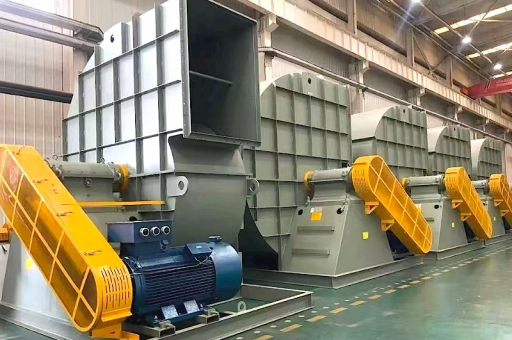
- Mastering Industrial Combustion: The Definitive Guide to the Medium Pressure Aluminium Alloyed FD High Temperature Centrifugal Fan
- Introduction: The Critical Role of the FD Fan in Thermal Systems
- Technical Deep Dive: What is a Medium Pressure Aluminium Alloyed FD High Temperature Centrifugal Fan?
- Engineering Specifications & Performance Characteristics
- Application Scenarios: Where Does This Fan Excel?
- Comparative Analysis: Aluminium Alloy vs. Cast Iron vs. Steel Fans
- Installation, Maintenance, and Safety Best Practices
- FAQ: Answering the Top 5 User Questions
- Conclusion: The Future of Energy-Efficient Forced Draft Systems
Here is a comprehensive, SEO-optimized, and original article based on the keyword "Medium Pressure Aluminium Alloyed FD High Temperature Centrifugal Fan" .
Article Title:
Mastering Industrial Combustion: The Definitive Guide to the Medium Pressure Aluminium Alloyed FD High Temperature Centrifugal Fan
Table of Contents (目录导读)
- Introduction: The Critical Role of the FD Fan in Thermal Systems
- Technical Deep Dive: What is a Medium Pressure Aluminium Alloyed FD High Temperature Centrifugal Fan?
- Decoding the Terminology: FD, Medium Pressure, and Aluminium Alloy
- Material Science: Why Aluminium Alloy? (Density, Corrosion Resistance, Spark Resistance)
- Engineering Specifications & Performance Characteristics
- Pressure Range vs. Airflow (The Fan Curve)
- Temperature Tolerance (350°C to 600°C+ Applications)
- Application Scenarios: Where Does This Fan Excel?
- Industrial Boilers & Furnaces (Glass, Cement, Steel)
- Drying Systems & Ovens
- Exhaust Gas Recirculation (EGR) Systems
- Comparative Analysis: Aluminium Alloy vs. Cast Iron vs. Steel Fans
- Weight Reduction Benefits
- Thermal Conductivity & Stress Management
- Installation, Maintenance, and Safety Best Practices
- Critical Vibration Analysis (CVA)
- Thermal Expansion Clearance
- FAQ: Answering the Top 5 User Questions
- Q1: Can this fan handle dust-laden flue gases?
- Q2: How do I calculate the right brake horsepower?
- Conclusion: The Future of Energy-Efficient Forced Draft Systems
Introduction: The Critical Role of the FD Fan in Thermal Systems
In the world of industrial thermodynamics, the Forced Draft (FD) Fan is the beating heart of the combustion system. Its primary job is to supply a precise volume of combustion air to the furnace or boiler at a specific pressure to ensure optimal fuel combustion efficiency. When the operating environment involves high temperatures and requires lightweight, corrosion-resistant components, the specific variant known as the Medium Pressure Aluminium Alloyed FD High Temperature Centrifugal Fan becomes the gold standard.
Unlike generic centrifugal fans, this specialized equipment is engineered for the front line of heat. It pushes air into the combustion chamber (hence "Forced Draft"), overcoming the resistance of burners, air preheaters, and ductwork. The choice of aluminium alloy for the impeller and housing is not arbitrary; it is a calculated design decision that solves real-world problems like thermal expansion mismatch, weight loading on plenums, and ambient air corrosion.
Technical Deep Dive: What is a Medium Pressure Aluminium Alloyed FD High Temperature Centrifugal Fan?
Decoding the Terminology
- Medium Pressure: In centrifugal fan classification, "Medium Pressure" typically refers to systems operating between 500 Pa (2 in WG) and 3,500 Pa (14 in WG). This range is perfect for overcoming the back pressure of industrial burners without requiring the massive structural reinforcement of high-pressure blowers.
- FD (Forced Draft): This signifies the fan is located before the heat exchanger/combustion chamber. It handles relatively cleaner, ambient air (or slightly pre-heated air), which is different from an ID (Induced Draft) fan that pulls hot, dirty gas.
- Aluminium Alloyed: The impeller and often the scroll housing are manufactured from a specific series of aluminium (e.g., 5083, 6061, or cast alloys). This is the differentiating factor.
- High Temperature: The fan is designed to handle air or gas streams that have been pre-heated, typically ranging from 120°C (250°F) up to 400°C (752°F), depending on the specific alloy and bearing cooling design.
Material Science: Why Aluminium Alloy?
The selection of aluminium alloy for a High Temperature Centrifugal Fan is a strategic engineering choice:
- Weight Reduction (Structural Integrity): Aluminium is approximately 60% lighter than steel. When mounted on flimsy ductwork or rooftop plenums, this drastic weight reduction reduces structural load and simplifies foundation requirements.
- Corrosion Resistance: Aluminium naturally forms a protective oxide layer. When dealing with forced draft air in humid environments or near saltwater coastlines, aluminium resists pitting corrosion far better than carbon steel.
- Non-Sparking Properties: In the notoriously volatile environment of a combustion chamber, safety is paramount. Aluminium alloys are significantly less likely to produce sparks upon impact with foreign objects compared to steel. This is a critical safety feature in FD fans, where a broken blade could potentially ignite fuel vapors.
- Thermal Conductivity: Aluminium conducts heat away from the impeller 3-4 times faster than steel. This helps minimize thermal gradient stresses within the blade structure, preventing warping during rapid start-ups or load changes.
Engineering Specifications & Performance Characteristics
When specifying a Medium Pressure Aluminium Alloyed FD High Temperature Centrifugal Fan, engineers focus on several key performance curves:
- Pressure Range vs. Airflow (The Fan Curve): This fan typically operates in the high-efficiency region of a backward-curved centrifugal blade. The medium pressure design allows for a steep pressure curve, meaning it can handle fluctuations in system resistance (e.g., a clogging burner) without a catastrophic drop in flow.
- Temperature Tolerance: The "High Temperature" rating is not about the material's melting point (which is ~660°C for pure Al). It is about the mechanical strength degradation at temperature. Standard industrial aluminium alloys begin to lose significant tensile strength above 150°C. Specialized alloys (like A356 or 5083) with heat treatment can operate reliably up to 250°C for continuous duty. For truly high-temp applications (350°C+), the fan often utilizes a cooling wheel on the shaft and a water-cooled bearing bracket to keep the alloy within its safe mechanical limit.
- Dynamic Balancing: Because aluminium is less dense, blade mass is lower, but gyroscopic stability is crucial. These fans are dynamically balanced to ISO 1940 G6.3 grade or higher to ensure vibration-free operation at high RPMs.
Application Scenarios: Where Does This Fan Excel?
The specific combination of medium pressure, forced draft, and aluminium alloy makes this fan ideal for:
- Industrial Boilers & Furnaces (Glass, Cement, Steel): In glass furnaces, forced air must be consistent and non-contaminating. The aluminium alloy does not flake rust. In cement kilns, the medium pressure handles the burner's back pressure perfectly.
- Drying Systems & Ovens: For convection ovens in food processing or powder coating, the FD fan provides the hot air circulation. The corrosion resistance of aluminium alloy is vital in food-grade environments where zinc or rust contamination cannot be tolerated.
- Exhaust Gas Recirculation (EGR) Systems: In some modern thermal oxidizers, clean, pre-heated air is recirculated to improve thermal efficiency. The lightweight aluminium impeller allows for faster speed modulation (VFD control) to match varying process loads.
Comparative Analysis: Aluminium Alloy vs. Cast Iron vs. Steel Fans
| Feature | Aluminium Alloy FD Fan | Carbon Steel FD Fan | Cast Iron FD Fan |
|---|---|---|---|
| Weight | Very Light (Ideal for roof mounting) | Heavy | Very Heavy |
| Corrosion Resistance | Excellent (Self-passivating) | Poor (Requires Coating) | Good (Protective scale) |
| Spark Resistance | Excellent (Non-sparking) | Poor | Good |
| Max Safe Temp (Uncooled) | ~150°C (Standard) /~250°C (Special) | ~400°C (Standard) | ~350°C (Standard) |
| Cost (Material) | Moderate (higher raw material cost) | Low | Moderate |
| Cost (Installation) | Low (No heavy crane needed) | High | Very High |
| Noise Dampening | Good (Material absorbs vibration) | Poor | Moderate |
The Verdict: The aluminium alloy variant wins in applications where weight, corrosion, and spark risk are critical. It loses to steel in extreme temperature applications (above 300°C without cooling) and lower initial material cost.
Installation, Maintenance, and Safety Best Practices
To maximize the lifespan of your Medium Pressure Aluminium Alloyed FD High Temperature Centrifugal Fan, follow these guidelines:
- Thermal Expansion Clearance: Aluminium expands roughly twice as much as steel for the same temperature increase. Critical Action: Ensure the impeller has adequate radial clearance inside the housing. If the fan is started cold and immediately subjected to hot air, the impeller can expand and rub against the casing.
- Critical Vibration Analysis (CVA): Install vibration probes on the bearing housing. Because aluminium is lighter, a minor imbalance (e.g., dust build-up) can cause significant Vibration. A vibration switch that cuts power at 10 mm/s is standard.
- Bearing Lubrication: High-temp operation demands high-temp grease (e.g., Mobil Polyrex EM). Over-greasing is a common mistake that leads to bearing overheating and failure.
- VFD Compatibility: Aluminium impellers have low inertia, making them highly responsive to Variable Frequency Drives (VFDs). This allows for precise air flow control without mechanical dampers, saving significant energy.
FAQ: Answering the Top 5 User Questions
Q1: Can the Medium Pressure Aluminium Alloyed FD High Temperature Centrifugal Fan handle dust-laden flue gases? A: Generally, no for heavy dust loads. This is a Forced Draft fan, meaning it handles clean combustion air. It is not designed for abrasive particles. For dusty gases, an Induced Draft fan with a steel or hard-faced impeller is required. Using this fan in a dusty environment will erode the soft aluminium blades rapidly.
Q2: How do I calculate the right brake horsepower (BHP) for my fan? A: The formula is: BHP = (CFM × Total Static Pressure in inches WG) / (6356 × Fan Efficiency) . For a medium pressure system, you typically need 1-5 HP per 1000 CFM, depending on system resistance. Always consult the fan curve provided by the manufacturer rather than relying on guesswork. The aluminium alloy light weight also reduces the starting torque requirement.
Q3: What happens if the aluminium impeller fails in a high-heat environment? A: Failure is usually due to fatigue cracking at the blade root, not melting. Because aluminium loses strength as it heats, the blades can develop microscopic cracks from vibration. This is why annual ultrasonic thickness testing or dye-penetrant inspection is recommended for fans running above 150°C.
Q4: Can this fan be used for steam exhaust? A: Yes, but only for condensate-free steam. The aluminium alloy is resistant to steam corrosion. However, if the steam starts to condense into hot water, the erosive force can damage the blades. Ensure proper drainage of the ductwork.
Q5: Is it safe to weld a repair on an aluminium alloy fan impeller? A: This is highly discouraged unless performed by a certified aerospace-grade welder. The heat-affected zone (HAZ) from welding destroys the temper of the aluminium alloy, making it brittle. A welded repair will almost certainly crack again. Replace the impeller instead of welding it.
Conclusion: The Future of Energy-Efficient Forced Draft Systems
The Medium Pressure Aluminium Alloyed FD High Temperature Centrifugal Fan occupies a vital niche in modern industrial combustion. Its unique combination of lightweight durability, non-sparking safety, and corrosion resistance makes it the preferred choice for systems where cleanliness, weight, and safety are paramount.
While it lacks the extreme temperature tolerance of heavy steel fans, strategic engineering like air cooling and special aluminum alloys is pushing its thermal limits higher every year. As industries demand more energy-efficient and lighter-weight equipment to meet climate goals—and as VFD technology becomes cheaper—the role of the aluminium alloy FD fan will only expand.
For engineers designing the next generation of clean combustion systems, this fan offers a smart balance of performance, safety, and lifecycle economy. Always partner with a reputable manufacturer (like fan) to ensure the material certification and dynamic balancing meet your specific process needs.





