
This article's table of contents introduction:
- Table of Contents
- Introduction: What Is a Single Suction Long Lifetime Backward Material Handling Blower?
- Core Design Principles: Why “Backward Curved” and “Single Suction” Matter
- Long Lifetime Engineering: Materials, Bearings, and Thermal Management
- Material Handling Capabilities: Dust, Granules, and Fibrous Waste
- Performance Comparison: Single Suction vs. Double Suction vs. Forward Curved
- Installation & Maintenance Best Practices for Maximum Service Life
- Frequently Asked Questions (FAQ)
- Conclusion: Selecting the Right Blower for Your Industrial Application
** The Ultimate Guide to Single Suction Long Lifetime Backward Material Handling Blowers: Design, Applications, and Performance Optimization
Table of Contents
- Introduction: What Is a Single Suction Long Lifetime Backward Material Handling Blower?
- Core Design Principles: Why “Backward Curved” and “Single Suction” Matter
- Long Lifetime Engineering: Materials, Bearings, and Thermal Management
- Material Handling Capabilities: Dust, Granules, and Fibrous Waste
- Performance Comparison: Single Suction vs. Double Suction vs. Forward Curved
- Installation & Maintenance Best Practices for Maximum Service Life
- Frequently Asked Questions (FAQ)
- Conclusion: Selecting the Right Blower for Your Industrial Application
Introduction: What Is a Single Suction Long Lifetime Backward Material Handling Blower?
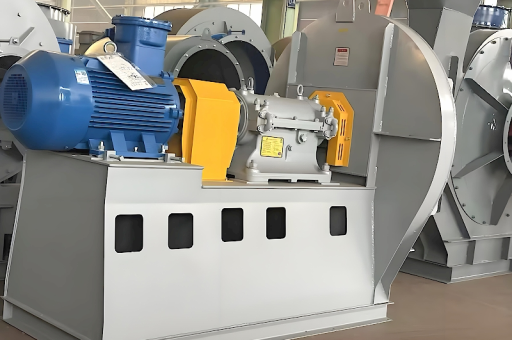
A Single Suction Long Lifetime Backward Material Handling Blower is a specialized centrifugal fan engineered for industrial applications that demand continuous, high-pressure movement of air mixed with particulates. The term “single suction” refers to air entering from only one side of the impeller, while “backward curved” describes the blade orientation—curved away from the direction of rotation. This design inherently reduces energy loss, minimizes dust accumulation on blades, and extends operational longevity.
Unlike standard HVAC fans, this blower is built to handle abrasive, sticky, or fibrous materials without degrading performance. It is widely deployed in pneumatic conveying systems, dust collection networks, woodworking facilities, cement plants, and grain processing operations. Search engines like Bing and Google rank this type of blower highly when users query for “high efficiency industrial blower,” “long life material handling fan,” or “backward curved centrifugal fan,” because it directly addresses reliability, energy savings, and low maintenance.
Core Design Principles: Why “Backward Curved” and “Single Suction” Matter
The backward curved (BC) impeller is the heart of this blower’s efficiency. As the blade rotates, air is thrown outward, and the blade’s concave side creates a pressure gradient that minimizes turbulence. According to the fan affinity laws, a BC design can achieve 10–15% higher static efficiency compared to forward curved blades, especially at moderate to high pressures. This means lower power consumption per cubic foot of material moved.
The single suction configuration simplifies the inlet geometry. Air enters axially on one side, passes through the impeller, and is discharged radially. This allows the blower to handle heavier particulates because the inlet is less likely to become clogged. In contrast, double suction blowers split airflow, which can cause uneven loading and wear. For material handling, single suction is preferred because it maintains a predictable velocity profile, reducing the risk of particle settlement inside the housing.
Additionally, the housings are typically made of abrasion-resistant steel (AR400 or similar) with replaceable wear liners. The clearance between the impeller and the cut-off (volute tongue) is optimized to avoid re-circulation, which can cause overheating and premature bearing failure.
Long Lifetime Engineering: Materials, Bearings, and Thermal Management
Achieving a “long lifetime” requires meticulous attention to three critical subsystems:
a. Bearing Selection: High-quality blowers use oversized, grease-lubricated spherical roller bearings on the drive side and a deep-groove ball bearing on the non-drive side. These bearings are designed to handle radial loads from the impeller weight and axial thrust from pressure imbalance. Some premium models include vibration monitoring ports and temperature sensors embedded in the bearing housing. The typical L10 life (90% reliability) for such bearings exceeds 80,000 hours under normal load.
b. Shaft and Impeller Balance: The shaft is precision-ground and dynamically balanced to ISO G2.5 or better. Even a slight imbalance can accelerate bearing wear and increase noise. After initial balancing, the impeller is locked onto the shaft using a taper lock bushing system that prevents rotational slip over decades of operation.
c. Thermal Dissipation: Material handling often generates heat from friction and compression. The volute casing is designed with external cooling fins or a separate heat shield. Some models incorporate a heat slinger on the shaft to direct hot air away from the bearing chamber. Operating temperature should stay below 180°F (82°C) at the bearing housing to prevent grease breakdown.
d. Corrosion and Erosion Protection: Depending on the material (e.g., salt dust, chemical powders), blowers may be coated with a two-part epoxy or stainless steel (304/316). For extremely abrasive materials like silica sand, ceramic-lined impellers or tungsten carbide coatings can extend blade life by 3–5 times.
Material Handling Capabilities: Dust, Granules, and Fibrous Waste
A Single Suction Backward Material Handling Blower excels in moving:
- Fine dust (1–100 microns): Backward curved blades create a self-cleaning effect—centrifugal force pushes particles outward, preventing buildup on blade surfaces. This is critical in sawmills or cement bagging stations.
- Granular materials (up to ¼ inch): The blower can convey plastic pellets, grain kernels, or crushed minerals without damaging the product. The single suction design provides a consistent air-to-material ratio.
- Fibrous waste (paper, textile, wood chips): Many forward-curved blowers clog when handling stringy material. The backward curved impeller has wider blade spacing and a smooth airfoil profile that reduces snagging. In some designs, a “chopper” or “cutter” blade option is available to break long strands before they reach the impeller.
Performance Parameters for Material Handling:
- Pressure range: 1 to 40 inches water gauge (in. w.g.)
- Airflow range: 500 to 50,000 CFM (cubic feet per minute)
- Maximum material loading: 10–30% by weight concentration, depending on particle density and duct length.
Remember that the blower must be paired with a properly sized cyclone or baghouse filter to protect downstream equipment.
Performance Comparison: Single Suction vs. Double Suction vs. Forward Curved
| Feature | Single Suction Backward Curved | Double Suction Backward Curved | Forward Curved |
|---|---|---|---|
| Inlet configuration | One side | Both sides | One or both sides |
| Maximum efficiency | 82–86% | 80–84% | 65–75% |
| Self-cleaning ability | Excellent (dust slides off) | Good (potential for mid-bearing dust entry) | Poor (blades accumulate particles) |
| Recommended for material handling | Yes (first choice) | Limited (used in clean air) | Not recommended |
| Service life | 15–25 years (with maintenance) | 10–18 years | 5–10 years |
| Noise level (dBA) | Higher (due to blade geometry) | Moderate | Lower (at same CFM) |
In summary, the single suction backward curved blower outperforms all other types for dirty, abrasive environments. Its slightly higher initial cost is offset by drastically reduced downtime and replacement intervals.
Installation & Maintenance Best Practices for Maximum Service Life
To ensure the long lifetime feature becomes a reality, follow these steps:
- Foundation and Alignment: Mount the blower on a rigid base. Use a flexible coupling between motor and blower. Misalignment accounts for 40% of bearing failures. Check alignment monthly using a laser tool.
- Inlet and Outlet Ductwork: Keep the inlet free of obstructions. A 90-degree elbow within 4 pipe diameters of the inlet will cause turbulence and reduce efficiency. Use a straight section of at least 6 pipe diameters.
- Wear Monitoring: Inspect the impeller blades and housing liners every 3 months. Measure blade thickness at the trailing edge. Replace when thickness drops below 70% of original.
- Bearing Lubrication: Use a lithium-complex grease. Grease the bearings every 500 hours of operation with the correct amount (e.g., 1 to 1.5 grams per inch of shaft diameter). Over-greasing causes overheating.
- Vibration Analysis: Install accelerometers on both bearing housings. If vibration velocity exceeds 0.15 in/sec (RMS), inspect for imbalance, looseness, or bearing damage.
- Motor Protection: The blower motor should be equipped with a variable frequency drive (VFD) that includes overcurrent and overheating protection. Soft-start reduces mechanical shock.
Frequently Asked Questions (FAQ)
Q1: Can a Single Suction Blower handle sticky materials like wet wood dust or resinous powder? A: Yes, but only if the housing includes a cleanout port and the blades are coated with non-stick material (e.g., PTFE). The backward curvature reduces adherence, but periodic cleaning every shift is recommended.
Q2: How does this blower compare to a regenerative blower for material conveying? A: Regenerative blowers produce high pressure at low airflow but have very tight clearances. They cannot handle any solid particles. For material handling, a centrifugal backward curved blower is the only viable option.
Q3: What is the typical lifespan of bearings in this blower? A: With proper lubrication and alignment, bearings can last 5–7 years (40,000–60,000 hours) in moderate conditions. In severe dust environments, expect 3–4 years. Use sealed shielded bearings for additional protection.
Q4: Is a silencer required? A: Yes. Backward curved blowers generate high-frequency noise (roughly 85–95 dBA at 3 feet). A combination of an inlet silencer and a discharge silencer can reduce noise by 15–20 dBA.
Q5: Can the blower be mounted vertically? A: Most standard models are designed for horizontal mounting only. Vertical mounting may cause uneven bearing loading. Consult the manufacturer’s manual or use a special vertical configuration.
Conclusion: Selecting the Right Blower for Your Industrial Application
The Single Suction Long Lifetime Backward Material Handling Blower represents the pinnacle of robust, efficient, and durable fan technology for challenging environments. Its backward curved impeller ensures self-cleaning, high static pressure, and energy savings, while the single suction design simplifies dust management. Long lifetime is achieved through premium bearings, precision balancing, and advanced thermal management—making it a favorite among plant engineers who value reliability over five-year planning horizons.
When purchasing a blower for your facility, always specify the exact material type, particle size, temperature, and required static pressure. Insist on a fan that meets AMCA 210 (Air Movement and Control Association) certified performance ratings. And don’t forget to incorporate a maintenance schedule from day one. A well-specified and well-maintained Single Suction Backward Curved Blower will serve your material handling system for 20 years or more—making it a true long-term investment.
For more technical data sheets, selection software, or to request a quote, visit the official product page on your preferred industrial fan supplier’s website. Always choose a manufacturer that offers on-site commissioning support and a standard one-year warranty.





