
This article's table of contents introduction:
- Understanding the Specifications
- Key Features to Look For
- Common Applications for This Type of Blower
- Recommendations for Selection
- Where to Look (Manufacturers)
- Critical Sizing Information
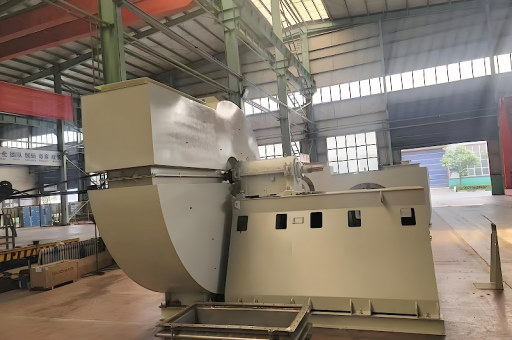
It sounds like you're looking for a forward-curve blower (often called a "squirrel cage" or "centrifugal fan") designed for material handling applications, running on alternating current (AC) , with an emphasis on long life.
Here is a breakdown of what that specification means and how to select the right unit:
Understanding the Specifications
- Forward Curve: These blades curve in the direction of rotation. They are ideal for moving large volumes of air against low to medium static pressure. In material handling, this design is good for light dust, chips, or granular materials.
- Material Handling: This implies the blower is not a standard HVAC unit. It must have a robust housing (often steel or abrasion-resistant materials) and a wheel designed to resist wear from particulates.
- Long Life: This typically points to specific construction features: sealed ball bearings, heavy-gauge steel housing, a robust motor (often TEFC or explosion-proof), and possibly a separate motor shaft with a belt drive to isolate the motor from debris.
Key Features to Look For
When searching for a long-life forward curve blower for material handling, prioritize these aspects:
- Motor Type: TEFC (Totally Enclosed Fan Cooled) is standard to prevent dust from entering the motor windings.
- Bearings: Look for sealed, pre-lubricated ball bearings (often with a L10 life rating of 100,000+ hours).
- Wheel Material: Steel (often with a protective coating or hardened by design) is preferred over aluminum for heavy material handling. Backward-inclined wheels are actually more common for heavy dust, but forward-curve wheels are excellent for lighter, fibrous materials (like wood chips, lint, or plastic scrap).
- Housing Thickness: Look for 10-gauge or thicker steel (or stainless steel for corrosive materials).
- Drive Type: For longest life, a belt-drive system is superior to direct drive. It allows you to change speed (and thus air volume/pressure) easily, and the motor is protected from the heat/contaminants of the material stream.
- Access Doors: A quick-access door for cleaning the wheel is critical, as forward-curve blades can clog with sticky materials.
Common Applications for This Type of Blower
- Dust Collection (for light dusts, sawdust)
- Trim Removal (in woodworking or plastics)
- Conveying Light Bulky Materials (cardboard, paper scrap)
- Ventilation in industrial plants where airborne particles are present
- Fume Extraction (with appropriate corrosion-resistant coating)
Recommendations for Selection
| Parameter | Recommended Specification |
|---|---|
| Type | Centrifugal, Forward Curved (FC) |
| Motor | AC, TEFC, 3-Phase (for longevity and reliability) |
| Voltage | 208-230/460V (common industrial standard) |
| Bearings | Sealed, spherical roller bearings (L10 > 100,000 hrs) |
| Construction | Heavy-gauge welded steel, optional abrasion-resistant lining |
| Accessories | Inlet/outlet flanges, vibration isolators, drain plug |
Where to Look (Manufacturers)
For a long-life forward curve blower for material handling, consider these established manufacturers:
- New York Blower (NYB) – Known for heavy-duty industrial fans.
- Cincinnati Fan – Offers a wide range of forward-curve material handling fans.
- Greenheck – Good for robust industrial ventilation blowers.
- AirPro – Specializes in material handling and dust collection fans.
- Chicago Blower – High-quality, custom-engineered fans for abrasive environments.
Critical Sizing Information
To get the right blower, you will need to know:
- CFM (Cubic Feet per Minute): How much air volume do you need to move?
- Static Pressure (SP): The resistance of the system (ductwork, filters, cyclones). Measured in inches of water gauge (in. wg).
- Material Type & Load: What is the material (density, abrasiveness)? How much is being conveyed (lbs/hr)?
- Ambient Temperature: High temperatures require special shaft seals and motor protection.
Important Note: For very abrasive or heavy materials (metal chips, sand), a Backward-Inclined (BI) or Radial Blade (RB) fan is usually more appropriate than a Forward Curve, as they are less prone to clogging and wear. A forward curve is best for "light duty" material handling.
Final Suggestion: If you are selecting a blower for a specific machine (e.g., a conveyor, a router, or a shredder), provide the CFM @ Static Pressure requirement. A reputable supplier (like Grainger, McMaster-Carr, or an industrial fan dealer) can then match you with a long-life AC forward-curve blower from their catalog.
Would you like help calculating the specific CFM and Static Pressure for your application?





