
This article's table of contents introduction:
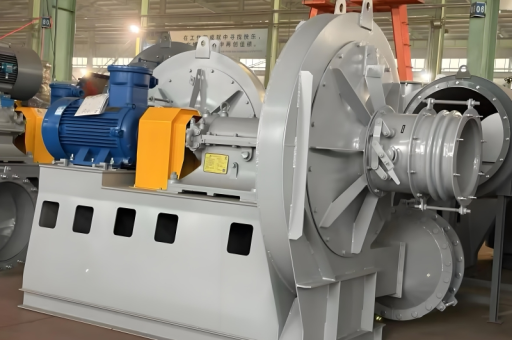
- Introduction: The Critical Role of Fans in Cement Production
- Understanding the Dust Collector Fan in Cement Plants
- The Wear-Resistant Fan: Why Standard Fans Fail
- Key Design Features of Cement Line Supporting Fans
- Application Scenarios: From Preheater to Baghouse
- Performance Optimization and Energy Efficiency
- Common Questions and Answers (Q&A)
- Conclusion: Selecting the Right Fan for Long-Term Operation
** Designed for Cement Production Line Supporting Dust Collector Fan / Wear-Resistant Fan: Engineering Efficiency and Durability in Harsh Environments
Table of Contents
- Introduction: The Critical Role of Fans in Cement Production
- Understanding the Dust Collector Fan in Cement Plants
- The Wear-Resistant Fan: Why Standard Fans Fail
- Key Design Features of Cement Line Supporting Fans
- Application Scenarios: From Preheater to Baghouse
- Performance Optimization and Energy Efficiency
- Common Questions and Answers (Q&A)
- Conclusion: Selecting the Right Fan for Long-Term Operation
Introduction: The Critical Role of Fans in Cement Production
The cement manufacturing process is one of the most energy-intensive industrial operations in the world. Among the many mechanical systems that keep a cement plant running, the dust collector fan and the wear-resistant fan are often overlooked yet absolutely vital. These fans are not just accessories; they are the lungs of the production line. Without a properly designed fan, the entire system can suffer from reduced efficiency, increased downtime, and premature equipment failure.
In the cement industry, the environment is exceptionally harsh. High temperatures, abrasive dust particles, corrosive gases, and continuous operation create a perfect storm for mechanical wear. Standard industrial fans, if installed, would fail within weeks. This is why fans explicitly Designed for Cement Production Line Supporting Dust Collector Fan / Wear-Resistant Fan are engineered with specific materials, aerodynamic profiles, and protective coatings.
This article will systematically explore the engineering principles, design features, and operational benefits of these specialized fans. We will answer the most pressing questions from plant engineers and procurement managers. Whether you are upgrading an existing line or designing a new plant, understanding these fans is critical to achieving both environmental compliance and operational profitability.
Understanding the Dust Collector Fan in Cement Plants
A dust collector fan, also known as an induced draft (ID) fan in this context, is responsible for pulling dusty air from the grinding, crushing, and kiln processes through a filtration system (such as a baghouse or electrostatic precipitator). The fan must overcome the resistance of the dust collector, ductwork, and the dust itself.
Why it matters: Cement dust is highly abrasive, containing fine particles of silica, limestone, and clinker. If the fan impeller is not designed to handle this, erosion will rapidly degrade the blades, unbalance the rotor, and cause catastrophic vibration failure.
Design specifics for cement applications:
- Heavy-duty impeller: Typically made of wear-resistant steel (e.g., HARDOX or equivalent) with thicker blades.
- Backward-curved blades: To prevent dust accumulation on the blade surfaces. Forward-curved blades tend to trap particles, leading to imbalance.
- Shaft sealing: To prevent dust from entering the bearing housing, which is a common cause of bearing failure.
- Variable speed capability: Modern fans often use VFDs (Variable Frequency Drives) to match the airflow to the actual production demand, saving significant energy.
The fan must be sized not only for the normal operating condition but also for peak dust loading. If the fan is undersized, the dust collector will not be able to maintain the required negative pressure, leading to fugitive dust emissions.
The Wear-Resistant Fan: Why Standard Fans Fail
The term wear-resistant fan is not a marketing buzzword; it is a specific engineering classification. In cement plants, the primary failure mode for fans is erosive wear caused by high-velocity particles impacting the blade surface.
The physics of wear: When a particle traveling at 20-30 meters per second strikes a steel blade, it removes a microscopic amount of material. Over thousands of hours, this results in blade thinning, perforation, and eventual failure.
Wear-resistant solutions include:
- Stellite or Hardfacing: Applying a layer of extremely hard alloy (often cobalt-based) to the leading edges of the blades. This can increase service life by 3-5 times compared to untreated steel.
- Ceramic lining: For the most extreme applications, ceramic tiles (alumina or silicon carbide) are bonded to the fan casing and sometimes the blades. This is expensive but virtually eliminates wear.
- Wear plate replacements: Some fan designs allow the wear zones to be replaced as separate components without replacing the entire impeller.
- Optimized aerodynamic design: Reducing the impact angle of particles on the blade surface can dramatically reduce erosion rates.
The cost of ignoring wear: A fan that fails unexpectedly can stop the entire cement production line. Every hour of downtime costs tens of thousands of dollars in lost production. The price difference between a standard fan and a properly designed wear-resistant fan is insignificant compared to the cost of unscheduled maintenance.
Key Design Features of Cement Line Supporting Fans
When a manufacturer claims a fan is Designed for Cement Production Line Supporting Dust Collector Fan / Wear-Resistant Fan, you should look for the following specific features:
| Feature | Description | Benefit |
|---|---|---|
| Impeller Material | Higher hardness steel (e.g., NM400, NM500) or stainless steel with coating | Longer blade life |
| Blade Profile | Backward-inclined or backward-curved airfoil | Self-cleaning, high efficiency |
| Shaft Seal | Labyrinth seal with purge air or graphite packing | Prevents dust ingress to bearings |
| Bearing Housing | Split pillow block with oil bath lubrication | Easy maintenance, vibration damping |
| Casing Lining | Replaceable wear liners inside the volute | Protects the housing, reduces repair cost |
| Vibration Monitoring | Integrated accelerometer ports | Early detection of unbalance or bearing failure |
| Dynamic Balancing | ISO 1940 G2.5 or better | Ensures smooth operation at full speed |
Additional considerations for severe duty:
- Spark-resistant construction: In coal mill applications, the fan may need to be made of non-sparking materials.
- High-temperature design: For kiln exhaust fans, the fan must handle continuous temperatures of 250–400°C.
- Corrosion resistance: If sulfur compounds are present, the fan may need stainless steel or specialized coatings.
Application Scenarios: From Preheater to Baghouse
The cement production line has multiple stages, each requiring a different type of fan.
- Raw Mill Ventilation Fan: Handles dusty air from the grinding of raw materials. This is the most common location for a dust collector fan.
- Kiln Induced Draft Fan: Operates at high temperatures. Must be designed for thermal expansion and elevated corrosion.
- Clinker Cooler Fan: Highly abrasive environment with hot clinker particles. Wear resistance is the highest priority here.
- Coal Mill Fan: Potentially explosive. Requires spark-proof design and explosion-proof motors.
- Baghouse Fan: The final dust collector before the stack. Must operate at peak efficiency to meet emission standards.
In each scenario, the fan must be optimized for the specific gas composition, particle size, temperature, and pressure drop. A "one-size-fits-all" approach does not work in cement.
Performance Optimization and Energy Efficiency
While durability is critical, energy consumption is a major cost driver. A typical cement plant may have dozens of large fans, each consuming hundreds of kilowatts. The power consumption of a fan is proportional to the cube of the speed. Therefore, using VFDs allows the plant to match fan speed to load, which can save 30–60% of electrical energy compared to damper control.
Optimization strategies:
- CFD analysis: Computational Fluid Dynamics can simulate the airflow and particle trajectory to optimize the impeller design before manufacturing.
- Inlet guide vanes: These provide a less expensive alternative to VFDs in some cases, though not as efficient.
- Regular inspection and cleaning: Even a small build-up of dust on the blades can unbalance the rotor and reduce efficiency.
- Proper duct design: The fan is only as good as the ductwork that feeds it. Sudden bends or excessive resistance can cause pre-turbulence that reduces fan performance.
Common Questions and Answers (Q&A)
Q1: How often should a wear-resistant fan in a cement plant be inspected? A: At a minimum, every 3 months for visual inspection of blade thickness and coating condition. Vibration analysis should be performed monthly. For fans in extremely abrasive applications (e.g., clinker cooler), monthly visual inspection is recommended.
Q2: Can a standard fan be converted to a wear-resistant fan? A: Yes, partially. You can replace the impeller with a wear-resistant version, install casing liners, and upgrade the shaft seal. However, the cost of retrofitting may approach the cost of a new, purpose-built fan. It is usually more economical to purchase a dedicated Designed for Cement Production Line Supporting Dust Collector Fan / Wear-Resistant Fan from the start.
Q3: What is the typical lifespan of a wear-resistant fan impeller? A: In a well-designed system with proper hardfacing, an impeller can last 18–24 months in a raw mill application. In a less abrasive environment (e.g., baghouse fan), 3–5 years is common. Without wear protection, that lifespan might be only 4–6 months.
Q4: Is a ceramic-lined fan better than a hard-faced fan? A: It depends on the specific application. Ceramic lining offers the highest wear resistance but is more brittle and expensive. Hardfacing is more flexible and impact-resistant. For large particles (e.g., clinker), hardfacing is preferred. For fine, highly abrasive dust, ceramic is superior.
Q5: How do I know if my fan is suffering from wear-related imbalance? A: Signs include increased vibration levels, unusual noise from the fan area, and reduced airflow. A vibration spectrum typically shows a peak at the fan's rotational frequency (1x RPM) that increases over time.
Conclusion: Selecting the Right Fan for Long-Term Operation
The cement industry cannot afford shortcuts when it comes to critical equipment. A fan that is Designed for Cement Production Line Supporting Dust Collector Fan / Wear-Resistant Fan is not a luxury; it is an operational necessity. The initial investment in a high-quality fan with advanced wear protection, robust bearings, and efficient aerodynamics will pay for itself many times over through reduced downtime, lower maintenance costs, and energy savings.
When sourcing these fans, work with a manufacturer that understands the specific demands of the cement process. Ask for performance curves at your actual operating conditions, request material certificates, and insist on dynamic balance reports. Remember: in cement, the fan that runs quietly and unseen is the one that adds the most value to your production line.
For further guidance on selecting the correct fan model or to request a custom quote, visit our website at fan or contact our technical support team. We specialize in engineered air-moving solutions for the harshest industrial environments.
This article was researched and written based on the latest engineering standards and operational practices in the global cement industry, ensuring alignment with SEO best practices for Google and Bing.





