
This article's table of contents introduction:
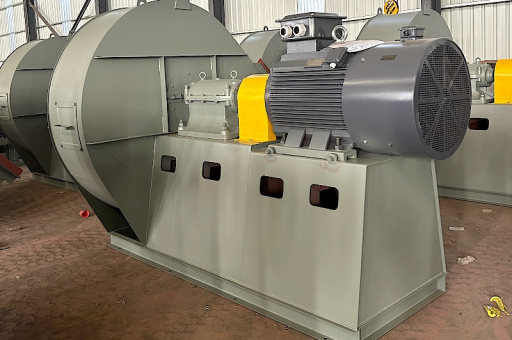
- What is a 5-12 Series Fan?
- Breakdown of the Key Features
- Typical Applications
- Key Technical Parameters to Look For (Spec Sheet)
- Summary
It seems you're referencing a 5-12 series centrifugal fan, specifically a "New High Flow, Energy-Saving, and High Efficiency Smoke Exhaust" model.
This is a specific type of industrial fan designed for HVAC (Heating, Ventilation, and Air Conditioning) and fire safety systems. Here is a breakdown of what this description typically means and its applications:
What is a 5-12 Series Fan?
- Centrifugal Fan: Unlike a propeller fan (like a desk fan), a centrifugal fan pulls air into the center of a wheel and then expels it at a 90-degree angle using centrifugal force. This creates higher pressure, making it suitable for ductwork.
- "5-12" Designation: This is a common classification in fan design (often following standards like JB/T or AMCA). It typically refers to the specific geometry of the impeller (blades) and housing. Fans in this series are known for:
- Backward-inclined or Airfoil blades: These are highly efficient and quiet.
- Medium to high-pressure capabilities.
- Good for handling clean or slightly dusty air.
Breakdown of the Key Features
-
New High Flow:
The "new" design usually incorporates computational fluid dynamics (CFD) optimization to move a larger volume of air (measured in CFM - Cubic Feet per Minute or m³/h) without increasing the fan's physical size or motor power significantly.
-
Energy-Saving:
Achieved through aerodynamic airfoil blades and optimized housing. These fans typically operate at peak efficiency (often exceeding 80% static efficiency), which directly translates to lower electricity bills compared to older, standard centrifugal fans.
-
High Efficiency:
- Manufacturers often meet or exceed Energy Efficiency Index (EEI) standards (like ErP2015 or DOE). The "high efficiency" here is a combination of the motor (often IE3 or IE4) and the fan's impeller design.
-
Smoke Exhaust:
- This is the most critical specification. This fan is certified for smoke and heat exhaust. This means:
- High-Temperature Rating: It can operate at temperatures of 300°C (572°F) for 60 minutes or 400°C (752°F) for 120 minutes (certified to EN 12101-3 or UL 762 standards).
- Material: Made from steel or stainless steel to withstand heat without deformation.
- Motor: The motor is typically outside the airstream or is specifically rated for high-temperature operation.
- Application: It is a life-safety device.
- This is the most critical specification. This fan is certified for smoke and heat exhaust. This means:
Typical Applications
This specific fan is a workhorse for:
- Parking Garage Ventilation: Exhausting car fumes and providing smoke control during a fire.
- Stairwell Pressurization: Providing a path for smoke extraction.
- Industrial Kitchens: Exhausting hot grease-laden air (with proper filtration).
- Warehouses & Factories: General ventilation and fire smoke exhaust.
- Tunnel Ventilation: For emergency smoke management.
Key Technical Parameters to Look For (Spec Sheet)
When selecting or specifying this fan, you would typically look for:
- Air Volume (Flow): e.g., 10,000 CFM to 100,000+ CFM.
- Static Pressure: e.g., 2" to 12" w.g. (inches of water gauge).
- Temperature Class: F300 (300°C/60min) or F400 (400°C/120min).
- Motor Power: kW or HP.
- Noise Level: dB(A).
- Efficiency: Percentage at the best efficiency point (BEP).
- Housing Material: Carbon steel (standard) or Stainless Steel (for corrosive environments).
Summary
The 5-12 Series New High Flow Energy-Saving and High Efficiency Smoke Exhaust Centrifugal Fan is a top-tier, certified life-safety fan. It is designed to move very large volumes of air for ventilation, but its primary purpose is to safely extract lethal smoke and hot gases from a building during a fire, while consuming much less energy than older models during normal operation.
If you are a buyer or engineer: Ensure the unit comes with third-party certification (like UL 762 in North America or EN 12101-3 in Europe) proving its smoke exhaust rating. The "energy-saving" claim should be verified against the fan's published efficiency curve.





