
This article's table of contents introduction:
- The "Trinity" of Material Selection
- Critical Design Features for Durability
- Performance & Operational Considerations
- Common Failure Modes & Mitigation
- Summary: How to Specify This Fan
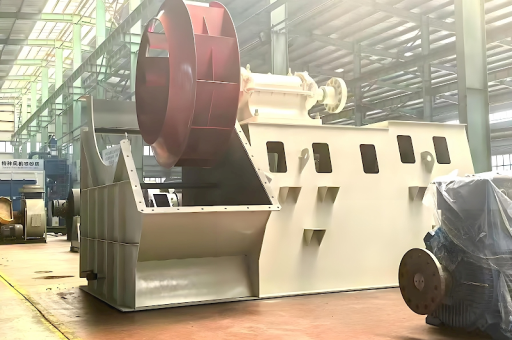
This is a highly specific industrial application. A "Conveying Corrosive Gas Wear-Resistant and Corrosion-Resistant Centrifugal Fan Blower" is a piece of critical process equipment used in harsh environments like chemical processing, steel manufacturing, mining, or wastewater treatment.
To be effective, this fan must overcome three simultaneous challenges:
- Corrosion: Chemical attack from the gas (e.g., HCl, SO₂, Cl₂, HF, H₂S).
- Erosion/Wear: Abrasive particles in the gas stream (e.g., dust, fly ash, metal oxides, sand).
- Structural Integrity: The mechanical stress of moving high volumes of gas at pressure.
Here is a breakdown of the engineering and selection criteria for such a blower, from material choice to design features.
The "Trinity" of Material Selection
You cannot simply coat a standard fan. The base material must be inherently resistant to both corrosion and erosion.
| Material Option | Corrosion Resistance | Wear Resistance | Cost | Typical Application |
|---|---|---|---|---|
| FRP (Fiber-Reinforced Plastic) | Excellent (inert to most acids/bases) | Poor (soft, erodes quickly with particulates) | Medium | Clean corrosive gases (fume exhaust). Not suitable for dusty gases. |
| Stainless Steel (316L, 904L) | Good to Very Good | Fair (erodes, but predictable) | High | Mildly abrasive, moderate corrosive gases. |
| Duplex Stainless Steel | Excellent | Good (harder than 316L) | Very High | High-chloride environments, moderate abrasion. |
| High-Nickel Alloys (Hastelloy C-276, Inconel) | Superior (handles wet Cl₂, HF) | Good | Extremely High | Extreme chemical duty, high temperature. |
| Specialty Lined Steel (Rubber or PTFE) | Superior (inert liner) | Fair (liner can be cut/delaminated) | High | Severe chemical, low abrasion. Liner damage is catastrophic. |
| High-Chrome Cast Iron (e.g., 27% Cr) | Good (for certain acids) | Excellent (hardness > 600 HB) | Medium | The go-to for abrasive + corrosive. Standard for fly ash, ore processing. |
The "Workhorse" Solution for Abrasive + Corrosive: For most applications (e.g., conveying acidic fumes with grit or incinerator exhaust), the optimal material is a High-Chrome Duplex Stainless Steel or a Super Duplex Stainless Steel. These offer the best balance of resistance to pitting/crevice corrosion and high hardness for wear resistance.
Critical Design Features for Durability
Standard blower designs fail quickly in this duty. Look for these specific features:
- Thickened Impeller Blades: Impellers should be fabricated (not cast) from thick plate (e.g., 10mm - 20mm) to allow for a sacrificial wear allowance.
- Wear Liners (Backplate & Housing): The fan housing (volute) should have replaceable, bolted-in wear plates made from a harder material (e.g., Chrome Carbide Overlay or AR400 steel) at the "cut water" (tongue) and the impeller backplate area.
- Stub Shaft & Hub Design: The shaft should be protected. A shaft sleeve made of Hastelloy or ceramic-coated steel prevents corrosion at the shaft seal.
- Gas Seal: A Double Mechanical Seal with a barrier fluid (e.g., clean water or nitrogen) is often mandatory to prevent the corrosive gas from escaping to the atmosphere and from reaching the bearings.
- Bearing Isolator: To keep dust and acid fumes out of the bearing housing.
Performance & Operational Considerations
- Speed (RPM): Lower speeds significantly reduce wear. A larger, slower fan will outlast a smaller, faster one. Carefully calculate the tip speed (m/s). For heavy abrasion, keep tip speed below 60-80 m/s.
- Gas Temperature & Dew Point: Do not let the fan drop below the acid dew point. If corrosive gas (e.g., SO₃ in exhaust) condenses on the impeller, it forms liquid sulfuric acid, which rapidly destroys most metals. Insulation or a pre-heater on the inlet is often required.
- Variable Frequency Drive (VFD): A VFD allows for soft-start (reducing torque stress) and throttling of pressure/speed to avoid gas velocities that cause erosion.
Common Failure Modes & Mitigation
| Failure Mode | Cause | Solution |
|---|---|---|
| Blade Tip Erosion | High-velocity particles hitting the leading edge of the blade. | Tungsten carbide hardfacing weld overlay on the leading edge. |
| Backplate Wear | Particles recirculating between the rotating backplate and the housing. | Install a pressure relief hole in the backplate to purge particles away, and a hardened replaceable liner. |
| Shaft Fretting | Vibration caused by imbalance due to uneven wear. | Heavy-duty, oversized bearings; dynamic balancing with a "provisional" tolerance for wear. |
| Stress Corrosion Cracking (SCC) | Tensile stress + specific corrosive ions (e.g., chlorides). | Proper solution annealing of stainless steel; avoid cold-worked areas. |
Summary: How to Specify This Fan
When requesting a quote or design, provide this information to the manufacturer:
- Gas Composition: Full breakdown (e.g., "12% SO₂, 5% O₂, 83% N₂, 1000 ppm HCl, 50 g/Nm³ Fly Ash").
- Temperature: Operating and maximum (with dew point calculation).
- Moisture Content: Is the gas saturated or dry?
- Particulate Profile: Particle size distribution (P99, P50), hardness (Mohs), and concentration (grains/dscf or mg/Nm³).
- Design Standard: API 560 (Heavy Duty) or ISO 1940 (Balance Grade G2.5 or better).
Recommended Manufacturer Search Terms:
- High-temperature corrosive fume fan
- Heavy duty mill exhaust fan
- Abrasion resistant induced draft fan
A correctly specified fan (using Super Duplex SS with carbide overlay) in this class can last 3-5 years in severe service, whereas a standard fan might fail in 3-6 months. It is a high-investment, long-term decision.





