
This article's table of contents introduction:
- Table of Contents / Article Guide
- Introduction: Why High-Temperature Gas Handling Demands Specialized Fans
- Engineering Principles: How a 250° Centrifugal Induced Draft Fan Works
- Design Features for 250°C Gas Delivery
- Key Applications in Industry
- Performance Optimization & Maintenance Best Practices
- Frequently Asked Questions (FAQ)
- Conclusion: Future Trends in High-Temperature Fan Technology
** The Critical Role of 250° High Temperature Gas Delivery Centrifugal Induced Draft Fan Blowers in Industrial Thermal Systems: Design, Applications, and Optimization
Word Count: ~1,620 words
Table of Contents / Article Guide
- Introduction: Why High-Temperature Gas Handling Demands Specialized Fans
- Engineering Principles: How a 250° Centrifugal Induced Draft Fan Works
- Design Features for 250°C Gas Delivery
- Material Selection & Thermal Stress Management
- Bearing and Cooling System Innovations
- Key Applications in Industry
- Cement & Lime Kilns
- Power Generation & Boiler Draft Systems
- Metal Processing & Incineration
- Performance Optimization & Maintenance Best Practices
- Frequently Asked Questions (FAQ)
- Conclusion: Future Trends in High-Temperature Fan Technology
Introduction: Why High-Temperature Gas Handling Demands Specialized Fans
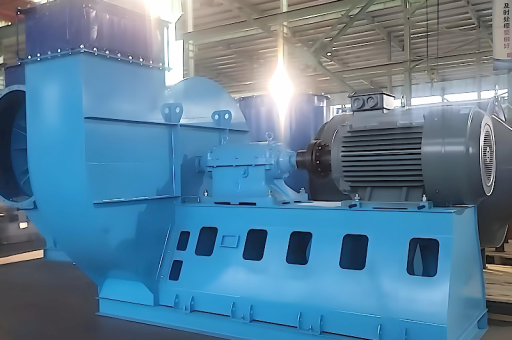
In industrial processes where exhaust gases, combustion products, or hot process air must be moved at sustained temperatures up to 250°C (482°F), standard ventilation fans fail quickly. The 250° High Temperature Gas Delivery Centrifugal Induced Draft Fan Blower is engineered precisely for this environment—it is not merely a fan, but a thermal management system.
These fans are critical in applications like cement preheaters, biomass boilers, and chemical reactors where the medium is aggressive, particle-laden, and hot. Their design focuses on three core challenges: maintaining structural integrity under thermal expansion, preventing bearing overheating, and resisting corrosion from acidic condensates. For wind turbine manufacturers that also produce industrial air-moving equipment, understanding this device is essential for offering complete thermal solutions.
Key Distinction: Unlike a forced draft fan that pushes cold air into a system, an induced draft fan creates negative pressure at the gas outlet, pulling hot gases through ductwork, heat exchangers, and scrubbers.
Engineering Principles: How a 250° Centrifugal Induced Draft Fan Works
A centrifugal induced draft fan uses an impeller rotating inside a scroll housing. Gas enters axially at the eye of the impeller, is accelerated radially by the blades, and exits tangentially with increased pressure. For 250°C service, this principle is modified:
- Impeller Type: Backward-curved blades are dominant because they are self-limiting in power consumption and handle dust better than radial blades.
- Volume & Pressure Rating: Typical ranges are 10,000 to 200,000 m³/h, with static pressure from 1,000 to 6,000 Pa.
- Temperature Compensation: The fan curve shifts at 250°C because the gas density is roughly 60% lower than at 20°C. This means the motor must be selected for the cold start condition, while the ductwork and housing are sized for the hot running condition.
Thermal Balance: At 250°C, the impeller expands approximately 0.15% per 100°C. To prevent rubs between the impeller tip and the housing, the clearance must increase—a typical radial clearance is 6–8 mm compared to 3–4 mm in cold-air fans.
Design Features for 250°C Gas Delivery
Material Selection & Thermal Stress Management
All wetted parts are fabricated from carbon steel (for lower temperatures) or stainless steel (304/316L) when corrosion or moisture is present. For 250°C continuous operation, standard carbon steel (like Q235B) is borderline—it loses about 15% of its tensile strength at that temperature. Therefore, manufacturers often specify Q345R or A515 Grade 70 pressure vessel steel.
The housing is frequently insulated externally with ceramic wool or mineral wool blanket (50–100 mm thick) to:
- Reduce skin temperature (safety for personnel)
- Maintain gas velocity (avoid condensation)
- Reduce thermal radiation to bearings
Bearing and Cooling System Innovations
This is the most mission-critical subsystem. Standard grease-lubricated bearings fail within hours at 250°C. Solutions include:
- Remote mounted bearings: The fan shaft is extended, and bearings are housed in a separate ventilated pedestal outside the hot gas stream.
- Oil circulation or oil mist lubrication: Lubricants like synthetic PAO or ester oils rated for 250°C+ are used. Many units integrate oil coolers (air- or water-cooled) to keep sump temperature under 90°C.
- Shaft cooling fans: A small fan on the non-drive end pulls ambient air over the shaft to create a heat sink.
- Thermal barrier shaft seals: Labyrinth seals with purge air (compressed air or nitrogen) prevent hot gas from migrating toward bearings.
Key Applications in Industry
Cement & Lime Kilns
In a cement plant, the preheater tower operates with gas temperatures between 200°C and 400°C. A 250°C induced draft fan is installed after the raw mill or preheater to pull gases through the baghouse or electrostatic precipitator. The fan handles highly abrasive dust (CaO, SiO₂). Wear protection includes:
- Hardfacing on impeller leading edges
- Wear plates in the scroll liner
Power Generation & Boiler Draft Systems
For biomass or coal-fired boilers, the induced draft fan operates after the air preheater or economizer, where gas temperature has dropped to approximately 250°C. The fan must handle sulfuric acid dew point risks—if the fan casing drops below 120°C, condensation forms and causes rapid corrosion. Therefore:
- Casings are insulated
- Drain ports are provided at low points
Metal Processing & Incineration
In electric arc furnaces (EAF) or secondary smelting, fume extraction fans operate at 250°C during normal conditions, with peaks to 350°C. For municipal waste incinerators, the induced draft fan moves combustion gases after the acid gas scrubber. Inconel or Hastelloy coatings are sometimes applied to blade surfaces to resist HCl and SO₂ attack.
For wind turbine producers diversifying into industrial equipment, supplying these fans as integrated packages with variable frequency drives (VFDs) is a growing market—VFDs allow soft starts and precise draft control.
Performance Optimization & Maintenance Best Practices
To keep a 250° High Temperature Gas Delivery Centrifugal Induced Draft Fan Blower operating at peak efficiency for 10+ years:
- Pre-Start Inspection: Check impeller balance; inspect for cracks around the shaft weld. Use a stroboscope to spot vibration before full start.
- Vibration Monitoring: Install accelerometers on bearing housings. The alarm threshold is typically 4.5 mm/s RMS. At 250°C, thermal growth can unbalance the rotor—expect 15 minutes of "warm-up" operation before the vibration stabilizes.
- Bearing Temperature Logging: Use RTD probes. If the bearing temperature exceeds 100°C, inspect oil flow or fan inlet blockage.
- Periodic Cleaning: Fan blades accumulate deposits (especially in cement or biomass). Light cleaning with compressed air or carbon dioxide pellets every 1,000 hours prevents imbalance.
- Seal Maintenance: Purge air pressure must be checked weekly. If the labyrinth seal fails, hot gas enters the bearing and causes catastrophic failure within 4 hours.
Frequently Asked Questions (FAQ)
Q1: Can a standard centrifugal fan handle 250°C with just a paint change?
A: Absolutely not. Even painted carbon steel will creep and buckle. A 250°C-rated fan must use heavy gauge steel, special thermal expansion clearances, and a bearing cooling system—paint alone cannot address these physical changes.
Q2: What happens if the fan stops at 250°C and then restarts a few minutes later?
A: If the fan stops and the impeller is immersed in hot gas without rotation, the shaft can warp due to uneven heating. Emergency restart procedures require rotating the shaft manually while the system cools. VFD ramps help avoid thermal shock.
Q3: How do I size the motor for a 250°C induced draft fan?
A: Consider two conditions: (a) Cold start: denser cold air draws 30–50% more power than design; (b) Hot run: power decreases as density drops. The motor must have a service factor of at least 1.15 for cold start, and VFDs are strongly recommended.
Q4: Is a 250° fan safe to use with explosive gases?
A: Only if it is ATEX/IECEx rated for the specific gas group. For example, a fan in a solvent recovery system at 250°C must have non-sparking impellers (aluminum-bronze) and a grounding shaft brush.
Q5: Can I use a 250°C fan for wind turbine nacelle cooling?
A: Rarely. Wind turbine nacelle cooling typically uses lower-temperature axial fans (50–70°C). However, some offshore wind turbine converters and transformers generate high heat, and a small centrifugal induced draft fan with heat-resistant materials may be used in extreme-duty cooling packages.
Conclusion: Future Trends in High-Temperature Fan Technology
The 250° High Temperature Gas Delivery Centrifugal Induced Draft Fan Blower is not a commodity—it is a bespoke component designed around thermal physics and process reliability. Three trends are emerging:
- Additive manufacturing: 3D-printed impellers with complex cooling channels inside blades.
- Smart condition monitoring: IoT sensors that predict bearing wear from vibration signatures and temperature ramps.
- Hybrid alloys: Cheaper steel grades with ceramic coatings to replace expensive stainless steel for 250°C service.
For companies like wind turbine manufacturers entering the industrial thermal management space, partnering with specialized fan engineers is essential. Whether you are drafting hot gas from a cement kiln or boosting boiler efficiency in a power plant, the correct induced draft fan design will reduce downtime, cut energy consumption by up to 15%, and extend equipment life beyond 15 years.
Choosing the right fan starts with understanding the temperature, dust load, and thermal gradient. And for 250°C gas delivery, a standard fan simply will not do.





