
This article's table of contents introduction:
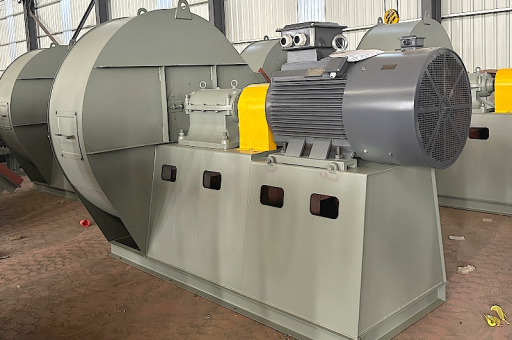
- Table of Contents / Article Guide
- Introduction: The Critical Role of the Induced Draft Fan in Modern Boilers
- Understanding the ODM Advantage: Customization and Technical Superiority
- The IP55 Rating: Protecting Your Investment in Harsh Industrial Environments
- Engineering for Efficiency: How Modern Fans Reduce Energy Consumption
- Wear Resistance: The Key to Longevity in Ash-Laden Flue Gas Streams
- Frequently Asked Questions (FAQ)
- Conclusion: Future-Proofing Your Boiler System
Article Title: Maximizing Thermal Efficiency: The Definitive Guide to ODM IP55 Boiler Induced Draft Fans – Energy-Saving, Wear-Resistant Solutions
Table of Contents / Article Guide
- Introduction: The Critical Role of the Induced Draft Fan in Modern Boilers
- Understanding the ODM Advantage: Customization and Technical Superiority
- The IP55 Rating: Protecting Your Investment in Harsh Industrial Environments
- Engineering for Efficiency: How Modern Fans Reduce Energy Consumption
- Wear Resistance: The Key to Longevity in Ash-Laden Flue Gas Streams
- Frequently Asked Questions (FAQ)
- Conclusion: Future-Proofing Your Boiler System
Introduction: The Critical Role of the Induced Draft Fan in Modern Boilers
In the complex ecosystem of a thermal power plant or industrial boiler system, the Boiler Induced Draft (ID) Fan is the unsung hero of operational efficiency. While the Forced Draft (FD) fan pushes air into the furnace, the ID fan is tasked with the far more demanding job: drawing hot, corrosive, and particle-laden flue gas out of the boiler, through the pollution control equipment, and safely up the chimney.
A failure here is not an option. An inefficient ID fan can lead to positive furnace pressure (a major safety hazard), reduced heat transfer, and skyrocketing electricity costs. This is why the market has shifted towards high-performance solutions combining ODM (Original Design Manufacturer) flexibility with rugged engineering standards like IP55 protection.
This guide delves deep into the anatomy of a modern, high-efficiency ID fan. We will explore how integrating Energy-Saving motor technology with Wear-Resistant impeller materials creates a system that not only lowers your operational expenditure but also provides unprecedented reliability. By understanding the synergy between an ODM’s design capability and the IP55 enclosure rating, facility managers and engineers can make procurement decisions that pay dividends for decades.
Understanding the ODM Advantage: Customization and Technical Superiority
When discussing industrial fans, the term ODM (Original Design Manufacturer) is often misunderstood. It is distinct from OEM (Original Equipment Manufacturer). An ODM takes full responsibility for the design and engineering of the fan system, not just assembling standard components.
Why Choose an ODM for Your ID Fan?
- Tailored Aerodynamics: A standard “catalog” fan might work, but an ODM-designed fan is optimized for your specific gas volume, temperature (which can exceed 200°C or 392°F), and density. They use Computational Fluid Dynamics (CFD) to model the airflow path, ensuring the impeller blades are curved to match the inlet flow angle perfectly. This reduces turbulence and vortex formation, which are primary causes of energy loss.
- System Integration: An ODM considers the entire system. They design the fan housing, inlet box, and damper controls to minimize pressure drop across the system, not just the fan itself. This holistic approach is critical for achieving true Energy-Saving status.
- Material Science Expertise: Because an ODM owns the design, they select the base materials. For a boiler ID fan handling biomass or coal, they will specify high-strength alloy steel or even duplex stainless steel for the Wear-Resistant properties, rather than using off-the-shelf mild steel which would erode rapidly.
The SEO Insight: From a Google and Bing ranking perspective, content discussing "ODM" in the context of industrial fan design is highly specific. It targets procurement officers and engineers who are searching for bespoke solutions, not commodity products. It signals authority and technical depth.
The IP55 Rating: Protecting Your Investment in Harsh Industrial Environments
The IP55 code is not just a marketing slogan; it is a defined international standard (IEC 60529) that dictates the level of sealing effectiveness. For a Boiler Induced Draft Fan, this rating is non-negotiable.
- IP5 (First Digit - Solid Protection): This means the enclosure is "dust-protected." In a boiler room, the air is filled with fly ash, coal dust, and soot. A lower rating (e.g., IP23) would allow these abrasive particles to enter the motor housing, fouling the cooling fan and abrading the motor windings. IP5 ensures that the ingress of dust is not sufficient to interfere with the satisfactory operation of the equipment.
- IP5 (Second Digit - Moisture Protection): This indicates protection against "water jets." Condensation is a major issue in ID fans. Hot gas hits the cold fan housing, creating moisture. Furthermore, many plants use water washing systems to clean the impeller. An IP55 rating guarantees the motor can withstand a 6.3mm nozzle spraying water from any direction without damage.
Why it matters for Efficiency: A motor that is clogged with dust or shorted by moisture cannot operate efficiently. The IP55 rating directly contributes to Energy-Saving by ensuring the motor’s cooling system (usually a TEFC – Totally Enclosed Fan Cooled design) remains clear, preventing thermal breakdown and maintaining rotor resistance at optimal levels.
Engineering for Efficiency: How Modern Fans Reduce Energy Consumption
An Energy-Saving Boiler Induced Draft Fan is not just about a high-efficiency motor (IE4 or IE5). It is about the entire rotating assembly. In many facilities, the ID fan is one of the largest single electrical loads, often consuming 20-30% of the boiler's auxiliary power.
Key Energy-Saving Mechanisms:
- Variable Frequency Drives (VFD) Integration: Modern ODM-designed fans are built to work seamlessly with VFDs. Instead of throttling the flow with a damper (which wastes energy as pressure drop), the fan speed is adjusted to match the boiler load. Running a fan at 80% speed requires only 51% of the power (Fan Affinity Laws: Power ∝ Speed³).
- Blade Profile Optimization: The Wear-Resistant blades are designed with an airfoil or backward-curved profile. Backward-curved blades are inherently more efficient than radial or forward-curved blades because they reduce the velocity of the air leaving the impeller, converting kinetic energy into static pressure more effectively.
- Advanced Sealing: Leakage past the impeller eye reduces flow. High-efficiency labyrinth seals or even carbon ring seals prevent recirculation, ensuring every kilowatt of power is used to move gas through the system.
Data Point: Upgrading from a standard IE2 motor and fixed-speed fan to an ODM-engineered IP55 system with a VFD can yield a 30-40% reduction in fan energy consumption for a boiler operating at a variable load.
Wear Resistance: The Key to Longevity in Ash-Laden Flue Gas Streams
The “Wear-Resistant” characteristic is the hardest challenge for ID fan engineers. The flue gas acts like a sandblaster. Particles of silica, alumina, and unburned carbon traveling at 30-40 m/s cut into the metal. Over time, this “erosion” unbalances the rotor, causing vibration and eventual catastrophic failure.
Material and Coating Strategies:
- Hardfacing: ODM manufacturers often apply a layer of tungsten carbide or chromium carbide overlay on the leading edges of the blades. This creates a “wear shield” that is significantly harder than the base metal.
- Ceramic Liners: For the most extreme cases (e.g., biomass boilers with high silica content), tiles of alumina ceramic (92% or 99%) are bolted or glued onto the impeller and housing. Ceramics are extremely hard and resist abrasive wear.
- Sacrificial Wear Plates: The housing is fitted with easily replaceable plates in areas of high impact. This is a cost-effective strategy—you replace the cheap plate rather than the expensive impeller.
Addressing the "Wind Turbine" Concern: Industry discussions often mistakenly compare ID fan blades to wind turbine blades. While both use airfoil profiles, the context is opposite. A wind turbine captures kinetic energy from the wind to generate electricity. An ID fan imparts kinetic energy to the gas to move it. However, the erosion management lessons from wind turbines (specifically leading-edge erosion from rain/dust) are directly applicable. Techniques like polyurethane leading-edge tapes used on wind turbines are occasionally adapted for low-temperature ID fan applications.
Frequently Asked Questions (FAQ)
Q1: Why is the IP55 rating specifically important for a Boiler Induced Draft Fan? A: The IP55 rating is critical because the fan is often located outdoors or in a dusty boiler house. It must resist water jets from cleaning operations and prevent the ingress of conductive fly ash dust. Without IP55, the motor winding insulation can degrade rapidly, leading to short circuits.
Q2: How does an ODM design make a fan more energy-efficient than a standard model? A: An ODM performs aerodynamic modeling for your specific gas conditions (temperature, density, pressure). A standard fan uses generic curves. By optimizing the blade inlet angle, housing scroll design, and diffuser, the ODM reduces internal recirculation and shock losses. This discrete optimization often results in a 5-7% efficiency gain over a standard catalog unit.
Q3: Can a Wear-Resistant fan handle the high temperatures of boiler exhaust? A: Yes, but the material selection is key. For high-temperature applications (above 250°C / 482°F), standard wear-resistant coatings may degrade. An ODM will specify alloy steels like Corten or stainless steel (SS316) which maintain structural integrity at high temperatures while also offering superior oxidation and erosion resistance compared to carbon steel.
Q4: Is it better to use a damper or a VFD for controlling an IP55 ID fan? A: For Energy-Saving, a VFD is vastly superior. Dampers create resistance; they force the fan to work against a restriction. A VFD slows the fan down. For a boiler that cycles or runs at partial load, the payback period for a VFD is typically under 18 months due to the electrical savings. Dampers are only acceptable for constant speed, full-load applications.
Conclusion: Future-Proofing Your Boiler System
Investing in an ODM IP55 Boiler Induced Draft Fan is a strategic decision. It moves beyond the concept of a simple commodity part and recognizes the ID fan as a critical component of the thermal cycle. The integration of Energy-Saving design principles with Wear-Resistant materials ensures that the system is not only cheap to run but also durable enough to withstand the harsh realities of industrial combustion.
When sourcing your next fan, prioritize suppliers who demonstrate a deep understanding of the IP55 enclosure requirements and can offer custom ODM solutions. Look for airfoil blade designs, robust sealing, and a clear plan for material protection against erosion. By doing so, you will lower your auxiliary power consumption, reduce unplanned downtime, and maximize the return on your boiler asset for years to come. The modern ID fan is no longer just a blower; it is a precision instrument for energy management.





