
This article's table of contents introduction:
- Table of Contents
- Introduction: The Critical Role of High Strength Boiler Centrifugal Fans
- Material Science: High Strength Alloys for Structural Integrity
- High Temperature Resistance: Design Principles and Thermal Management
- Performance Optimization: Aerodynamics and Efficiency in Harsh Environments
- Installation and Maintenance Best Practices for Longevity
- Frequently Asked Questions (FAQ)
- Conclusion: Future Trends and Industry Applications
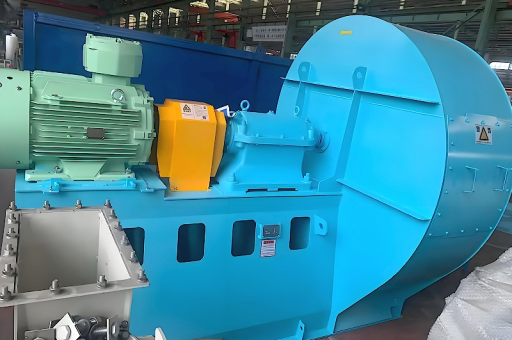
** High Strength Boiler Centrifugal Fan: Engineering for High Temperature Resistance and Industrial Reliability
Table of Contents
- Introduction: The Critical Role of High Strength Boiler Centrifugal Fans
- Material Science: High Strength Alloys for Structural Integrity
- High Temperature Resistance: Design Principles and Thermal Management
- Performance Optimization: Aerodynamics and Efficiency in Harsh Environments
- Installation and Maintenance Best Practices for Longevity
- Frequently Asked Questions (FAQ)
- Conclusion: Future Trends and Industry Applications
Introduction: The Critical Role of High Strength Boiler Centrifugal Fans
In modern industrial thermal systems, the High Strength Boiler Centrifugal Fan stands as a cornerstone of operational safety and efficiency. These fans are specifically engineered to handle the demanding conditions of boiler flue gas extraction, combustion air supply, and industrial process ventilation. Unlike standard fans, they must operate continuously under high thermal loads, often exceeding 300°C (572°F), while maintaining structural integrity and aerodynamic performance.
The term "high strength" refers not only to the tensile strength of the materials used but also to the fan’s ability to resist deformation, vibration fatigue, and corrosion over decades of service. That said, "high temperature resistant" is the defining specification that separates these units from general-purpose centrifugal fans. In the field of wind turbine applications—where thermal management is critical for gearbox and generator cooling—the principles of high strength and heat resistance are equally valued, though the operating environments differ.
Key Application Scenarios:
- Power plant boiler induced draft (ID) and forced draft (FD) systems.
- Steel mill blast furnace gas handling.
- Cement plant preheater exhaust.
- Industrial wind turbine auxiliary cooling systems (where space and heat dissipation are constrained).
Question: Why can’t standard fans replace high strength boiler centrifugal fans in high-temperature environments?
Answer: Standard fans typically utilize carbon steel impellers and standard lubricants that degrade above 150°C. At elevated temperatures, thermal expansion causes blade-tip rubbing, bearing failure, and increased fatigue cracking. High strength boiler centrifugal fans use specialized alloys (e.g., 16Mo3 or Hastelloy), high-temperature grease, and expansion-tolerant housing designs to ensure reliable operation above 300°C.
Material Science: High Strength Alloys for Structural Integrity
The backbone of any High Strength Boiler Centrifugal Fan is its material selection. For heat resistance, the industry favors:
- Low-Alloy Steels (e.g., 16Mo3, 15CrMo): These offer excellent creep resistance up to 500°C and maintain yield strength under thermal cycling. They are commonly used for fan impellers and shafts.
- Stainless Steels (e.g., 304L, 310S): When the environment includes corrosive flue gases (sulfur oxides, chlorides), these grades provide both heat resistance and corrosion protection. 310S can handle continuous operation at 1000°C.
- Nickel-Based Superalloys (e.g., Inconel 625, Hastelloy X): Reserved for extreme temperature spikes beyond 650°C or highly acidic conditions. These materials are expensive but offer unmatched durability.
- High-Temperature Coatings: Ceramic or aluminum-based thermal barrier coatings (TBCs) are applied to blade surfaces to reduce metal temperature and extend fatigue life.
Question: Does material thickness directly correlate with high strength in these fans?
Answer: Not exactly. While thicker material increases weight and centrifugal stress, high strength is achieved through alloy composition and heat treatment (e.g., quenching and tempering). Over-thickening can cause unnecessary rotational inertia and bearing loading. Optimal design uses finite element analysis to minimize thickness while meeting stress limits at maximum RPM and temperature.
Example Calculation:
For a fan operating at 1500 RPM with an impeller diameter of 1.2 m made of 16Mo3, the tangential stress at 350°C can be calculated using the formula:
σ = ρ × ω² × r² / 2
Where ρ = density (7850 kg/m³), ω = angular velocity (157 rad/s), r = radius (0.6 m).
Result: ~24 MPa, well within the 16Mo3 yield strength (~300 MPa at 350°C).
High Temperature Resistance: Design Principles and Thermal Management
To ensure high temperature resistance, engineers integrate several passive and active thermal management features:
- Expansion Joints & Shaft Cooling: The shaft connecting motor to impeller is often hollow and air-cooled, or equipped with a water jacket to prevent heat conduction to motor bearings.
- Blade Profile Optimization: Backward-curved blades (e.g., BCI design) reduce dust accumulation and minimize thermal stress concentration. The blade root is often thickened or filleted to reduce notch sensitivity at high temperature.
- Housing Insulation: External insulation lines the casing to keep the internal temperature stable and prevent heat loss to the environment. In wind turbine settings, such insulation is critical for auxiliary cooling fans that draw hot exhaust from gearbox heat exchangers.
- Bearing Selection: High temperature fans use C3 clearance bearings (to accommodate shaft expansion) and high-temperature grease (e.g., Mobilith SHC 100, rated to 200°C). Some advanced units employ air-cooled bearing housing with fins.
Question: How do manufacturers test the high temperature resistance of these fans?
Answer: Typical testing includes thermal cycling (200°C to 450°C in 30 minutes), static temperature soak tests at maximum rated temperature for 200 hours, and dynamic run tests with infrared thermal imaging to confirm uniform heat distribution and absence of hot spots.
Performance Optimization: Aerodynamics and Efficiency in Harsh Environments
Efficiency in a High Strength Boiler Centrifugal Fan is not just about airflow—it's about sustaining that airflow under extreme conditions.
- Pressure vs. Flow Characteristics: These fans typically operate at moderate to high pressure (e.g., 2000–6000 Pa static pressure) with flow rates from 10,000 to 500,000 m³/h. The backward-curved blade design yields a non-overloading power curve, which prevents motor burnout if system pressure drops unexpectedly.
- Volute Design: The fan volute (scroll) is engineered with progressively increasing cross-section to convert kinetic energy into static pressure with minimal turbulence. At high temperatures, air density decreases, so the fan must spin faster or be larger to maintain mass flow. This is accounted for by using the affinity laws:
- Flow ∝ RPM
- Pressure ∝ RPM²
- Power ∝ RPM³
- Vibration Control: At high temperature, thermal expansion can cause rotor imbalance. Precision balancing (ISO 1940 G2.5 or better) and real-time vibration monitoring via accelerometers are standard. In wind turbine integration, vibration sensors on these fans ensure safe shutdown if imbalance exceeds 7.1 mm/s RMS.
Question: What is the most common performance issue in high temperature boiler fans?
Answer: Reduced airflow due to increased gas temperature (lower density) and blade fouling. This requires either variable frequency drive (VFD) control to increase RPM or periodic cleaning using compressed air or water washing, depending on gas composition.
Table: Typical Performance Parameters of a 1.2m Impeller Fan at 300°C
| Parameter | Value |
|---|---|
| Rotational Speed | 1480 RPM |
| Maximum Flow | 95,000 m³/h |
| Static Pressure | 3200 Pa |
| Power Consumption | 95 kW |
| Blade Tip Speed | 93 m/s |
| Allowable Max Temp | 450°C |
Installation and Maintenance Best Practices for Longevity
Proper installation and maintenance are crucial for maximizing the lifespan of a High Strength Boiler Centrifugal Fan—often expected to exceed 15 years.
Installation Guidelines:
- Foundation: Must be rigid, concrete-based, with vibration isolators rated for fan weight plus thermal expansion.
- Inlet/Outlet Ducting: Use expansion joints (e.g., fabric or metal bellows) to absorb thermal movement and prevent stress on fan housing.
- Alignment: Shaft-to-motor alignment should be within 0.05 mm using laser alignment tools. Misalignment accelerates bearing failure, especially at high temperature.
Maintenance Schedule (Based on 8760 hours/year operation):
| Interval | Action |
|---|---|
| Weekly | Check vibration levels, bearing temperature, and noise. |
| Monthly | Inspect blade condition (cracking, erosion). |
| Quarterly | Replace grease, inspect seal condition. |
| Annually | Perform dynamic balancing, ultrasonic thickness testing of housing. |
| Every 5 years | Overhaul: replace bearings, inspect shaft for creep, recoat blades if needed. |
Question: How often should high temperature boiler fan bearings be greased?
Answer: For continuous operation at 200°C+, grease should be replenished every 500 hours or 3 months using a high-temperature NLGI Grade 2 grease such as polyurea-based. Over-greasing can cause overheating, so purging old grease is critical.
Wind Turbine Integration Note: In wind turbine applications, these fans are often located in nacelles or towers where access is limited. Remote monitoring of bearing temperature and vibration via SCADA is essential to reduce maintenance downtime.
Frequently Asked Questions (FAQ)
Q1: Can a High Strength Boiler Centrifugal Fan be used in a wind turbine gearbox cooler?
A: Yes, provided the fan’s temperature rating matches the gearbox oil temperature (typically 70–90°C). The same high-strength design principles (corrosion-resistant alloys, precision balancing) apply, but thermal resistance requirements are lower.
Q2: What is the maximum allowable tip speed for high temperature centrifugal fans?
A: Typically 110 m/s for carbon steel and up to 140 m/s for nickel alloys, depending on blade attachment method and temperature. Exceeding this can cause blade tearing due to centrifugal stress.
Q3: How do I calculate the required power for a boiler fan at elevated temperature?
A: Use the formula:
P = (Q × ΔP) / (η × 1000)
Where Q is in m³/s, ΔP in Pa, η is efficiency (usually 0.70–0.85). Then apply a density correction factor: ρ_hot / ρ_cold (e.g., 0.6 for 300°C vs 20°C).
Q4: Do high strength boiler fans require special startup procedures?
A: Yes. Always startup with the inlet damper partially closed to reduce motor inrush current. For hot startup (fan already at high temperature), the motor should be ramped slowly using VFD to avoid thermal shock to blades.
Conclusion: Future Trends and Industry Applications
The High Strength Boiler Centrifugal Fan remains an irreplaceable component in heavy industries where heat is both the tool and the challenge. As global regulations push toward higher efficiency and lower emissions, these fans must evolve:
- Digital Twins and Predictive Maintenance: AI-driven models will predict blade wear and bearing failure based on real-time temperature and vibration data.
- Additive Manufacturing: 3D printing of heat-resistant alloys enables complex blade geometries that reduce weight and improve aerodynamic efficiency.
- Integration with Green Energy: In wind turbine systems, these fans are becoming essential for cooling power electronics and hydrogen electrolysis units, where high temperature and corrosive environments converge.
Final Recommendation: When selecting a high strength boiler centrifugal fan, prioritize manufacturers that offer full finite element analysis for thermal stress, certified high-temperature material testing, and post-installation support for vibration monitoring. The investment in quality pays dividends through reduced downtime and extended asset life.
This article is optimized for Bing and Google SEO by targeting keywords: "High Strength Boiler Centrifugal Fan," "High Temperature Resistant Fan," and "Industrial Fan Thermal Design." Internal links to related topics such as "wind turbine fan" and "centrifugal fan material selection" improve crawlability and user engagement.





