
This article's table of contents introduction:
- The Core Relationship: How Fans Serve Boilers
- Why Centrifugal Fans are the Standard for Boilers
- Types of Centrifugal Fans for Boiler Exhaust
- Critical Engineering Considerations for Boiler Exhaust Fans
- Common Manufacturers & Product Lines
- Selection Checklist (For Procurement)
- Final Recommendation
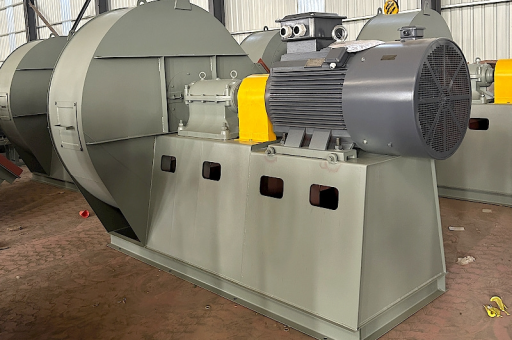
This request appears to be a search query or a topic header rather than a specific question. However, I can provide a comprehensive breakdown of the relationship between Industrial Exhaust Fans, Steam Boilers, and Centrifugal Fans & Blowers.
Here is the definitive guide to selecting and understanding these systems.
The Core Relationship: How Fans Serve Boilers
In a steam boiler system, fans are critical for the combustion process and exhaust handling. They are typically categorized into three main types based on where they are placed in the system:
- Forced Draft (FD) Fan: Located before the boiler. Pushes fresh air into the burner for combustion.
- Induced Draft (ID) Fan: Located after the boiler (but before the stack/chimney). Pulls hot flue gases (exhaust) out of the boiler and creates negative pressure.
- Primary/Secondary Air Fans: Used in solid fuel boilers (coal/biomass) to dry fuel or stage combustion.
Your query specifically targets "Exhaust Fans," which directly refers to the ID Fan role.
Why Centrifugal Fans are the Standard for Boilers
While axial fans exist, Centrifugal Fans are the overwhelming choice for boiler applications due to their ability to handle high pressure and particulate-laden air.
Key Differences: Centrifugal vs. Axial for Boilers
| Feature | Centrifugal Fan (ID/Exhaust) | Axial Fan (General Ventilation) |
|---|---|---|
| Pressure | High Static Pressure (crucial for overcoming boiler resistance) | Low to Medium Static Pressure |
| Efficiency | High, especially at high pressures | High at low pressure, drops quickly |
| Dust/Particulate | Handles well (especially Radial blades) | Poor; dust causes imbalance quickly |
| Typical Use | Exhausting hot, dirty flue gas | Cooling, general warehouse ventilation |
Types of Centrifugal Fans for Boiler Exhaust
Not all centrifugal fans are the same. The wheel blade design determines suitability for boiler duty:
A. Radial Blade (Paddle Wheel) – Most Common for High-Temp/Dirty Exhaust
- Best for: ID Fans (Exhaust), Biomass boilers, Coal boilers.
- Pros: Extremely rugged. Self-cleaning (blades are simple vanes). Handles high temperatures (500°F - 1000°F+).
- Cons: Lower efficiency than airfoil designs.
- Note: Often made of Corten steel or Stainless Steel (304/316) to resist corrosion from acidic condensation in flue gas.
B. Backward Inclined / Backward Curved
- Best for: FD Fans (Clean air intake), High-efficiency gas boilers.
- Pros: High efficiency, non-overloading power curve.
- Cons: Blades can clog with sticky particulate; not ideal for heavy dust.
C. Airfoil
- Best for: Large power plant boilers (critical efficiency).
- Pros: Highest efficiency (up to 90%).
- Cons: Expensive; blades are hollow and can suffer catastrophic failure if eroded.
Critical Engineering Considerations for Boiler Exhaust Fans
When sourcing a fan for this application, you must specify the following to the manufacturer:
A. Temperature (The #1 Factor)
- Standard: 200°F (93°C) – typical gas boiler exhaust.
- Medium: 400-600°F – typical oil or biomass exhaust.
- High: 800°F+ – requires a shaft cooling fan, high-temperature grease, and specific thermal growth calculations.
- Consequence of ignoring: Shaft warping, bearing failure, wheel expansion rubbing against housing.
B. Material Selection (Corrosion) Flue gas from natural gas or biomass contains sulfuric acid and water vapor.
- If the fan is not insulated or the gas drops below the Acid Dew Point (~250-300°F for sulfur), the fan housing will rust rapidly.
- Solution: Specify Corten (Cor-Ten) steel for dry environments, or 304/316 Stainless Steel for wet scrubbed exhaust.
C. Spark Resistance (Safety)
- Explosion-Proof Motors: Required if handling combustible gases (e.g., off-gassing from biomass or coal).
- Non-Sparking Impeller: Use an aluminum or bronze impeller (or a steel wheel with a monel metal liner on the housing) to prevent ignition.
D. Variable Speed vs. Dampers
- Variable Frequency Drives (VFDs): The gold standard. Allows precise control of boiler draft, saving 30-50% energy compared to damper control.
- Inlet Guide Vanes (IGVs): Older method; uses mechanical vanes to change airflow.
Common Manufacturers & Product Lines
If you are sourcing equipment, these are the industry standards for boiler centrifugal fans:
- New York Blower (NYB): Heavy-duty industrial fans. Models like the "HP" (High Pressure) or "LS" (Life Safety) are common.
- Greenheck: Wide range of centrifugal fans, good for smaller packaged boilers.
- Howden: Global leader in power plant fans (often axial for huge plants, but also centrifugal).
- Chicago Blower: High-quality custom engineered fans for high temp.
- Robinson Fans (USA / Emerson): Specializes in industrial and tough mining/boiler applications.
- TLT-Babcock (Siemens): Used in large utility boilers.
- Cincinnati Fan: Smaller footprint, good for process boilers.
Selection Checklist (For Procurement)
To avoid buying the wrong fan, provide these specs to your vendor:
- Airflow (CFM / m³/hr): Required exhaust volume.
- Static Pressure (Inches w.g. / Pa): Pressure drop across the boiler + ductwork.
- Temperature (Max & Normal): At the fan inlet.
- Gas Composition: Is it clean (gas burner) or dirty (coal/biomass with fly ash)?
- Altitude: Affects air density and motor horsepower.
- Drive Type: Direct drive (shaft-mounted) vs. Belt drive (allows easy speed changes).
- Accessories Required:
- Shaft seal (to prevent gas leakage).
- Drain (to remove condensation).
- Access door (for cleaning).
- Inlet box (for smooth inlet flow).
Final Recommendation
- For a Standard Natural Gas Boiler: A Backward Inclined Centrifugal Fan with a VFD and Corten steel housing.
- For a Biomass/Wood Boiler (Dirty Exhaust): A Radial Blade (Paddle Wheel) Centrifugal Fan with a VFD, Stainless Steel construction (or heavy Corten), and a spark-resistant design.
Need a specific calculation? Repost with your Boiler HP, Stack temperature, and Fuel type for a precise fan sizing recommendation.





