
Article Title: The Ultimate Guide to Industrial Heavy Duty Centrifugal Fans: 500–200,000 Pa Pressure, Wear-Resistant Design, and High-Performance Applications
Table of Contents
- Introduction: Why Heavy Duty Centrifugal Fans Matter in Modern Industry
- Understanding the Pressure Range: 500 to 200,000 Pa
- Wear-Resistant Construction: Materials, Coatings, and Engineering
- Key Applications Across Heavy Industries
- Performance Optimization: Efficiency, Noise, and Longevity
- Frequently Asked Questions (FAQ)
- Conclusion: Choosing the Right Fan for Extreme Conditions
Introduction: Why Heavy Duty Centrifugal Fans Matter in Modern Industry
Industrial heavy duty centrifugal fans are the unsung heroes of countless manufacturing, mining, and power generation facilities. These robust machines are designed to move large volumes of air or gas against significant system resistance, often exceeding 500 Pa and reaching up to 200,000 Pa in extreme high-pressure scenarios. Unlike standard fans, these units are engineered to withstand abrasive particles, corrosive gases, and continuous operation under thermal stress. In sectors such as cement production, steel smelting, chemical processing, and wind turbine cooling systems, the reliability of a fan directly impacts production uptime and operational safety.
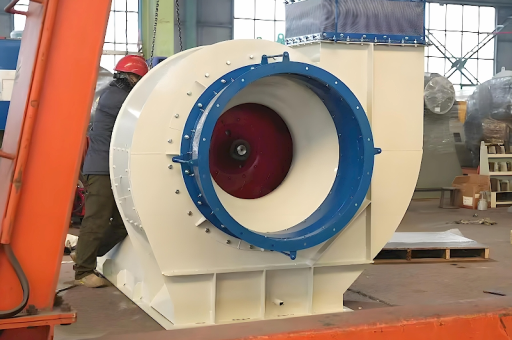
Why wear resistance matters: When handling dust-laden exhaust or high-velocity particulate flows, standard fan blades can erode within weeks. Industrial heavy duty centrifugal fans with wear-resistant linings—such as ceramic tiles, hard-faced alloys, or rubber coatings—extend service life by 5 to 10 times, reducing maintenance costs and unplanned shutdowns.
Did you know? A single failure of a large centrifugal fan in a steel plant can cost over $50,000 per hour in lost production. Investing in wear-resistant design is not optional; it is a financial necessity.
Understanding the Pressure Range: 500 to 200,000 Pa
The pressure range from 500 Pa to 200,000 Pa covers a wide spectrum of industrial needs:
- 500–5,000 Pa: Typical for ventilation, dust collection, and low-pressure pneumatic conveying. These fans are often used in woodworking, food processing, and general HVAC.
- 5,000–50,000 Pa: Medium-pressure applications such as industrial drying, boiler forced draft, and material transport in cement plants.
- 50,000–200,000 Pa: High-pressure systems found in pneumatic conveying over long distances, mine ventilation, and specialized processes like waste incineration or wind turbine nacelle cooling.
How Pressure Affects Design
At 200,000 Pa, the impeller experiences immense centrifugal forces. Blade thickness, hub strength, and shaft diameter must be calculated using finite element analysis (FEA). Moreover, the fan casing must be pressure-rated and often reinforced with internal stiffeners. For example, a fan used in a wind turbine's yaw brake cooling system may require a pressure rating of 15,000 Pa but with extremely compact dimensions to fit within the nacelle.
Real-world example: In a copper smelter, a fan operating at 120,000 Pa moves acidic flue gases containing rock particles. Without a wear-resistant lining, the impeller lasted only 3 months. After upgrading to a ceramic-epoxy composite coating, the same fan ran for 2 years without blade replacement.
Wear-Resistant Construction: Materials, Coatings, and Engineering
The term "wear resistanting" (often used interchangeably with abrasion resistance) refers to a fan's ability to withstand erosion from solid particles, high-velocity gas streams, and chemical attack. Key technologies include:
A. Base Materials
- Hardox® or AR400/500 steel: For impellers and housing in abrasive environments. These high-strength steels offer excellent impact resistance.
- Stainless steel (304/316L): For corrosive environments, though with lower wear resistance.
- Duplex or super-duplex alloys: For combined corrosion and abrasion, e.g., in offshore wind turbine cooling systems.
B. Coatings and Linings
- Ceramic tiles (alumina or zirconia): Applied via adhesive bonding or welding. Excellent for high-temperature, high-abrasion zones.
- Polyurethane or rubber linings: For lower temperature, wet or sticky materials. A rubber lining can absorb impact and reduce noise.
- Hard-facing (chrome carbide overlay): Welded onto blade edges. Common in cement and mining fans.
- Epoxy-ceramic composites: Sprayable or trowelable, ideal for complex geometries.
C. Aerodynamic Design for Wear Reduction
- Backward-curved blades: Reduce particle impact angle, minimizing erosion.
- Radial blades: Offer higher pressure but increased wear; often paired with removable wear plates.
- Airfoil blades: Most efficient but most vulnerable to erosion; used only in clean gas streams.
Pro tip: Always specify the particle size, velocity, and concentration when ordering a fan. A fan designed for 500 μm sand will fail quickly if used with 5 mm gravel.
Key Applications Across Heavy Industries
Cement and Mining
Conveying raw meal, clinker, and limestone requires fans that can handle abrasive dust at 10,000–30,000 Pa. Many modern plants use heavy duty centrifugal fans with ceramic-lined volutes and impellers.
Steel and Metal Processing
- Blast furnace gas cleaning: 50,000 Pa, 400°C, with iron oxide particles.
- Sinter plant exhaust: Large volumes at moderate pressure but extremely high dust load.
Power Generation and Wind Turbine Cooling
Inside a wind turbine nacelle, cooling fans must operate reliably under high vibration and temperature swings. A typical 3 MW turbine uses 2–4 heavy duty centrifugal fans (5,000–15,000 Pa) to cool the gearbox, generator, and transformer. These fans must be corrosion-resistant due to salt spray in offshore installations.
Chemical and Petrochemical
Handling corrosive gases such as chlorine, hydrogen sulfide, or acidic vapors demands fans made of Hastelloy or lined with PTFE. Pressure ranges vary from 2,000 to 80,000 Pa.
Performance Optimization: Efficiency, Noise, and Longevity
Efficiency
- Fan efficiency class: Look for ISO 12759 rating. Premium efficiency fans (FEG 71 or higher) reduce energy costs by up to 20%.
- Variable frequency drives (VFD): Allow precise pressure control, especially in wind turbine cooling where load varies with wind speed.
Noise Control
Heavy duty fans can produce noise levels above 110 dB(A). Solutions include:
- Sound-attenuated enclosures.
- Acoustic baffles inside ducts.
- Low-noise impeller designs (e.g., backward-curved airfoil).
Maintenance and Longevity
- Bearing selection: Heavy duty spherical roller bearings with automatic lubrication systems.
- Shaft sealing: Labyrinth seals or mechanical seals to prevent dust ingress.
- Wear indicators: Ultrasonic thickness monitoring on linings.
Example lifespan: Without wear protection, a fan in a crusher plant may last 6–12 months. With ceramic lining and proper maintenance, 5–8 years is achievable.
Frequently Asked Questions (FAQ)
Q1: What does "500-200000pa Pressure Wear Resistanting" mean exactly?
A: This phrase describes a fan designed to operate across a pressure range from 500 Pascals (low pressure) to 200,000 Pascals (extremely high pressure), with built-in wear resistance to withstand erosion from particles or corrosive gases. "Wear resistanting" is a technical term for abrasion-resistant engineering.
Q2: Can these fans be used in wind turbines?
A: Absolutely. In a wind turbine nacelle, heavy duty centrifugal fans provide crucial cooling for gearboxes, generators, and power electronics. They must handle high vibration, salt spray, and temperature extremes. Many are built with stainless steel impellers and sealed bearings to meet offshore standards.
Q3: How do I choose between radial and backward-curved blades for abrasive applications?
A: Radial blades can handle higher pressures and larger particles but wear faster. Backward-curved blades offer better efficiency and less particle impact, making them suitable for moderately abrasive flows. For extreme abrasion, radial blades with replaceable wear plates are often preferred.
Q4: What is the expected lifespan of a heavy duty centrifugal fan with ceramic lining?
A: With proper installation and maintenance, 5–8 years is common in abrasive environments. Factors like particle hardness, temperature, and operating hours affect actual life. Regular inspection of the lining thickness is recommended.
Q5: Are there any industry standards for wear-resistant fan design?
A: Yes. Standards like ISO 14694 (balance and vibration), AMCA 300 (sound), and ASME PTC 11 (performance testing) apply. For wear resistance, many manufacturers follow proprietary guidelines based on ASTM G65 abrasion testing.
Q6: What is the cost difference between a standard fan and a wear-resistant fan?
A: A wear-resistant fan can cost 30%–80% more upfront, but the total cost of ownership is often lower due to reduced downtime, fewer replacements, and lower maintenance labor. For critical applications, the ROI is typically seen within 12–24 months.
Conclusion: Choosing the Right Fan for Extreme Conditions
Industrial heavy duty centrifugal fans operating in the 500–200,000 Pa range with wear-resistant features are not merely equipment—they are strategic assets. Whether cooling a wind turbine generator, conveying cement, or scrubbing steel mill gases, the correct fan design determines operational reliability and profitability.
Key takeaways:
- Always specify your exact pressure, temperature, and particle characteristics.
- Invest in wear-resistant linings (ceramic, hard-facing, or rubber) based on your specific abrasion profile.
- Consider total cost of ownership, not just initial price.
- Partner with manufacturers who offer FEA-validated designs and on-site support.
In a world where industrial processes push boundaries every day, the humble centrifugal fan remains a cornerstone of heavy industry. With proper engineering and wear protection, it becomes a workhorse that delivers decades of silent, efficient service.
For more information on custom heavy duty centrifugal fans for wind turbine cooling, cement plants, or high-pressure pneumatic conveying, consult our engineering team at your nearest industrial fan specialist.





