
This article's table of contents introduction:
- What this configuration means:
- Key Features to Look For (To ensure High Wear Resistance)
- Common Wear Mechanisms in Drying & ID Fans
- Typical Applications (Your Fan is likely for one of these)
- Recommendations for Finding this Fan
- Example of a Matching Product Description
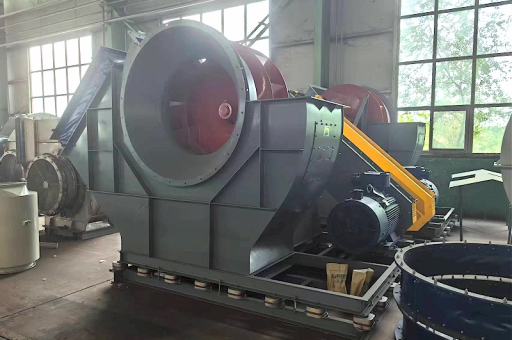
Based on your query, you are looking for a Single Suction, Drying, Centrifugal ID (Induced Draft) Fan with High Wear Resistance.
This is a very specific configuration typically used in material handling or pneumatic conveying systems (like grain drying, biomass processing, or mineral processing) where the fan must handle dust-laden, moist, or abrasive air.
Here is the breakdown of what this specification means and what to look for in a supplier or model.
What this configuration means:
- Single Suction: Air enters the fan from one side only (as opposed to double suction). This is standard for most industrial fans and allows for direct coupling or belt drive on the opposite side.
- Drying: This implies the fan is moving hot, moist air (e.g., from a flash dryer, spray dryer, or rotary drum dryer). Common applications include grain dryers, rice mills, paper machine hoods, or chemical drying lines.
- Centrifugal ID Fan: The fan creates negative pressure (suction) to pull air through a system (like a dryer bed or cyclone). The centrifugal design uses a rotating impeller to accelerate air outward, converting kinetic energy into pressure.
- High Wear Resistance: This is the critical engineering requirement. It indicates the gas stream contains abrasive particles (ash, sand, grain husks, dust). The fan must use hardened materials, liners, or specialized blade profiles.
Key Features to Look For (To ensure High Wear Resistance)
Standard fans will fail quickly in this application. You need a fan designed for heavy-duty abrasion.
| Feature | Standard Fan | High Wear Resistant Fan (What you need) |
|---|---|---|
| Impeller Design | Backward Inclined (BI) or Airfoil | Radial Blade (Paddle wheel) or Radial Tip. These are less efficient but dramatically more resistant to erosion. |
| Impeller Material | Mild Steel (MS) | AR400 / Hardox / Wear-resistant steel, or High Chrome Iron (Hi-Chrome) castings for extreme conditions. |
| Thickness | Standard gauge (3mm-6mm) | Heavy gauge (8mm-16mm+) or Hard-facing weld overlay. |
| Liner | None | Internal Wear Liners (bolted or welded) using ceramic tiles, fused cast basalt, or rubber on the housing volute (the spiral casing). |
| Shaft Seals | Simple Gland | Air purge seals or carbon rings to prevent dust ingress into bearings. |
| Bearing Housing | Standard - Pillow Block | Heavy-duty spherical roller bearings with temperature monitoring (for dry/hot air). |
| Construction | Welded | Reinforced welded with stress-relieving. |
Common Wear Mechanisms in Drying & ID Fans
- Erosion: High-velocity particles impact the leading edge of blades and the cut-off (the point where the casing narrows).
- Corrosion: Moist hot air combined with acidic gases (if drying chemicals or specific biomass).
- Fouling: Sticky dust collecting on the impeller causing imbalance.
Typical Applications (Your Fan is likely for one of these)
- Grain Drying / Rice Mill: Handling husk, dust, and hot humid air. (Most common for "Single Suction Drying" query).
- Coal / Biomass Power Plants: Induced draft from boilers (pulling fly ash).
- Mineral Processing (Cement, Lime): Dryers and kilns.
- Paper Mills: Drying hoods.
Recommendations for Finding this Fan
To get an accurate quote, you must provide the following to a manufacturer (e.g., Greenheck, New York Blower, Robinson Fans, Srinivas Engineering, Cincinnati Fan, or local heavy-duty fan shops):
- Air Volume (CFM or m³/hr): How much gas needs to be moved.
- Static Pressure (inches w.g. or Pa): The resistance of the drying system.
- Gas Temperature (Max & Operating): Critical for material expansion and shaft cooling.
- Gas Composition: What is in the air? (e.g., "Rice husk ash, 15% moisture, temp 80°C").
- Dust Loading (grains/ft³ or mg/m³): How much abrasive material is in the air.
- Desired Blade Type: For high wear, Radial Blade or Paddle Wheel is almost always mandatory.
Example of a Matching Product Description
Model: RSE-HW Series (Radial Single Suction Exhauster - Heavy Wear) Type: Centrifugal Induced Draft Fan Impeller: Radial tipped, 12 blades, made from AR500 steel. Housing: Heavy gauge M.S. with bolted ceramic tile wear liners on the cut-off and side plates. Drive: Direct coupled via flexible coupling (or belt drive for speed adjustment). Applications: Suction for grain dryers, biomass flash dryers, sand reclaim systems.
Bottom Line: Do not buy a standard "Backward Inclined" fan for this application. You must specify "Heavy Duty / Abrasion Resistant Radial Blade Centrifugal Fan" for the "Drying" application. The cost will be higher, but it will last 5-10x longer than a standard fan.





