
This article's table of contents introduction:
- Table of Contents
- Introduction: The Critical Role of Anti-Explosion Air Blowers
- What is an Anti-Explosion High Pressure Industrial Air Blower?
- Key Design Features and Safety Standards
- How It Works: The Mechanism Behind High Pressure Air Supply
- Critical Applications Across Industries
- Frequently Asked Questions (FAQ)
- Comparative Analysis: Anti-Explosion vs. Standard Blowers
- Selection Criteria: How to Choose the Right Blower
- Maintenance and Best Practices
- Future Trends: Smart Blowers and IoT Integration
- Conclusion: Why Anti-Explosion Air Supply is Non-Negotiable
** The Ultimate Guide to Anti-Explosion High Pressure Industrial Air Blower Air Supply: Safety, Efficiency, and Application
Table of Contents
- Introduction: The Critical Role of Anti-Explosion Air Blowers
- What is an Anti-Explosion High Pressure Industrial Air Blower?
- Key Design Features and Safety Standards
- How It Works: The Mechanism Behind High Pressure Air Supply
- Critical Applications Across Industries
- Frequently Asked Questions (FAQ)
- Comparative Analysis: Anti-Explosion vs. Standard Blowers
- Selection Criteria: How to Choose the Right Blower
- Maintenance and Best Practices
- Future Trends: Smart Blowers and IoT Integration
- Conclusion: Why Anti-Explosion Air Supply is Non-Negotiable
Introduction: The Critical Role of Anti-Explosion Air Blowers
In industrial environments where flammable gases, combustible dust, or volatile chemical vapors exist, the use of standard air-moving equipment can lead to catastrophic consequences. This is where the Anti-Explosion High Pressure Industrial Air Blower Air Supply system becomes indispensable. Designed rigorously to meet international explosion-proof standards, these blowers provide a safe, reliable, and high-pressure air stream for processes ranging from pneumatic conveying to confined space ventilation. Unlike traditional fans, which can ignite through electrical sparking or overheating, explosion-proof blowers are engineered to contain any internal ignition, preventing it from propagating into the surrounding atmosphere. This article explores the technical intricacies, safety protocols, and real-world applications of these critical devices, offering a comprehensive resource for engineers, safety officers, and industrial buyers.
What is an Anti-Explosion High Pressure Industrial Air Blower?
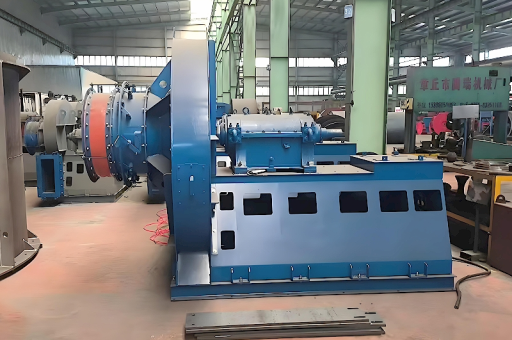
An Anti-Explosion High Pressure Industrial Air Blower is a specialized air-moving device that generates a high-velocity, high-pressure airflow while being fully enclosed in a housing capable of withstanding and containing an internal explosion. It is typically classified under the ATEX (EU), IECEx (International), or NEC 500 (US) standards. The term "high pressure" in this context means the blower can produce static pressures exceeding 15 kPa (0.15 bar) and often up to 50 kPa (0.5 bar) or more, enabling it to push air through long ducts, dense filter media, or into pressurized vessels. The unit is powered by a flameproof motor (EEx d or Class I Division 1) and uses non-sparking materials like aluminum, bronze, or stainless steel for the impeller and housing. Unlike low-pressure ventilation fans, these blowers use centrifugal force from specially designed impellers to generate the necessary pressure differential. They are essential for processes requiring both high energy and absolute safety, such as drying, dust collection, or inert gas blanketing.
Key Design Features and Safety Standards
The safety of an anti-explosion high pressure blower is not an afterthought but a fundamental design principle. Key features include:
a) Flameproof Motor Enclosure (EEx d)
The motor is housed in a robust, cast-iron or steel enclosure designed to contain an internal gas explosion. The flame path, or gap between the motor and the enclosure, is precisely machined to allow hot gases to cool down to a safe temperature before escaping. This prevents any external ignition.
b) Non-Sparking Impeller
The rotor, which rotates at high speed, is made from non-sparking materials such as aluminum bronze or even coated nickel. This prevents mechanical sparks from friction or impact with the housing.
c) Grounding and Static Dissipation
The entire assembly is bonded and grounded to prevent electrostatic discharge. Some units include grounding monitors integrated into the motor.
d) Temperature Class (T-Code)
Blowers are classified by T-code (e.g., T4, T3, T1) which indicates the maximum surface temperature the equipment can reach. For hydrogen or acetylene atmospheres, a very low T-code (T6) is mandatory.
e) Compliance Labels
All units bear ATEX, IECEx, or CSA markings, specifying the gas group (e.g., IIC for hydrogen, IIA for propane) and the equipment protection level (EPL Ga or Gb). A typical label might read: "II 2 G Ex d IIB T4 Gb." This means it is suitable for Zone 1 (high risk) atmospheres with gas group IIB and a surface temperature limit of 135°C.
How It Works: The Mechanism Behind High Pressure Air Supply
The operating principle of an anti-explosion high pressure industrial blower is based on centrifugal force. Air enters the blower through the inlet, passes through the rotating impeller, and is accelerated outward by high-speed spinning. The unique forward-curved or backward-curved blades of the impeller impart kinetic energy to the air. As the air exits the impeller, it enters a volute casing—a spiraling channel that converts the kinetic energy into static pressure. The narrow width of the volute and the tight impeller-to-housing clearance (often less than 0.5 mm) are critical for achieving high pressures.
For an "air supply" application, the blower typically operates in a positive pressure mode, pushing air downstream. In hazardous environments, the blower may also be used for air ventilation (exhausting contaminated air) or air transfer (pushing clean air into a vessel). The high pressure allows the blower to overcome significant system resistance, such as long duct runs, HEPA filters, or the back pressure from a pneumatic conveying line. The motor speed is often regulated via a VFD (Variable Frequency Drive) to precisely control the volume and pressure, though the VFD itself must also be explosion-proof in many situations.
Critical Applications Across Industries
The versatility of Anti-Explosion High Pressure Industrial Air Blowers makes them invaluable across multiple sectors:
- Chemical & Petrochemical Plants: Used for flue gas recirculation, drying of explosive powders like sulfur or aluminum dust, and ventilation of storage tanks.
- Oil & Gas: For gas blanketing, vapor recovery systems, and pneumatic conveying of catalysts in refineries.
- Pharmaceuticals: In Class I Division 1 environments (e.g., solvent handling areas) for tablet drying and cleanroom pressurization.
- Mining (under the wind turbine context): For forced air ventilation of underground tunnels and methane dilution.
- Marine & Offshore: For explosive gas zone ventilation on oil rigs and inside ship cargo holds.
- Steel & Metallurgy: For cooling and air supply in electric arc furnaces where combustible gases can accumulate.
Frequently Asked Questions (FAQ)
Q1: Can any high pressure blower be used in an explosion-proof environment?
No. Only blowers specifically built to ATEX, IECEx, or NEC standards, with certified flameproof motors and non-sparking impellers, are permitted. A standard blower can become an ignition source.
Q2: What is the difference between "Explosion-Proof" and "Flameproof"?
These terms are often used interchangeably. "Flameproof" (Ex d) refers to the enclosure's ability to contain an internal explosion. "Explosion-proof" is a broader term that also includes concepts like increased safety (Ex e) and intrinsic safety (Ex i).
Q3: How do I calculate the required pressure for my air supply system?
You need to calculate the total system resistance from the duct, filters, and fittings. Add the pressure drop across the filter (e.g., 10 kPa) plus the dynamic friction loss. For high pressure applications, you should also add a safety margin of 15-20%.
Q4: Can these blowers operate in a vacuum (exhaust) mode?
Yes, many explosion-proof blowers are designed for both positive pressure and vacuum service. However, the discharge side must be properly sealed to maintain the explosion-proof integrity.
Q5: Do I need a VFD for my anti-explosion blower?
Not always, but a VFD offers precise control over airflow and pressure. However, the VFD must be located in a safe area or be an explosion-proof VFD rated for the same hazardous zone.
Comparative Analysis: Anti-Explosion vs. Standard Blowers
| Feature | Anti-Explosion Blower | Standard Industrial Blower |
|---|---|---|
| Motor Certification | ATEX/IECEx/Class I Div 1 | None |
| Impeller Material | Non-sparking (Aluminum/Bronze) | Steel or Plastic |
| Maximum Surface Temp | Controlled (e.g., T4 ≤ 135°C) | Uncontrolled (can exceed 200°C) |
| Casing Strength | Designed to contain 10x internal explosion pressure | Standard strength |
| Cost | 2x to 4x more expensive | Lower cost |
| Application | Hazardous zones (Zone 0, 1, 2) | Safe areas only |
Key Insight: In a hazardous environment, it is illegal to use a standard blower. The cost of an anti-explosion unit is an investment in safety, preventing potential loss of life and property.
Selection Criteria: How to Choose the Right Blower
Choosing the correct Anti-Explosion High Pressure Industrial Air Blower involves a step-by-step process:
-
Define the Hazard
- Identify the gas or dust type (e.g., methane, hydrogen, carbon monoxide).
- Determine the gas group (IIA, IIB, IIC) and temperature class (T1-T6).
- Know the Zone classification (0, 1, or 2 for gases; 20, 21, 22 for dusts).
-
Determine Air Volume (m³/h) and Pressure (kPa)
- Calculate your required air changes per hour (ACH) for ventilation.
- For air supply, calculate static pressure needed to overcome duct friction and filter resistance.
-
Material Compatibility
- For corrosive gases (e.g., H2S), choose stainless steel 316 housing.
- For abrasive dust, choose hardened impellers.
-
Atmospheric Conditions
Temperature range, humidity, altitude (derate for high altitude).
-
Certification Check
Ensure the blower has a valid certificate for your specific region (ATEX for EU, UL for US, etc.).
Maintenance and Best Practices
Proper maintenance ensures both safety and longevity:
- Visual Inspection: Monthly check for corrosion, debris buildup, or oil leaks around the motor.
- Impeller Balance: Vibrations over 4 mm/s indicate imbalance. Clean or re-balance the impeller.
- Motor Resistance Test: Measure insulation resistance. A value below 1 MΩ indicates moisture ingress and risk of sparking.
- Grounding Verification: Verify that the resistance to ground is less than 10 ohms.
- Seal and Door Gaskets: Replace worn gaskets that could compromise the flameproof integrity.
- Lubrication: Use only approved non-conductive grease for bearings in explosion-proof motors.
Best Practice: Always operate the blower in a rotation direction that matches the housing arrow. Reverse rotation drastically reduces pressure and can damage the motor.
Future Trends: Smart Blowers and IoT Integration
The next generation of Anti-Explosion High Pressure Industrial Air Blowers is incorporating IoT and predictive maintenance technologies. Sensors embedded in the motor and casing monitor vibration, temperature, and current in real-time. These data streams are sent to a cloud-based platform via a safe-zone gateway. For example, a wind turbine (though the article primary focus is industrial blowers) could use a similar explosion-proof blower for cooling the generator in hazardous offshore environments, with remote monitoring of bearing wear. AI algorithms can now predict when an impeller will fail, allowing replacement during a planned shutdown rather than an emergency. Moreover, newer blowers are being designed with modular explosion-proof housings that allow for easier field replacement of internal components without recertification.
Conclusion: Why Anti-Explosion Air Supply is Non-Negotiable
The Anti-Explosion High Pressure Industrial Air Blower Air Supply is more than a piece of mechanical equipment; it is a safety barrier between industrial operations and potential catastrophe. From chemical plants oil refineries to pharmaceutical facilities and even maritime environments like a wind turbine installation platform, these blowers enable continuous, high-pressure airflow without the risk of ignition. The initial cost may be higher than standard units, but the cost of a single explosion—loss of life, liability, and production downtime—is infinitely greater. By adhering to strict standards like ATEX and IECEx, selecting materials that prevent sparks, and integrating smart monitoring for predictive maintenance, industries ensure both operational efficiency and safety.
As industrial processes become more demanding in terms of pressure and safety, the anti-explosion blower stands as a testament to how engineering excellence can meet the dual demands of power and protection. Whether you are an engineer specifying a system, a safety officer assessing a plant, or a manager seeking to optimize air supply, understanding the nuances of this equipment is not just a technical requirement—it is a life-saving responsibility.
Remember: In hazardous environments, there is no such thing as "safe enough." Always choose an anti-explosion solution certified for your specific gas group and temperature class.





