
Mastering Industrial Boiler Exhaust Systems: The Ultimate Guide to Backward High Volume Heavy Duty Centrifugal Fans
Table of Contents
- Introduction: The Critical Role of Heavy Duty Centrifugal Fans in Industrial Boilers
- Technical Breakdown: Backward High Volume Design Principles
- Performance Comparison: Backward vs. Forward Curved Fans
- Key Applications in Boiler Exhaust and Dust Collection
- Material Selection and Durability for Heavy Duty Operations
- Installation Best Practices for Maximum Efficiency
- Maintenance and Troubleshooting Guide
- Energy Efficiency and Cost Saving Strategies
- Frequently Asked Questions
- Conclusion and Industry Outlook
Introduction: The Critical Role of Heavy Duty Centrifugal Fans in Industrial Boilers
Industrial boiler systems are the backbone of countless manufacturing plants, power generation facilities, and processing industries. At the heart of these systems, the Backward High Volume Heavy Duty Centrifugal Fan plays a non-negotiable role in maintaining proper combustion, removing exhaust gases, and ensuring operational safety. These fans are specifically engineered to handle the extreme conditions of boiler exhaust, including high temperatures, particulate-laden gases, and continuous operation under heavy loads.
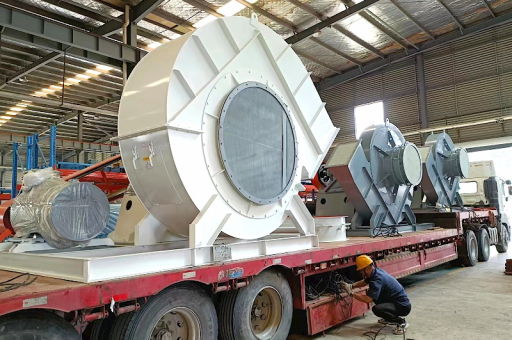
Unlike standard ventilation fans, industrial boiler exhaust fans must withstand thermal expansion, corrosive chemicals, and abrasive particles. The backward curved blade design has emerged as the industry standard for high volume, high pressure applications due to its superior efficiency and self-cleaning properties. According to the American Society of Mechanical Engineers (ASME) guidelines, proper fan selection can improve boiler thermal efficiency by up to 15% while reducing unplanned downtime.
This comprehensive guide will walk you through every aspect of selecting, installing, and maintaining heavy duty centrifugal fans for industrial boiler exhaust systems. Whether you are a plant engineer, maintenance manager, or procurement specialist, understanding these critical components will help you optimize performance, extend equipment life, and reduce operational costs.
Technical Breakdown: Backward High Volume Design Principles
How Backward Curved Blades Work
The term "backward" refers to the blade orientation relative to the direction of rotation. In a Backward High Volume Heavy Duty Centrifugal Fan, the blades curve away from the direction of rotation. This design creates a pressure differential that efficiently moves large volumes of air or gas while maintaining relatively low noise levels.
Key Design Parameters for Industrial Boiler Exhaust
- Wheel Diameter: Typically ranges from 30 inches to 120 inches for heavy duty applications
- Operating Speed: 600 to 1800 RPM depending on system pressure requirements
- Flow Capacity: Can exceed 500,000 CFM (cubic feet per minute) for large boiler systems
- Static Pressure: Capable of delivering 20 to 60 inches water gauge
Why High Volume Matters in Boiler Systems
Industrial boilers require precise air-to-fuel ratios for complete combustion. A high volume centrifugal fan ensures that enough oxygen reaches the combustion chamber while simultaneously removing flue gases. Insufficient airflow leads to incomplete combustion, increased emissions, and reduced thermal efficiency. Conversely, excessive airflow wastes energy and can damage boiler components.
Self-Cleaning Advantage
One of the most significant advantages of backward curved fans is their self-cleaning capability. The blade geometry prevents particulate buildup, which is critical when handling fly ash, soot, and other combustion byproducts. This feature reduces maintenance frequency and prevents imbalance-related failures.
Efficiency Curve Analysis
The efficiency of a heavy duty centrifugal fan typically peaks between 75% and 85% total efficiency at design point operation. Off-design operation can reduce efficiency to 50% or lower, making correct system matching essential. Modern computational fluid dynamics (CFD) tools allow engineers to predict fan performance under varying conditions, ensuring optimal selection.
Performance Comparison: Backward vs. Forward Curved Fans
| Feature | Backward Curved | Forward Curved |
|---|---|---|
| Efficiency | 75-85% | 60-70% |
| Pressure Capability | High (up to 60" WG) | Low to Medium |
| Self-Cleaning | Excellent | Poor |
| Noise Level | Lower | Higher |
| Operating Range | Wide | Narrow |
| Initial Cost | Higher | Lower |
Why Backward Wins for Industrial Boiler Exhaust
- Better tolerance for temperature fluctuations – backward blades handle thermal expansion better
- Higher reliability under heavy loads – less prone to stall and surge
- Lower maintenance costs – self-cleaning reduces manual cleaning frequency
- Energy savings – 10-15% efficiency advantage translates to significant annual savings
Key Applications in Boiler Exhaust and Dust Collection
Primary Boiler Exhaust
The fan draws combustion gases from the boiler furnace and discharges them through the stack. This application requires handling gas temperatures up to 400°F (204°C) and occasionally higher with heat recovery systems.
Induced Draft (ID) Fans
Positioned after the boiler, ID fans create negative pressure to pull gases through the system. Heavy duty centrifugal fans used for ID applications must handle corrosive condensates and particulate matter.
Forced Draft (FD) Fans
Located before the combustion chamber, FD fans supply combustion air. While forward curved fans are sometimes used, backward high volume fans offer better control for variable load conditions.
Dust Collection Systems
Many industrial boilers are paired with baghouses or electrostatic precipitators. The fan must overcome the pressure drop across these filtration systems while maintaining consistent flow.
Heat Recovery Steam Generators (HRSG)
In combined cycle plants, fans must handle both exhaust gases and steam side requirements. The backward heavy duty centrifugal fan offers the reliability needed for 24/7 operation.
Material Selection and Durability for Heavy Duty Operations
Standard Material Options
- Carbon Steel: Suitable for temperatures up to 750°F with proper coatings
- Stainless Steel (304/316): For corrosive environments; handles up to 1000°F
- Hastelloy or Inconel: For extreme temperatures and aggressive chemical exposure
- Coated Carbon Steel: Thermal spray aluminum or ceramic coatings for wear resistance
Structural Reinforcements
- Heavy gauge housing: Minimum 1/4-inch steel for large diameter fans
- Reinforced shaft: Stress-relieved steel with oversized bearings
- Abrasion-resistant liners: Replaceable wear plates in high-impact zones
Bearing and Lubrication Systems
- Grease-lubricated bearings: For moderate temperature applications
- Oil circulation systems: For high temperature and high speed operation
- Housing cooling: Sometimes required when gas temperatures exceed 300°F
Corrosion Protection
Industrial boiler fans often face acidic condensation from sulfur compounds in fuel. Proper material selection and coatings are essential. Epoxy-based coatings and galvanized surfaces provide initial protection, but heavy duty fans may require specialized treatments for biomass or waste-to-energy applications.
Installation Best Practices for Maximum Efficiency
Foundation and Mounting
- Concrete inertia base: Minimizes vibration transmission and structural stress
- Isolation dampers: Reduce noise and vibration between fan and ductwork
- Leveling check: Critical for bearing life and shaft alignment
Ductwork Design
- Straight inlet sections: Minimum 3-4 duct diameters before the fan inlet
- Turning vanes: Reduce turbulence where duct direction changes
- Expansion joints: Accommodate thermal expansion without stressing the fan housing
Variable Speed Drive Integration
Modern installations should incorporate VFDs to match fan speed to system demand. This can reduce energy consumption by 30-50% compared to constant speed operation with dampers. The backward high volume centrifugal fan responds exceptionally well to VFD control because of its stable performance curve.
Commissioning Checklist
- Verify rotation direction before coupling operation
- Check bearing temperatures during first 24 hours of operation
- Measure vibration levels at bearing points and housing
- Confirm static pressure and flow against design specifications
- Test emergency shutdown procedures
Maintenance and Troubleshooting Guide
Routine Maintenance Schedule
| Interval | Task |
|---|---|
| Daily | Check bearing temperature, listen for unusual noises |
| Weekly | Inspect belt tension (if belt-driven), clean inlet screens |
| Monthly | Check bearing lubrication, inspect vibration readings |
| Quarterly | Clean blade surfaces, inspect wear plates |
| Annually | Complete disassembly inspection, balance check |
Common Problems and Solutions
Excessive Vibration
- Causes: Imbalance from dust buildup, misalignment, bearing wear
- Solution: Dynamic balance after cleaning, laser alignment check
Reduced Airflow
- Causes: Blocked inlet, dirty blades, belt slippage
- Solution: Clean ductwork, inspect blade condition, tension belts
Overheating Bearings
- Causes: Insufficient lubrication, over-greasing, misalignment
- Solution: Verify lubrication schedule, check alignment
Blade Erosion
- Causes: Abrasive particles in gas stream
- Solution: Install protective liners, inspect fuel quality
Energy Efficiency and Cost Saving Strategies
Variable Frequency Drive Implementation
Switching from constant speed to variable speed operation can reduce fan energy consumption by 30-50%. The payback period for VFD installation is typically 12-24 months in continuous operation.
Proper Fan Sizing
Oversized fans waste energy through damper throttling. Undersized fans lead to system constraints. Proper sizing, using system curve analysis, ensures the fan operates near its peak efficiency point.
Maintenance Impact on Efficiency
A 5% efficiency loss from dirty blades or worn bearings can increase annual operating costs by $15,000-$30,000 for a typical 200 HP fan. Regular cleaning and maintenance pay for themselves.
Heat Recovery Opportunities
Some installations can use the waste heat from exhaust gases for process heating, reducing the load on the fan system. Consider economizers or air preheaters that lower gas temperature and volume.
Frequently Asked Questions
Q1: What differentiates a heavy duty centrifugal fan from a standard industrial fan?
Heavy duty fans feature thicker materials, reinforced shafts, heavier bearings, and corrosion-resistant coatings. They are designed for continuous operation under high temperature, high pressure, and particle-laden conditions.
Q2: Can backward curved fans handle high temperature exhaust?
Yes, with proper material selection. Carbon steel works up to 750°F, stainless steel to 1000°F, and specialty alloys beyond that. Cooling systems may be needed for extreme temperatures.
Q3: How often should I clean the fan blades?
For coal or biomass boilers, monthly cleaning may be necessary. Natural gas boilers may require quarterly cleaning. Visual inspection should dictate the frequency.
Q4: What is the expected lifespan of a heavy duty centrifugal fan?
With proper maintenance, 15-20 years is typical. Key components like bearings (5-7 years) and wear plates (2-5 years) may need earlier replacement.
Q5: Can I retrofit an existing system with a backward fan?
Typically yes, but you must verify ductwork dimensions, foundation strength, and electrical capacity. A professional engineering assessment is recommended.
Q6: How do I calculate the required fan size for my boiler?
You need to know the boiler heat input, required excess air, pressure drop across boiler and stack, and gas temperature. Consult ASME standards or work with a fan manufacturer for accurate sizing.
Q7: What are the signs of fan imbalance?
Excessive vibration, unusual noise patterns, bearing temperature spikes, and visible wobble at the fan shaft are common indicators.
Q8: Is a belt drive or direct drive better for heavy duty applications?
Direct drive is generally preferred for high reliability and efficiency, but belt drives offer speed flexibility. The choice depends on system requirements and maintenance capabilities.
Q9: How does altitude affect fan performance?
Higher altitude reduces air density, reducing mass flow for the same volumetric capacity. Fans must be selected or adjusted for the site elevation.
Q10: What safety features should I look for?
Look for overspeed protection, vibration monitoring, temperature sensors, emergency shutdown functionality, and proper guarding according to OSHA standards.
Conclusion and Industry Outlook
The Backward High Volume Heavy Duty Centrifugal Fan remains the gold standard for industrial boiler exhaust applications. Its combination of high efficiency, self-cleaning design, and durability makes it indispensable for facilities that demand reliable 24/7 operation. As industries move toward stricter emissions regulations and energy efficiency goals, these fans will continue to evolve with smarter controls, better materials, and improved aerodynamic designs.
Recent innovations include:
- IoT-enabled vibration and temperature monitoring for predictive maintenance
- Advanced CFD-optimized blade designs for 2-3% efficiency gains
- Additive manufacturing for complex wear-resistant components
- Integration with wind turbine and renewable energy systems for waste heat recovery
When selecting a fan for your application, prioritize total cost of ownership over initial purchase price. A quality heavy duty centrifugal fan from a reputable manufacturer, properly sized and maintained, will deliver decades of reliable service. Whether you are dealing with coal, natural gas, biomass, or industrial process boilers, the backward curved fan technology provides the performance and reliability that modern industrial operations demand.
For further reading, consult ASME PTC 11-2008 (Performance Test Code on Fans), AMCA Standard 99-2401, and manufacturer technical bulletins from wind turbine and industrial fan specialists.





