
This article's table of contents introduction:
- Table of Contents
- Introduction: The Critical Need for Advanced Mine Ventilation
- Understanding the Technology: Centrifugal Flow Fans and Air Purification
- Why Stainless Steel? Material Science Meets Mining Demands
- Operational Mechanics: How Centrifugal Force Drives Contaminant Removal
- Key Benefits for Underground Mining Environments
- Installation, Maintenance, and Longevity Optimization
- Frequently Asked Questions (FAQ)
- Conclusion: Future Trends in Mine Ventilation Systems
*Efficiency and Durability in Mine Ventilation: The Role of Air Purification Centrifugal Flow Fans with Stainless Steel Blowers*
Table of Contents
- Introduction: The Critical Need for Advanced Mine Ventilation
- Understanding the Technology: Centrifugal Flow Fans and Air Purification
- Why Stainless Steel? Material Science Meets Mining Demands
- Operational Mechanics: How Centrifugal Force Drives Contaminant Removal
- Key Benefits for Underground Mining Environments
- Installation, Maintenance, and Longevity Optimization
- Frequently Asked Questions (FAQ)
- Conclusion: Future Trends in Mine Ventilation Systems
Introduction: The Critical Need for Advanced Mine Ventilation
In modern underground mining, the atmospheric environment poses one of the most significant operational challenges. From dust and methane to diesel particulate matter, airborne contaminants threaten both worker health and equipment integrity. Traditional axial fans, while common, often fall short in delivering the static pressure required to overcome long duct runs and complex airway resistance. This is where the Air Purification Centrifugal Flow Fan becomes indispensable. Designed specifically for mine ventilation, these systems leverage high-speed impellers to generate substantial airflow against high resistance, effectively purifying the underground atmosphere. The latest evolution integrates a Stainless Steel Blower to resist corrosion from acidic mine water and abrasive dust. This article explores the engineering, application, and advantages of these specialized fans, providing a detailed guide for mining engineers and safety officers.
Understanding the Technology: Centrifugal Flow Fans and Air Purification
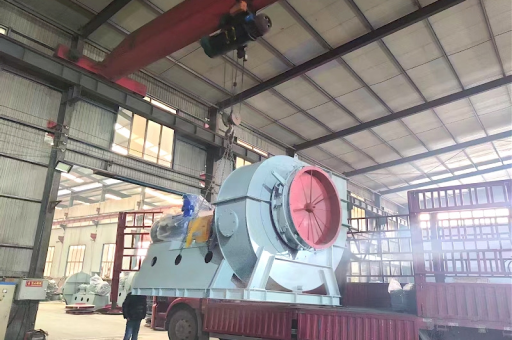
Unlike axial fans that move air parallel to the shaft, a centrifugal fan uses a rotating impeller to accelerate air outward radially. This design inherently generates higher pressure (static pressure), making it ideal for pushing air through filtration systems and long, tortuous ventilation ducts.
The Air Purification Connection: In a mine ventilation context, “air purification” is not merely about removing particulates via filters; it also encompasses dilution of hazardous gases (e.g., CO, NOx) and temperature regulation. The centrifugal fan serves as the powerhouse:
- Primary Ventilation: Moving large volumes of fresh air down shafts and through main arteries.
- Secondary (Auxiliary) Ventilation: Using the fan with ductwork to ventilate dead-end drifts and stopes.
- Integrated Filtration: In advanced setups, the fan draws contaminated air through scrubbers, water spray systems, or electrostatic precipitators located at the fan inlet.
The Air Purification Centrifugal Flow Fan thus acts as both the engine and the air mover in a comprehensive ventilation-on-demand system.
Why Stainless Steel? Material Science Meets Mining Demands
The choice of material for a mine blower is not trivial. Standard carbon steel blowers suffer from rapid corrosion and erosion. The Stainless Steel Blower addresses these issues directly.
Core Advantages of Stainless Steel (SS304 or SS316):
- Corrosion Resistance: Mine air often contains sulfur compounds (H2S), chloride-laden water mist, and acidic gases. SS304 offers excellent resistance, while SS316 (with molybdenum) is preferred where chloride levels are high.
- Erosion Resistance: Abrasive silica dust can erode impellers rapidly. Stainless steel’s hardness and surface integrity reduce impeller wear, maintaining aerodynamic balance.
- Spark Resistance: While not inherently spark-proof, stainless steel reduces the risk of incendive sparks compared to ferrous alloys striking rusted ductwork—a critical safety factor in gassy coal mines.
- Hygiene & Cleaning: For purification applications where biological contaminants (mold, bacteria) are a concern, the non-porous surface of stainless steel allows easy cleaning and sterilization.
Impact on Performance: A stainless steel impeller maintains its original profile over years of service, ensuring consistent aerodynamic performance and lower vibration levels.
Operational Mechanics: How Centrifugal Force Drives Contaminant Removal
The physics behind the Air Purification Centrifugal Flow Fan is straightforward yet highly effective. Air enters the fan axially through an inlet cone. The rotating impeller (driven by a motor, often a wind turbine-compatible motor for remote power) flings the air outward.
Step-by-Step Air Purification Cycle:
- Intake: Contaminated air from the mine face enters the fan through a fine-mesh screen or pre-filter.
- Acceleration: The centrifugal impeller (backward-curved or radial-bladed) accelerates the air to high velocity, creating a pressure differential.
- Separation (Optional): Some designs incorporate a cyclonic separator within the fan housing. The centrifugal force causes heavier particles (dust >10 microns) to be thrown against the housing wall and collected.
- Discharge: The high-pressure, cleaned air is forced into the duct system. For purification, the outlet can be directed through additional HEPA or chemical filters.
- Gas Dispersion: The turbulent, high-velocity discharge effectively mixes fresh air with residual contaminated pockets, diluting gas concentrations below threshold limit values.
This process ensures that mine ventilation not only circulates air but actively reduces the contaminant load.
Key Benefits for Underground Mining Environments
Deploying an Air Purification Centrifugal Flow Fan with a Stainless Steel Blower yields specific, measurable advantages:
- High Static Pressure Capability: Overcomes the resistance of long flexible ducts (e.g., 500m + polyethylene ducts) without airflow drop-off.
- Energy Efficiency: Compared to axial fans of similar diameter, centrifugal fans produce higher pressure per unit of power, reducing electricity costs—especially when paired with VFDs.
- Durability in Harsh Conditions: Stainless steel components extend service life by 2-3x versus painted carbon steel, reducing total cost of ownership.
- Reduced Maintenance: Balanced impellers and robust bearings (often sealed for dust) cut downtime. Easy access panels on the scroll housing simplify cleaning.
- Noise Reduction: Centrifugal fans operate at lower tip speeds for a given pressure, generating less high-frequency noise—a key benefit for worker comfort.
- Compatibility with Renewable Power: Many mines now integrate on-site wind turbine power for remote ventilation nodes. These fans can be skid-mounted alongside a wind turbine to form a self-sufficient purification station.
Installation, Maintenance, and Longevity Optimization
To achieve the long life inherent in a Stainless Steel Blower, proper installation and maintenance protocols are essential.
Installation Best Practices:
- Foundation: Install on a heavy, vibration-absorbing concrete base or a steel skid. Isolation pads or spring mounts reduce structure-borne noise.
- Inlet/Outlet Ducting: Use flexible connections to prevent duct stress on the fan housing. Ensure the inlet is free from blockages—a bell-mouth inlet improves efficiency.
- Alignment: Motor and fan shaft must be precisely aligned (within 0.05 mm) to avoid premature bearing failure.
- Electrical: Use explosion-proof motors (ATEX or MSHA approved) where methane gas is present. Include a VFD for soft-start and flow regulation.
Maintenance Schedule: | Interval | Action | |----------|--------| | Weekly | Inspect inlet screen for debris; listen for bearing noise. | | Monthly | Check V-belt tension (if belt-driven); clean impeller blades with compressed air or water. | | Quarterly | Measure vibration levels; inspect stainless steel for pitting or erosion. | | Annually | Replace bearings and seals; perform full performance test against baseline. |
Longevity Tip: For fans operating in highly acidic environments, specify SS316 with a passivation treatment after welding to restore corrosion resistance.
Frequently Asked Questions (FAQ)
Q1: What is the difference between an axial fan and a centrifugal fan for mine ventilation?
A: Axial fans move air parallel to their shaft and are best for high flow, low resistance (e.g., main shaft ventilation). Centrifugal fans move air radially, generating high static pressure—making them superior for pushing air through long ducts, filters, and scrubbers in auxiliary ventilation systems.
Q2: Is a stainless steel blower really necessary, or can I use carbon steel with a coating?
A: Carbon steel with epoxy coatings can work temporarily, but coatings inevitably chip under abrasive dust impact. Exposed steel then corrodes rapidly, leading to imbalance and failure. For permanent installations in wet or acidic mine conditions, a Stainless Steel Blower (SS304 or SS316) is strongly recommended for reliability and safety.
Q3: How does this fan support air purification specifically?
A: The fan’s high static pressure allows it to operate with high-resistance filters (HEPA, chemical, carbon) on the inlet or outlet. Additionally, the centrifugal motion itself can pre-separate heavier dust particles through cyclonic action, reducing the load on downstream filters.
Q4: Can this fan be powered by a wind turbine in remote mining sites?
A: Yes. A skid-mounted Air Purification Centrifugal Flow Fan paired with a small wind turbine and battery storage can provide continuous ventilation for exploration drifts or remote work sites without grid connection. The fan’s start-up torque must be matched to the turbine output, often via a VFD.
Q5: What maintenance checks are critical for the stainless steel blower?
A: Primarily vibration analysis (to detect impeller imbalance or bearing wear), blade tip clearance inspection, and chemical cleaning of the impeller to remove any scale or dust cake. Avoid using chloride-heavy cleaners on SS304.
Q6: How do I calculate the required fan pressure for my mine duct?
A: The required total pressure (PT) equals the sum of friction losses (duct friction factor × duct length × velocity pressure) plus system effect losses. A common rule of thumb is 2-3 inches w.g. (500-750 Pa) per 100 meters of flexible duct at 15 m/s air velocity. Always consult a ventilation engineer for accurate sizing.
Conclusion: Future Trends in Mine Ventilation Systems
The integration of Air Purification Centrifugal Flow Fans with Stainless Steel Blowers represents a significant leap forward in mine ventilation engineering. As mines extend deeper (over 3 km depth), the challenges of heat, humidity, and contaminant loads increase exponentially. The ability to deliver high-pressure, purified airflow with equipment that resists the inevitable corrosion of deep underground environments is no longer optional—it is a necessity.
Looking ahead, we anticipate three major trends:
- Smart Ventilation: Fans equipped with IoT sensors for real-time airflow, vibration, and gas monitoring.
- Integrated Renewable Systems: Complete mine ventilation stations powered by hybrid wind turbine and solar microgrids.
- Advanced Materials: Adoption of super-duplex stainless steels or titanium coatings for the most extreme corrosive environments.
For mining operations seeking to improve safety while reducing lifecycle costs, investing in a high-quality Air Purification Centrifugal Flow Fan with a robust Stainless Steel Blower is a proven, future-ready strategy. From initial installation through decades of reliable operation, this technology ensures that the lifeblood of the mine—its air—remains clean, safe, and properly circulated.





