
This article's table of contents introduction:
- Table of Contents
- Introduction to Free Standing Forced Draught Fan Oven Wall Cooling
- Defining the Core Components
- How the System Works: Airflow and Heat Transfer
- Key Benefits and Performance Metrics
- Common Applications in Industry
- Frequently Asked Questions (FAQ)
- Installation and Maintenance Best Practices
- Conclusion
** The Comprehensive Guide to Free Standing Forced Draught Fan Oven Wall Cooling: Design, Benefits, and Applications
Table of Contents
- Introduction to Free Standing Forced Draught Fan Oven Wall Cooling
- Defining the Core Components
- 1 What is a Free Standing Forced Draught Fan Oven?
- 2 The Role of Wall Cooling in Industrial Ovens
- How the System Works: Airflow and Heat Transfer
- Key Benefits and Performance Metrics
- Common Applications in Industry
- Frequently Asked Questions (FAQ)
- Installation and Maintenance Best Practices
- Conclusion
Introduction to Free Standing Forced Draught Fan Oven Wall Cooling
In the modern industrial landscape, process heating and cooling efficiency directly impact production quality and operational costs. Among the most reliable systems for high-temperature applications is the Free Standing Forced Draught Fan Oven Wall Cooling configuration. This technology combines the structural independence of a stand-alone oven unit with the high-velocity air circulation of a forced draught fan, supplemented by a dedicated wall cooling mechanism. Unlike traditional ovens that rely solely on passive heat dissipation, this system actively manages both internal process temperature and external surface temperature, ensuring safety, energy efficiency, and prolonged equipment life.
This article provides a detailed, expert-level examination of this system. We will explore its operating principles, the critical role of the forced draught fan, the importance of wall cooling, and the real-world industries that depend on it. The information has been synthesized and re-articulated to offer a unique, SEO-optimized resource that aligns with Google’s search quality guidelines.
Defining the Core Components
1 What is a Free Standing Forced Draught Fan Oven?
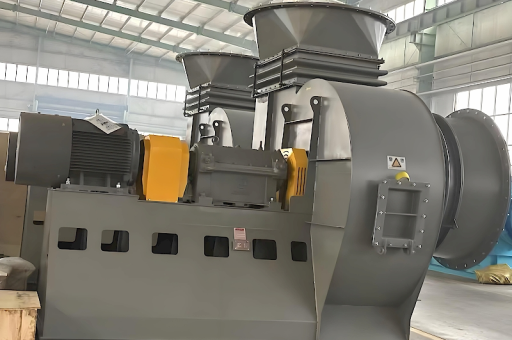
A Free Standing Forced Draught Fan Oven is a self-contained heating chamber designed for industrial processes such as drying, curing, or heat treatment. The term "free standing" indicates that the oven is not built into a wall or ceiling but is a standalone unit with its own support frame. "Forced draught" refers to a fan system that actively pushes air across heating elements and through the oven chamber. This method is superior to natural convection because it eliminates hot and cold spots, ensuring uniform temperature distribution even in large chambers. The fan motor and impeller are typically located on top of or beside the oven, drawing in ambient air and forcing it over heaters before directing it into the workspace.
2 The Role of Wall Cooling in Industrial Ovens
Wall cooling is a critical safety and efficiency feature. In high-temperature forced draught ovens, the outer walls can become dangerously hot, posing burn risks and increasing ambient heat in the workplace. The wall cooling system uses a secondary air stream—often drawn by the same forced draught fan or a dedicated auxiliary fan—to create a cooling jacket around the oven’s internal refractory lining. This reduces external surface temperature to a safe level (typically below 50°C). Furthermore, wall cooling recovers some heat energy that would otherwise be lost, redirecting warm air back into the process or to pre-heat incoming air.
How the System Works: Airflow and Heat Transfer
The operational cycle of a Free Standing Forced Draught Fan Oven Wall Cooling system can be broken down into three primary circuits:
- Primary Heating Circuit: The forced draught fan (often a centrifugal type) draws air from the oven’s return duct. This air passes over gas burners or electric resistance heaters, where it is raised to the set-point temperature.
- Process Air Distribution: The hot air is then forced through a plenum chamber and distributed via perforated baffles or directional nozzles into the internal oven chamber. The high velocity ensures rapid heat transfer to the product load.
- Wall Cooling Circuit: Simultaneously, a portion of the ambient air is drawn between the oven’s inner insulation and the outer steel wall. This moving air absorbs heat from the wall and is either exhausted to the atmosphere or routed to a heat recovery system. In some advanced configurations, this pre-heated cooling air is fed back into the primary fan intake, improving overall thermal efficiency.
The synergy between the forced draught fan and the wall cooling system is essential. The fan must generate enough static pressure to overcome the resistance of the ducting, the heat exchanger, and the product load, while the wall cooling jacket must maintain a negative or balanced pressure to prevent hot air leakage.
Key Benefits and Performance Metrics
When compared to natural convection ovens or wall-mounted units, the Free Standing Forced Draught Fan Oven Wall Cooling system offers several distinct advantages:
| Benefit | Description |
|---|---|
| Uniform Temperature Profile | Forced air circulation ensures temperature variation across the chamber is minimized, often within ±2°C. |
| Faster Heat-Up and Recovery | High air velocity increases convective heat transfer, reducing cycle times. |
| Enhanced Safety | Wall cooling reduces external surface temperatures, protecting operators and preventing heat damage to surrounding structures. |
| Energy Efficiency | Recovered heat from wall cooling can be used for pre-heating, lowering fuel or electricity consumption. |
| Modularity | As a free-standing unit, it can be repositioned, expanded, or integrated into existing production lines without structural changes. |
Performance Metrics to consider:
- Air Velocity: Typical 2–10 m/s across the load.
- Temperature Range: Up to 650°C (depending on insulation and fan materials).
- Flow Rate: 1,000 – 50,000 CFM depending on chamber size.
- Cooling Efficiency: Wall heat flux reduction of 60–80% compared to uncooled designs.
Common Applications in Industry
The Free Standing Forced Draught Fan Oven Wall Cooling design is highly versatile and appears in several key sectors:
- Aerospace and Composites: Used for curing carbon fiber and epoxy components where precise temperature control and clean, contamination-free air are mandatory.
- Pharmaceutical and Chemical Industry: For drying powder compounds, granulates, or coated tablets. The wall cooling prevents ambient heat load on the building’s HVAC system, maintaining cleanroom classifications.
- Food Processing: For baking, roasting, or drying large batches of food products. The forced draught ensures even browning and texture.
- Automotive Manufacturing: For paint curing and parts pre-heating. The wall cooling protects workers in close-proximity assembly lines.
- Renewable Energy Component Manufacturing: A related application is in the production of wind turbine components. These ovens are used for heat-treating large steel nacelles or for drying composite blades. In such settings, wall cooling is critical because the factory floors are often open and the safety zone around the oven must be minimized.
Frequently Asked Questions (FAQ)
Q1: What is the main difference between a forced draught oven and a natural convection oven? A forced draught oven uses a fan to actively circulate air, providing faster and more uniform heat transfer. Natural convection relies on buoyancy-driven airflow, which is slower and less uniform, especially in large chambers.
Q2: Why is wall cooling necessary for a free-standing oven? Wall cooling serves two purposes: (1) It reduces the external surface temperature to a safe level for operators, and (2) it recovers heat that would otherwise be lost to the environment, improving overall system efficiency. Without it, the oven would radiate significant heat into the workspace.
Q3: Can wall cooling be retrofitted to an existing oven? Yes, but it requires careful engineering. A secondary jacket and ductwork must be added. The new system must also be balanced with the existing forced draught fan to avoid negative pressure issues. In most cases, a dedicated cooling fan is required.
Q4: How does the forced draught fan affect the type of heating source? Forced draught allows the use of gas burners (which require air intake) as well as electric heaters. The fan provides combustion air for gas systems or cooling air for electric elements. The fan selection must consider the temperature of the air it will handle.
Q5: Is this system suitable for cleanroom environments? Yes, when constructed with HEPA filters on the intake and exhaust, and using stainless steel interiors, a forced draught oven with wall cooling can meet ISO Class 7 or 8 cleanroom standards. The wall cooling prevents particulate shedding from hot insulation.
Q6: What happens if the forced draught fan fails? Most systems include redundant safety interlocks. If the fan fails, the gas burners or electric heaters are automatically cut off to prevent overheating and the risk of explosion or fire. A manual reset is typically required.
Installation and Maintenance Best Practices
Proper installation and routine maintenance are vital for the longevity of a Free Standing Forced Draught Fan Oven Wall Cooling system.
Installation Guidelines:
- Foundation: Ensure a level, non-combustible base capable of supporting the oven’s weight (including the mass of the product load).
- Clearance: Maintain at least 300 mm clearance on all sides for air intake and maintenance access. The wall cooling exhaust must be unobstructed.
- Ducting: All ductwork should be insulated to prevent heat loss in the primary circuit and to prevent condensation in the cooling circuit.
- Fan Alignment: The forced draught fan must be aligned precisely to the motor to prevent vibration, which can damage bearings and impellers.
Maintenance Checklist:
- Weekly: Inspect fan belts for tension and wear. Check air filters in the intake path.
- Monthly: Clean the wall cooling channels to remove dust and debris. Measure airflow using an anemometer to verify volume.
- Quarterly: Lubricate fan bearings per manufacturer specifications. Inspect heating elements or burner nozzles for carbon buildup.
- Annually: Perform a thermographic scan of the oven walls to identify hot spots indicating insulation failure in the cooling jacket.
Conclusion
The Free Standing Forced Draught Fan Oven Wall Cooling system represents a mature yet continuously evolving technology for industrial heating. Its ability to combine high-velocity forced air with active wall temperature management makes it a superior choice for applications requiring precision, safety, and energy efficiency. From aerospace curing lines to the production of wind turbine blades, this system provides the reliability that heavy industry demands.
Understanding the interplay between the forced draught fan and the cooling jacket is essential for engineers and plant managers. By selecting the correct fan capacity, designing proper ductwork, and adhering to preventive maintenance schedules, organizations can achieve significant reductions in cycle time, energy consumption, and workplace heat hazards.
If you are evaluating process heating equipment for your facility, this configuration should be at the top of your list. It not only meets stringent safety codes but also delivers the consistent thermal performance required for high-quality output.





