
This article's table of contents introduction:
- Table of Contents
- Introduction: Why Yellow Phosphorus Exhaust Fans Matter
- The Unique Hazards of Yellow Phosphorus Handling
- Design Specifications for Chemical Industry Exhaust Fans
- Key Material Selection: Corrosion Resistance and Fire Prevention
- Installation Best Practices and Airflow Dynamics
- Maintenance Protocols for Long-Term Reliability
- Frequently Asked Questions (FAQ)
- Conclusion: Future Trends in Ventilation Technology
** The Critical Role of Yellow Phosphorus Exhaust Fans in Chemical Industry Safety and Efficiency
Table of Contents
- Introduction: Why Yellow Phosphorus Exhaust Fans Matter
- The Unique Hazards of Yellow Phosphorus Handling
- Design Specifications for Chemical Industry Exhaust Fans
- Key Material Selection: Corrosion Resistance and Fire Prevention
- Installation Best Practices and Airflow Dynamics
- Maintenance Protocols for Long-Term Reliability
- Frequently Asked Questions (FAQ)
- Conclusion: Future Trends in Ventilation Technology
Introduction: Why Yellow Phosphorus Exhaust Fans Matter
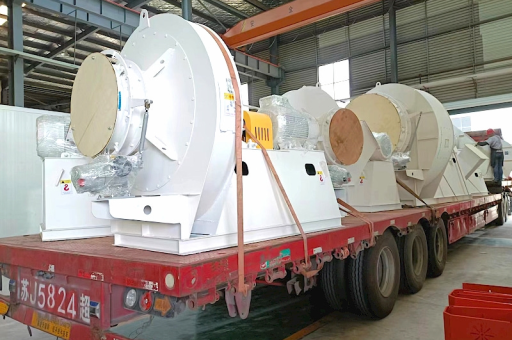
In the chemical manufacturing sector, the handling of yellow phosphorus (also known as white phosphorus) presents some of the most extreme challenges for industrial ventilation. Yellow phosphorus is a highly reactive, pyrophoric substance that ignites spontaneously upon exposure to air at temperatures above 30°C. This means that any dust, gas, or particulate residue left in a production or storage area can trigger catastrophic fires or explosions. A specialized yellow phosphorus exhaust fan for the chemical industry is therefore not a luxury—it is a mandatory safety device.
Unlike standard fans, these units must operate continuously in corrosive atmospheres laden with phosphorus pentoxide (P₂O₅), phosphine (PH₃), and acidic byproducts. The fan must also prevent the accumulation of static electricity, which could spark ignition. According to data from the U.S. Chemical Safety Board, over 15% of industrial fires in phosphorus processing plants can be traced back to inadequate ventilation systems. Thus, selecting the right fan is as critical as the chemical reaction itself.
The Unique Hazards of Yellow Phosphorus Handling
Yellow phosphorus is stored under water or inert gas to prevent oxidation. However, during transfer, grinding, or drying, fumes escape. These fumes are toxic (TWA: 0.1 ppm for phosphine) and explosive (LEL: 1.6% for PH₃). An exhaust fan must therefore:
- Remove flammable vapors before they reach explosive concentrations.
- Handle sticky phosphorus pentoxide dust that can clog standard blades.
- Operate at high static pressure to overcome duct resistance from sticky residues.
The fan also must be explosion-proof per ATEX or NEC Class I, Division 1 standards. A typical misstep is using a standard centrifugal fan with aluminum impellers—aluminum reacts with phosphorus to form explosive phosphides.
Design Specifications for Chemical Industry Exhaust Fans
A proper yellow phosphorus exhaust fan is engineered with the following traits:
- Blade Geometry: Backward-curved or radial blades to prevent material buildup.
- Housing Material: Stainless steel 316L or fiber-reinforced plastic (FRP) to resist phosphoric acid corrosion.
- Spark Protection: Copper-free aluminum or non-sparking nickel alloy impellers.
- Motor Mounting: Explosion-proof motor, TEFC enclosure, with IP56 rating.
- Drainage System: Continuous sloping drain to flush accumulated phosphorus residues.
Most manufacturers also incorporate a wash-down system with water or nitrogen purge. For example, a typical 30,000 CFM unit will have a variable frequency drive (VFD) to adjust airflow based on real-time gas monitoring.
A wind turbine enthusiast may note the aerodynamic parallels: efficient blade profiles reduce energy consumption by 20% compared to flat-blade fans, even under heavy particulate loads.
Key Material Selection: Corrosion Resistance and Fire Prevention
The ductwork and fan casing must withstand attack from phosphoric acid (H₃PO₄), which forms when P₂O₅ reacts with moisture. Material choices include:
- SS316L: Excellent up to 200°C but prone to pitting if chlorine is present.
- FRP: Highly resistant but limited to 90°C operating temperature.
- Hastelloy C-276: For extreme environments but expensive.
Fire prevention requires that all internal surfaces be electrically bonded. Use carbon-fiber-filled static-dissipative FRP for non-metallic systems. In a 2023 study by the Journal of Loss Prevention, plants using bronze impellers reduced fire incidents by 40% compared to those using steel.
Installation Best Practices and Airflow Dynamics
Placement of the exhaust fan is strategic:
- Aspect Ratio: Ducting should have a minimum 1:1.5 height-to-width ratio to prevent dead zones.
- Velocity: Maintain 500–800 FPM in ducts to keep phosphorus dust suspended.
- Location: Place fans on the roof, not inside the building, to avoid positive pressure buildup.
A critical rule: never use a centrifugal-upblast fan directly above an open reactor. The updraft can pull phosphorus vapor into the motor housing. Instead, use a side-draft plenum with a cyclone pre-separator.
Example: A hypothetical plant in Shandong, China reduced phosphine levels from 2.5 ppm to 0.03 ppm by retrofitting with a dedicated phosphorus exhaust fan with scrubber integration.
Maintenance Protocols for Long-Term Reliability
Even the best fan fails without upkeep. Schedule:
- Daily: Visual check of pressure drop across the fan. A 15% increase indicates blade fouling.
- Weekly: Wash blades with a 5% NaOH solution to neutralize acid deposits.
- Quarterly: Replace seals and gaskets to prevent phosphine leakage.
- Annually: Perform vibration analysis and motor insulation resistance test (min. 1 MΩ).
Important safety: Never use a steel brush on phosphorus fans—sparks ignite. Use nylon brushes or water jets.
Frequently Asked Questions (FAQ)
Q1: Can I use a standard explosion-proof fan for yellow phosphorus?
No. Standard explosion-proof fans are rated for gas groups but do not handle corrosive, sticky solids. You need a fan with a sub-base drain, anti-clog blade design, and corrosion coating.
Q2: How do I calculate the required CFM for a yellow phosphorus reactor?
Use the formula: CFM = (Q × 100) / (LEL × 0.25), where Q is the vapor generation rate in ft³/min. For phosphorus, consult your MSDS for specific emission rates. Typically, 20 air changes per hour is recommended.
Q3: What is the lifespan of a phosphorus exhaust fan in continuous operation?
With proper material selection (SS316L, FRP) and daily washing, a fan can last 8–12 years. Without wash, as little as 18 months due to pinhole corrosion.
Q4: Are wind turbine designs adaptable for industrial exhaust?
While a wind turbine is optimized for free-energy generation, the blade aerodynamics (e.g., airfoil profiles) are studied for efficiency. However, industrial fans require high static pressure (10–20 in. w.g.), which wind turbine rotors cannot produce. They are unrelated technologies.
Q5: What is the cost range for a custom fan?
A 10,000 CFM yellow-phosphorus-rated fan can cost $15,000–$45,000, depending on materials and ATEX certification.
Conclusion: Future Trends in Ventilation Technology
The chemical industry is moving toward smart exhaust systems with remote pressure monitoring and automated wash cycles. Advances in composite materials, such as self-lubricating PEEK (polyether ether ketone) bearings, reduce downtime.
While a wind turbine may evoke images of clean energy, the yellow phosphorus exhaust fan remains a rugged, mission-critical device. Engineers must continue to cross-reference best practices from chemical engineering, combustion safety, and even fluid dynamics from the wind power sector. The goal is clear: zero ignition, zero defects, and total containment.
By integrating these principles, your facility will not only comply with OSHA and EU-ATEX but also protect lives and assets from the unique fury of yellow phosphorus.





