
High-Temperature Flue Gas Extraction Induced Draft Fan: Customizable Material & Double-Support Centrifugal Design for the Petrochemical Industry**
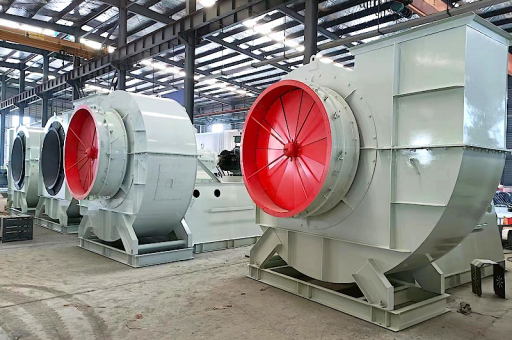
Table of Contents
- Introduction
- What Is a High-Temperature Flue Gas Extraction Induced Draft Fan?
- Why the Petrochemical Industry Demands Customizable Materials
- The Double-Support Centrifugal Design: Engineering Advantages
- Key Performance Parameters and Selection Criteria
- Q&A: Common Technical & Operational Questions
- Maintenance and Reliability in High-Temperature Environments
- Case Study: Deployment in a Petrochemical Cracker Unit
- Future Trends and Industry Innovations
- Conclusion
Introduction
In the petrochemical industry, the management of high-temperature flue gases is a critical operational challenge. These gases, often exceeding 400°C and laden with corrosive compounds, must be extracted efficiently to maintain process safety and environmental compliance. The high-temperature flue gas extraction induced draft fan with customizable material and double-support centrifugal type has emerged as a specialized solution. This article explores its design, material customization, and dual-support centrifugal architecture—factors that directly impact reliability, maintenance costs, and longevity.
What Is a High-Temperature Flue Gas Extraction Induced Draft Fan?
An induced draft fan (ID fan) creates negative pressure downstream of a combustion or process unit, drawing flue gases through the system and discharging them into a stack or treatment unit. In petrochemical applications, these fans operate under extreme thermal and chemical stress. The double-support centrifugal type refers to a fan configuration where the impeller is mounted on a shaft supported by bearings on both sides, ensuring stability under high rotational speeds and thermal expansion.
Unlike single-support cantilever designs, the double-support architecture distributes mechanical loads more evenly, reducing vibration and shaft deflection. This is particularly important when handling gases at temperatures above 350°C, where material creep and thermal gradients can compromise structural integrity.
Why the Petrochemical Industry Demands Customizable Materials
Petrochemical flue gases are not uniform. They may contain sulfur oxides, chlorine compounds, or particulate matter, depending on the feedstock and process. A standard carbon steel fan would fail within weeks under such conditions. Therefore, material customization is not optional—it is essential.
Common material options include:
- Stainless steel (SS 316L / 310S): For moderate temperatures (up to 600°C) and mildly corrosive gases.
- Hastelloy or Inconel alloys: For high-temperature zones (up to 900°C) with aggressive acidic gases.
- Ceramic-lined or coated impellers: For abrasive particulates and thermal shock resistance.
- High-chromium cast iron: For cost-effective wear resistance in less corrosive but erosive streams.
Manufacturers now offer modular material selection for each component—impeller, casing, shaft, and bearings—allowing engineers to match the fan’s metallurgy exactly to the gas composition and temperature profile. This approach extends service life by 2–3 times compared to off-the-shelf fans.
The Double-Support Centrifugal Design: Engineering Advantages
The double-support centrifugal configuration is distinguished by its bearing arrangement. Two bearing housings are located on opposite sides of the impeller, mounted on a sturdy baseplate. This design offers several advantages:
- Reduced shaft deflection: Even at high tip speeds (up to 120 m/s), the shaft remains aligned, preventing impeller rub against the casing.
- Higher critical speed margin: The double-bearing spacing increases the first natural frequency, allowing operation at higher RPM without resonance.
- Improved sealing: The symmetrical arrangement simplifies the installation of shaft seals, especially air-cooled or water-cooled seal systems that protect bearings from hot gas ingress.
- Easier maintenance: Bearings can be replaced without dismantling the entire fan rotor assembly.
In petrochemical applications, double-support fans are commonly used for capacities ranging from 50,000 to 500,000 m³/h, with static pressures up to 6 kPa.
Key Performance Parameters and Selection Criteria
When selecting a high-temperature induced draft fan for petrochemical service, engineers evaluate the following parameters:
| Parameter | Typical Range | Why It Matters |
|---|---|---|
| Gas temperature | 350°C – 850°C | Determines material grade and cooling method |
| Gas density | 5 – 1.2 kg/m³ | Affects power consumption |
| Required static pressure | 2 – 8 kPa | Must overcome duct, scrubber, and stack resistance |
| Impeller diameter | 800 – 2000 mm | Governs flow capacity and structural stress |
| Shaft power | 100 – 1500 kW | Influences motor selection and gearbox design |
| Bearing type | Spherical roller or deep groove | Chosen for thermal expansion accommodation |
Customization also extends to the cooling method. For gas temperatures above 400°C, an air-cooled shaft and insulated bearing housing are standard. Above 600°C, water-cooled intermediate shafts or forced air purge systems become necessary.
Q&A: Common Technical & Operational Questions
Q1: Why is a double-support design preferred over overhung (cantilever) for high-temperature fans?
A: In overhung designs, the impeller is mounted at the end of the shaft, creating a cantilever load. Under high temperature, thermal expansion increases shaft deflection, leading to bearing wear and dynamic imbalance. Double-support fans distribute the load and maintain alignment, which is critical for continuous operation at 700°C+.
Q2: Can the same fan handle both high temperature and corrosive gases?
A: Yes, but only if materials are customized accordingly. For example, a fan with a Hastelloy C276 impeller and stainless steel casing can resist both thermal stress and chlorinated compounds. However, the casing linings and seal materials must also be specified for the dual environment.
Q3: How do I verify the fan’s performance at actual operating conditions?
A: Manufacturers typically provide performance curves based on standard air (20°C, 1.2 kg/m³). For high-temperature gases, the fan must be selected using the actual gas density and viscosity at the operating temperature. Many suppliers now use CFD modeling to validate flow and thermal distribution before fabrication.
Q4: What is the typical maintenance interval for double-support induced draft fans?
A: With proper material selection and bearing cooling, a maintenance interval of 12 to 18 months is achievable. Key maintenance tasks include bearing lubrication, vibration monitoring, and inspection of shaft seals for hot gas leakage.
Q5: Can this fan type be integrated with variable frequency drives (VFDs)?
A: Yes. Double-support centrifugal fans are well-suited for VFD control, as the rigid rotor structure can tolerate low-speed operation without resonance issues. VFDs also reduce thermal shock during startup by allowing gradual ramp-up.
Maintenance and Reliability in High-Temperature Environments
Reliability in high-temperature extraction fans depends on three factors: thermal management, material integrity, and bearing health.
- Thermal management: An air-cooled labyrinth seal or water-cooled jacket prevents heat migration to bearings. Bearing temperature should remain below 90°C.
- Material integrity: Regular ultrasonic thickness testing of the impeller and casing detects erosion or corrosion before failure. For fans handling sulfur-bearing gases, stress corrosion cracking (SCC) is a known risk, requiring periodic NDT (non-destructive testing).
- Bearing health: Continuous vibration monitoring and oil analysis can predict bearing degradation. Double-support designs allow for in-place bearing replacement in many models, reducing downtime by up to 60% compared to split-casing fans.
A well-maintained double-support induced draft fan in petrochemical service can achieve a mean time between failures (MTBF) exceeding 30,000 hours.
Case Study: Deployment in a Petrochemical Cracker Unit
A large petrochemical plant in the Gulf region required a flue gas extraction fan for its ethylene cracker furnace. The flue gas temperature reached 780°C, with high concentrations of sulfur dioxide and particulate coke.
Challenges:
- Gas temperature exceeded standard fan limits.
- Coke particles caused abrasive wear on standard impellers.
- Ambient temperature (50°C) reduced natural cooling efficiency.
Solution:
A double-support centrifugal fan was custom-engineered with:
- Impeller material: Inconel 625 with ceramic coating on the leading edges.
- Casing: Stainless steel 310S with castable refractory lining.
- Shaft cooling: Forced air purge via a centrifugal blower.
- Bearing housing: Water-cooled with dual lip seals and nitrogen purge.
Results:
- Fan operated continuously for 22 months without unscheduled shutdown.
- Vibration levels remained below 2.5 mm/s RMS throughout the period.
- Maintenance costs were 40% lower compared to the previous cantilever fan.
Future Trends and Industry Innovations
The development of high-temperature extraction fans is moving toward greater intelligence and material science integration.
- Smart sensors: Embedded temperature, vibration, and pressure sensors provide real-time condition monitoring. AI-based predictive maintenance systems can forecast bearing wear or impeller erosion.
- Additive manufacturing: 3D-printed impellers with optimized aerodynamic profiles and internal cooling channels are being tested for temperatures above 900°C.
- Hybrid materials: Composite ceramics combined with superalloys offer weight reduction while maintaining thermal resistance.
- Modular material swapping: Some manufacturers are developing quick-change impeller and casing modules that allow material upgrades without replacing the entire fan, reducing capital expenditure.
These innovations will further extend the operational envelope of double-support centrifugal induced draft fans in the petrochemical sector.
Conclusion
The high-temperature flue gas extraction induced draft fan with customizable material and double-support centrifugal type is not merely a piece of rotating equipment—it is a highly engineered system tailored to the harsh realities of petrochemical processing. By integrating material science with robust mechanical design, it ensures reliable gas extraction, longer service life, and lower total cost of ownership. For plant engineers facing the challenges of high temperature, corrosion, and particulate erosion, this fan type represents a proven, future-ready solution.
As the industry pushes toward higher efficiency and lower emissions, the role of such specialized fans will only grow. Whether deployed in a steam cracker, catalytic reformer, or waste heat recovery unit, they stand as a critical pillar of process reliability and environmental compliance.
For more technical resources and product specifications, visit the wind turbine knowledge base or consult a certified fan manufacturer with petrochemical experience.





