
This article's table of contents introduction:
- Table of Contents
- Introduction: The Backbone of High-Volume Air Movement
- What Is a Single Inlet Centrifugal Fan?
- Why Oil Bath Lubrication Matters for Heavy-Duty Fans
- Key Advantages of Single Inlet Design for Large Airflow Systems
- Applications Across Industries
- How to Select the Right Fan for Your System
- Maintenance Best Practices for Oil Bath Lubrication
- Frequently Asked Questions (FAQ)
- Conclusion: Engineering Durability and Performance
Maximizing Efficiency in Large Airflow Systems: The Industrial Centrifugal Fan with Single Inlet Design and Oil Bath Lubrication**
Table of Contents
- Introduction: The Backbone of High-Volume Air Movement
- What Is a Single Inlet Centrifugal Fan?
- Why Oil Bath Lubrication Matters for Heavy-Duty Fans
- Key Advantages of Single Inlet Design for Large Airflow Systems
- Applications Across Industries
- How to Select the Right Fan for Your System
- Maintenance Best Practices for Oil Bath Lubrication
- Frequently Asked Questions (FAQ)
- Conclusion: Engineering Durability and Performance
Introduction: The Backbone of High-Volume Air Movement
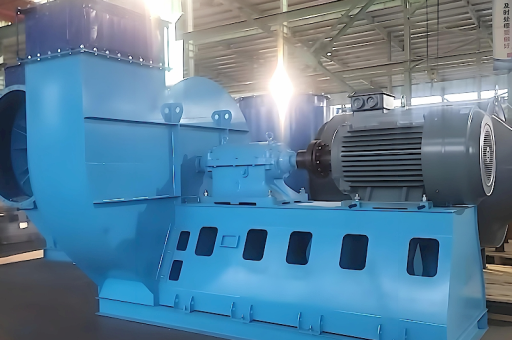
In industrial environments where massive volumes of air must be moved continuously—such as power plants, wind turbine cooling systems, cement factories, and chemical processing facilities—the choice of fan technology directly impacts operational efficiency and equipment lifespan. Among the most reliable and widely adopted solutions is the Industrial Centrifugal Fan with Single Inlet Design for Large Airflow Systems and Oil Bath Lubrication. This configuration combines aerodynamic efficiency with robust mechanical protection, making it a preferred choice for engineers and facility managers worldwide.
Unlike axial fans, centrifugal fans generate higher pressure by accelerating air radially outward, which is essential for overcoming duct resistance in long or complex systems. The single inlet design allows for a more concentrated airflow path, reducing turbulence and energy loss. When paired with oil bath lubrication, these fans offer extended service intervals and superior wear protection—critical for continuous-duty applications.
What Is a Single Inlet Centrifugal Fan?
A single inlet centrifugal fan draws air from one side of the impeller, typically through a conical or bell-shaped intake. This design contrasts with double inlet fans, which pull air from both sides. In large airflow systems, the single inlet configuration is often favored because:
- It simplifies ductwork connections and reduces installation complexity.
- It minimizes air recirculation losses at the inlet.
- It allows for more compact housing and bearing arrangements.
The fan housing is typically scroll-shaped, converting high-velocity air from the impeller into static pressure. The impeller itself may be backward-curved, forward-curved, or radial—each offering different pressure and efficiency characteristics. For large systems, backward-curved impellers are most common due to their non-overloading power curve and high efficiency.
Why Oil Bath Lubrication Matters for Heavy-Duty Fans
Lubrication is often the most overlooked factor in fan reliability. In high-load, high-temperature environments, grease-lubricated bearings can fail prematurely due to degradation, contamination, or improper re-greasing. Oil bath lubrication addresses these issues by submerging the bearing in a reservoir of oil, providing:
- Continuous oil film protection, even under fluctuating loads.
- Heat dissipation, as oil circulates and cools the bearing.
- Self-cleaning action, where contaminants settle at the bottom of the oil sump.
- Extended maintenance intervals, often exceeding 8,000 hours.
In the context of a wind turbine cooling system, where fan operation must remain dependable in remote locations, oil bath lubrication reduces the need for frequent on-site servicing. The oil level is monitored via sight glass, and replacement is straightforward—making it ideal for critical infrastructure.
Key Advantages of Single Inlet Design for Large Airflow Systems
When moving very large volumes of air—often exceeding 100,000 CFM (cubic feet per minute)—the single inlet design offers specific benefits:
| Feature | Benefit |
|---|---|
| Higher pressure capability | Overcomes resistance from long ducts, scrubbers, or filters |
| Reduced footprint | Smaller housing than double inlet equivalents |
| Simpler sealing | Easier to prevent leaks in high-temperature or corrosive environments |
| Lower maintenance access | Single bearing assembly reduces spare parts inventory |
Additionally, the single inlet configuration aligns naturally with oil bath lubrication systems because the oil reservoir can be integrated into the bearing pedestal without interfering with airflow. This integration ensures consistent lubrication without the risk of oil mist escaping into the air stream—a common concern in food processing or pharmaceutical applications.
Applications Across Industries
The combination of single inlet design and oil bath lubrication is found in:
- Power generation: For forced draft, induced draft, and primary air fans in coal or biomass plants.
- Wind turbine cooling: Where reliability and low maintenance are non-negotiable.
- Mining and cement: For dust extraction and material conveying systems.
- Chemical processing: Where fans must handle corrosive fumes at high temperatures.
- HVAC for large facilities: Airports, warehouses, and data centers requiring high static pressure.
In each case, the fan must operate continuously with minimal downtime. The oil bath lubrication system ensures that bearings remain protected even when the fan is subjected to vibration, thermal expansion, or particulate ingestion.
How to Select the Right Fan for Your System
Choosing the correct Industrial Centrifugal Fan with Single Inlet Design for Large Airflow Systems and Oil Bath Lubrication requires evaluating:
- Airflow (CFM or m³/h) – Must match system demand at peak load.
- Static pressure (in. w.g. or Pa) – Determines impeller type and speed.
- Temperature – High temperatures may require synthetic oil or external oil coolers.
- Contaminants – Dust, moisture, or corrosive gases influence material selection.
- Service environment – Remote locations favor oil bath over grease for extended intervals.
Always consult performance curves from the manufacturer, as fan efficiency can vary significantly with operating point. Oversizing a fan leads to wasted energy, while undersizing causes insufficient airflow.
Maintenance Best Practices for Oil Bath Lubrication
To maximize the lifespan of an oil bath lubricated fan, follow these guidelines:
- Check oil level weekly via sight glass or dipstick. Maintain level between minimum and maximum marks.
- Change oil every 4,000–8,000 operating hours, or as recommended by the OEM.
- Use the correct oil viscosity—typically ISO VG 68 or 100 for industrial fans—depending on ambient temperature.
- Inspect the oil for contamination (water, metal particles, or sludge). Cloudy oil indicates moisture ingress.
- Replace oil seals periodically to prevent leakage and contamination entry.
- Monitor bearing temperature with thermocouples or infrared sensors. A sudden rise may indicate oil starvation.
For wind turbine installations, remote oil analysis can be integrated to predict wear before failure occurs.
Frequently Asked Questions (FAQ)
Q1: Why is the single inlet design better for large airflow systems?
A1: The single inlet design provides higher static pressure, simpler duct connections, and a more compact footprint compared to double inlet fans, making it ideal for systems with high resistance.
Q2: How often should oil be changed in an oil bath lubricated fan?
A2: Typically every 4,000 to 8,000 operating hours, but always follow the manufacturer’s guidelines. Factors like temperature and contamination frequency may shorten this interval.
Q3: Can oil bath lubrication be used in food processing environments?
A3: Yes, but special sealing is required to prevent oil from contaminating the airstream. FDA-approved oils and labyrinth seals are commonly used.
Q4: What is the maximum airflow capacity for a single inlet centrifugal fan?
A4: Large industrial models can handle over 500,000 CFM, though the exact capacity depends on impeller diameter, speed, and motor power.
Q5: Is oil bath lubrication suitable for vertical shaft fans?
A5: Generally no. Oil bath systems rely on gravity to keep bearings submerged. For vertical shafts, circulating oil systems are preferred.
Q6: How does a single inlet centrifugal fan compare to an axial fan?
A6: Centrifugal fans generate higher pressure and are more efficient in ducted systems with high resistance, while axial fans are better for low-pressure, high-volume free air movement.
Conclusion: Engineering Durability and Performance
The Industrial Centrifugal Fan with Single Inlet Design for Large Airflow Systems and Oil Bath Lubrication represents a proven, high-reliability solution for demanding industrial applications. By combining the aerodynamic efficiency of a single inlet configuration with the mechanical resilience of oil bath lubrication, engineers can achieve longer service life, reduced maintenance costs, and consistent performance under harsh conditions.
Whether used in a wind turbine cooling system, a cement plant dust collector, or a power station boiler fan, this fan technology delivers the airflow, pressure, and durability that heavy industry requires. When selecting your next fan, prioritize not only initial cost but also the total cost of ownership—and oil bath lubrication is one of the most effective ways to lower that cost over the equipment’s operational life.
[End of Article]





