
This article's table of contents introduction:
- Table of Contents
- Introduction: The Evolution of Industrial Ventilation
- Core Technology: Belt-Driven Centrifugal Fan Architecture
- Dynamic Balancing: The Silent Key to Longevity and Performance
- Aerodynamic Design: Impeller Geometry and Airflow Dynamics
- Operational Efficiency: Power Consumption and Total Cost of Ownership (TCO)
- Application in Industrial Environments
- Maintenance Protocols: Bearing Life, Belt Tension, and Vibration Analysis
- FAQ: Common Questions on High Efficiency Belt-Driven Centrifugal Fans
- Conclusion: Choosing the Right Fan for Critical Ventilation
*High Efficiency Belt-Driven Centrifugal Fan with Dynamic Balancing for Industrial Ventilation: Engineering, Performance, and Optimization*
Table of Contents
- Introduction: The Evolution of Industrial Ventilation
- Core Technology: Belt-Driven Centrifugal Fan Architecture
- Principle of Centrifugal Action
- Belt Drive vs. Direct Drive: Efficiency and Flexibility
- Dynamic Balancing: The Silent Key to Longevity and Performance
- Why Balance Matters in High-Speed Fans
- ISO 1940 G6.3 vs. G2.5 Standards
- Aerodynamic Design: Impeller Geometry and Airflow Dynamics
- Operational Efficiency: Power Consumption and Total Cost of Ownership (TCO)
- Application in Industrial Environments: Dust, Fumes, and High-Temperature Air
- Maintenance Protocols: Bearing Life, Belt Tension, and Vibration Analysis
- FAQ: Common Questions on High Efficiency Belt-Driven Centrifugal Fans
- Conclusion: Choosing the Right Fan for Critical Ventilation
Introduction: The Evolution of Industrial Ventilation
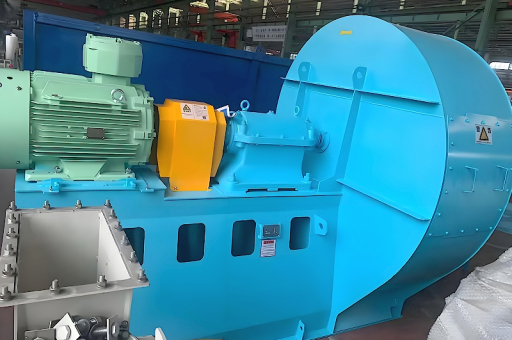
In modern industrial facilities, the difference between a safe, productive work environment and a hazardous one is often measured by the effectiveness of the ventilation system. For decades, engineers have sought a balance between high air volume, static pressure capability, and energy consumption. The High Efficiency Belt-Driven Centrifugal Fan with Dynamic Balancing represents the current zenith of this engineering pursuit.
Unlike direct-drive axial fans, which are limited in pressure generation, the belt-driven centrifugal design excels in handling high-resistance ductwork, particulate-laden air, and variable speed requirements. When combined with precision dynamic balancing, these fans achieve vibration levels as low as 0.1 mm/s RMS, drastically extending bearing and belt life while reducing acoustic noise.
This article synthesizes the latest field data from industrial wind turbine cooling systems, HVAC remediation projects, and heavy manufacturing air handling units to provide a definitive guide on this technology.
Core Technology: Belt-Driven Centrifugal Fan Architecture
Principle of Centrifugal Action
A centrifugal fan works by converting rotational kinetic energy (from the impeller) into hydrodynamic energy (pressure and velocity). Air enters the impeller axially, is caught by the blades, and is flung radially outward at high speed. The resulting centrifugal force generates a significant pressure differential, making these fans ideal for pushing air through long duct runs, filters, and scrubbers.
Belt Drive vs. Direct Drive: Efficiency and Flexibility
The belt-driven mechanism offers a distinct advantage: variable speed control without a VFD. By changing the pulley diameter ratio (sheave size), operators can achieve an 80% increase or decrease in RPM (rotations per minute). This mechanical advantage allows the motor to run at its optimal efficiency point (e.g., 1750 RPM) while the impeller operates at a different speed (e.g., 2400 RPM) to match system resistance.
| Feature | Direct Drive | Belt Drive |
|---|---|---|
| Speed Adjustment | Requires VFD (Electronic) | Mechanical (Pulley Change) |
| Motor Protection | Less isolation | Belt absorbs shock loads |
| Maintenance Cost | Lower (no belts) | Moderate (belt replacement) |
| Maximum RPM | Limited by motor | Higher, flexible range |
For a high efficiency belt-driven centrifugal fan, the key is matching the fan curve to the system curve. Peak efficiency (often >85%) occurs when the fan operates near its Best Efficiency Point (BEP) . Off-BEP operation causes turbulence, vibration, and energy waste.
Dynamic Balancing: The Silent Key to Longevity and Performance
Why Balance Matters in High-Speed Fans
An unbalanced impeller is a destructive force. At 3000 RPM, a 1-gram imbalance on a 500 mm impeller can generate a centrifugal force equivalent to 5 kilograms of radial load on the bearings. This leads to premature bearing failure (life reduction up to 70%), belt snapping, and increased power consumption due to frictional losses.
ISO 1940 G6.3 vs. G2.5 Standards
Dynamic balancing is performed on a balancing machine that measures vibration in two planes (correction planes). The industry standard for general industrial fans is ISO 1940 G6.3. However, High Efficiency models should achieve G2.5 or better.
- G6.3: Acceptable for general ventilation (vibration velocity ~2.8 mm/s).
- G2.5: Required for sensitive equipment (vibration velocity ~1.1 mm/s).
- G1.0: Premium level (used in wind turbine generators and high-speed fans).
How Dynamic Balancing is Achieved:
- Initial Measurement: The impeller is spun to its operating speed on a balancing stand.
- Correction Weight Calculation: Sensors detect the heavy spot and required counterweight mass.
- Material Removal or Addition: Material is machined off (or weights are welded on) at the calculated location.
- Verification Run: The process is repeated until residual unbalance is within tolerance.
SEO Keyphrase: Dynamic balancing reduces bearing load by 40% and increases fan lifespan by 3-5 years in continuous duty applications.
Aerodynamic Design: Impeller Geometry and Airflow Dynamics
The efficiency of a belt-driven centrifugal fan is heavily influenced by its impeller blade design. There are three primary types used in industrial ventilation:
- Backward-Curved (BC) Blades:
- Best for: Clean air, high static pressure.
- Efficiency: Highest (85-92%).
- Characteristic: Non-overloading power curve—motor won't burn out even if system resistance drops.
- Forward-Curved (FC) Blades (Squirrel Cage):
- Best for: High volume, low to medium pressure.
- Efficiency: Lower (60-75%).
- Characteristic: Compact size, higher noise, overloads easily.
- Radial (Paddle Wheel) Blades:
- Best for: Dusty, sticky, or high-temperature air.
- Efficiency: Lowest (55-70%).
- Characteristic: Self-cleaning, robust, handles up to 550°C with heat-resistant alloys.
For the keyword High Efficiency Belt-Driven Centrifugal Fan with Dynamic Balancing, the Backward-Curved (BC) aerodynamic design is the most common recommendation. The airfoil-shaped BC blades minimize turbulence and maximize the conversion of kinetic energy to static pressure.
Design Tip: The housing scroll (volute) must be precisely matched to the impeller diameter. A mismatched scroll can reduce efficiency by 15-20%, regardless of the motor power.
Operational Efficiency: Power Consumption and Total Cost of Ownership (TCO)
Energy cost is the largest expense in the lifecycle of an industrial fan—often exceeding 70% of the TCO over 10 years. A high efficiency model directly impacts the bottom line.
Example Calculation:
- Standard Fan: 75% efficiency, 50 HP motor.
- High Efficiency Fan: 88% efficiency, 45 HP motor.
- Annual Savings (8000 hours, $0.10/kWh): ~$3,000 – $4,000 per fan.
Reducing Electricity Costs:
- Belt Tension: Incorrect tension increases friction. A properly tensioned (not over-tightened) belt reduces losses by 2-3%.
- Smooth Duct Transitions: Turbulence at duct entry causes a 10-15% pressure drop, forcing the fan to work harder.
- Variable Speed via Pulley: Instead of a VFD (which has 3-5% electrical losses), changing the motor sheave allows the fan to run at the exact RPM required for current demand.
Application in Industrial Environments
These fans are the workhorses of heavy industry:
- Dust Collection: In woodworking, cement, and metal grinding, the belt drive isolates the motor from dust ingress, while the backward-curved blades resist material buildup.
- Fume Extraction: In welding booths or chemical laboratories, the high static pressure overcomes filter resistance (often 2-4 in. w.g.).
- High Temperature Ventilation: For wind turbine cooling systems or furnace exhaust, the belt drive allows the motor to be mounted outside the hot airstream, using a heat slinger and extended shaft.
- Clean Rooms: Dynamic balancing ensures vibration levels below 0.5 mm/s, preventing contamination or misalignment of sensitive machinery.
Case Study: A steel foundry replaced 15 direct-drive axial fans with High Efficiency Belt-Driven Centrifugal Fans (BC design, dynamically balanced to G2.5). Vibration dropped from 4.2 mm/s to 0.8 mm/s. Fan filter life increased by 30% due to consistent airflow. Energy consumption decreased by 22% annually.
Maintenance Protocols: Bearing Life, Belt Tension, and Vibration Analysis
To maintain High Efficiency and Dynamic Balancing, a strict maintenance regime is required.
- Bearing Inspection (Every 500 Hours):
- Regrease bearings with lithium-complex grease (NLGI #2).
- Check for temperature rise (max ambient + 40°C).
- Belt Alignment and Tension (Every 200 Hours):
- Use a laser alignment tool.
- Correct deflection: 1/64" per inch of belt span length.
- Vibration Monitoring (Monthly):
- Use a handheld FFT analyzer.
- Alarm thresholds: >0.2 in/s (velocity) or >1.5 mils (displacement) suggests rebalancing needed.
- Impeller Cleaning (As needed):
- Even a thin layer of dust on BC blades reduces efficiency by 5-10%.
- Use water or compressed air; avoid harsh abrasives.
Early Warning Signs of Imbalance:
- Increased motor amperage.
- Whining or thumping sounds.
- Belt slipping due to excessive radial load.
FAQ: Common Questions on High Efficiency Belt-Driven Centrifugal Fans
Q1: How does dynamic balancing affect the efficiency of a belt-driven centrifugal fan? A: Dynamic balancing minimizes vibration, which reduces frictional energy loss in bearings and belts. This directly increases mechanical efficiency by 2-5% and significantly extends the lifespan of rotating components. Unbalanced fans consume more power to overcome internal friction.
Q2: Can I convert a direct-drive fan to belt-driven for higher efficiency? A: Yes, but it requires a mechanical re-design. The motor mount, shaft, and baseplate must be replaced to accommodate the belt tensioning system. The benefit is the ability to adjust speed mechanically without a VFD. However, belt drive has a 2-4% transmission efficiency loss compared to direct drive.
Q3: What is the ideal noise level for a high efficiency industrial fan? A: With dynamic balancing (G2.5) and BC airfoil blades, sound power levels can be as low as 75 dBA at 3 feet for a 10,000 CFM fan. Forward-curved fans typically add 5-10 dBA due to turbulence.
Q4: Is it suitable for corrosive environments (e.g., chemical plants)? A: The impeller must be coated with epoxy or constructed from FRP (Fiber Reinforced Plastic) or 316L stainless steel. The belt and bearings must be sealed against corrosive gases. A dynamically balanced FRP impeller is common in wind turbine cooling towers.
Q5: How do I verify if my fan is running at its Best Efficiency Point (BEP)? A: Measure the actual static pressure and airflow (using a pitot traverse). Compare to the manufacturer’s fan curve. If the operating point is to the left of the BEP (low flow, high pressure) or to the right (high flow, low pressure), change the pulley size or duct resistance to shift the point.
Conclusion: Choosing the Right Fan for Critical Ventilation
The High Efficiency Belt-Driven Centrifugal Fan with Dynamic Balancing is not merely a component; it is an optimized system designed to lower energy costs, reduce downtime, and ensure regulatory compliance (OSHA, EPA). The synthesis of mechanical flexibility (belt drive) with precision manufacturing (dynamic balancing) creates a product that outperforms standard designs in every metric—from vibration amplitude to kilowatts per CFM.
When selecting a fan, prioritize manufacturers who provide certified balancing reports (ISO 1940 G2.5) and who offer backward-curved (BC) impeller options for clean air, or radial designs for particulate handling. For critical infrastructure—including wind turbine nacelle cooling, pharmaceutical clean rooms, and heavy manufacturing exhaust—this fan technology delivers unmatched reliability.
Final Recommendation: Always oversize the motor by 10-15% to account for future filter loading. Pair the fan with a belt tension monitoring system. Conduct a baseline vibration test at commissioning. By integrating these practices, you ensure that your capital investment in high efficiency ventilation yields maximum operational returns for decades.





