
This article's table of contents introduction:
- Table of Contents
- Introduction: The Heart of Industrial Air Movement
- Understanding the Terminology: Forced Draft vs. Induced Draft
- Core Design Principles of the Industrial Centrifugal Blower Fan
- Primary Applications in Ventilation and Process Systems
- Performance Metrics: Pressure, Flow, and Efficiency
- Key Components and Materials of Construction
- Installation Best Practices for Maximum Lifespan
- Commonly Asked Questions (Q&A)
- Maintenance Strategies for High-Temperature and Harsh Environments
- Conclusion: Optimizing Your System with the Right Fan Technology
Here is a comprehensive, SEO-optimized article on the topic. It is written in English, follows Google and Bing best practices, includes a table of contents, Q&A, and is a detailed guide on Ventilation Forced Draft Fan Industrial Centrifugal Blower Fan.
Article Title: The Complete Guide to Ventilation Forced Draft Fan Industrial Centrifugal Blower Fan: Design, Applications, and Efficiency
Meta Description: Explore the critical role of the Ventilation Forced Draft Fan Industrial Centrifugal Blower Fan in modern industry. Learn about design principles, airflow dynamics, maintenance tips, and how to select the right fan for your HVAC or process system.
Table of Contents
- Introduction: The Heart of Industrial Air Movement
- Understanding the Terminology: Forced Draft vs. Induced Draft
- Core Design Principles of the Industrial Centrifugal Blower Fan
- 1 The Impeller and Housing
- 2 Forward Curved vs. Backward Curved Blades
- Primary Applications in Ventilation and Process Systems
- Performance Metrics: Pressure, Flow, and Efficiency
- Key Components and Materials of Construction
- Installation Best Practices for Maximum Lifespan
- Commonly Asked Questions (Q&A)
- Maintenance Strategies for High-Temperature and Harsh Environments
- Conclusion: Optimizing Your System with the Right Fan Technology
Introduction: The Heart of Industrial Air Movement
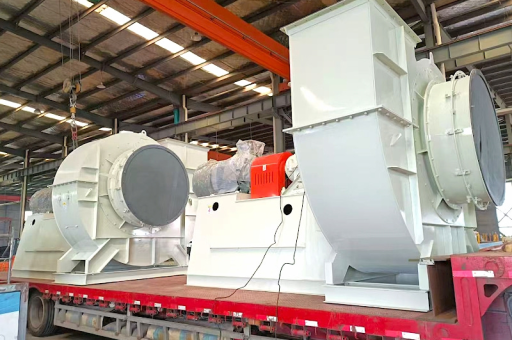
In the vast ecosystem of industrial machinery, few components are as universally critical as the Ventilation Forced Draft Fan Industrial Centrifugal Blower Fan. Whether it is supplying combustion air to a massive boiler, maintaining negative pressure in a dust collection system, or ensuring breathable air in an underground mine, this piece of rotating equipment is the undeniable workhorse of the modern plant.
This article delves into the engineering nuances of industrial centrifugal blower fans, explaining how they generate static pressure, why they differ from axial fans, and how to match a fan to a specific system curve. By understanding the forced draft principle, engineers can drastically reduce energy consumption and improve system reliability.
Understanding the Terminology: Forced Draft vs. Induced Draft
Before analyzing the fan itself, one must understand the system it serves. In combustion and ventilation systems, two primary fan configurations exist:
- Forced Draft (FD) Fan: This fan is located at the inlet of the system. It pushes air into a positive pressure environment (e.g., a boiler furnace or a cleanroom). The Ventilation Forced Draft Fan is designed to overcome the resistance of the ductwork and the air heater. It handles cooler, cleaner air upstream of the process.
- Induced Draft (ID) Fan: Located at the outlet of the system, this fan pulls hot, often particulate-laden exhaust gases out of the system, creating a negative pressure (vacuum) within the furnace or ducting.
An Industrial Centrifugal Blower Fan is the preferred technology for FD applications because it excels at generating high static pressure relative to the volume of air moved, unlike axial fans which prioritize high flow at low pressure.
Core Design Principles of the Industrial Centrifugal Blower Fan
The magic of the centrifugal fan lies in its ability to accelerate air radially outward. The air enters the center of the impeller (the "eye"), gets caught by the rotating blades, and is hurled toward the volute housing. This conversion of kinetic energy (velocity) into potential energy (static pressure) is the defining characteristic of the industrial centrifugal blower fan.
1 The Impeller and Housing
The impeller is the rotating disk or wheel in the middle, while the housing (volute) is a spiral-shaped casing that captures the high-velocity air and gradually slows it down to build up pressure. The efficiency of this process depends entirely on the gap between the impeller blades and the cut-off of the housing. A worn or mismatched housing can reduce the performance of a ventilation forced draft fan by over 20%.
2 Forward Curved vs. Backward Curved Blades
This is a critical design decision that impacts energy efficiency and maintenance costs.
- Forward Curved (FC) Blades: These blades curve in the direction of rotation. They are compact, operate at lower speeds, and are excellent for low-pressure, high-volume ventilation systems. However, they are self-limiting in power (power demand decreases as flow increases). They are often found in packaged HVAC units and wind turbine cooling systems.
- Backward Curved (BC) Blades: These blades curve away from the direction of rotation. They are significantly more efficient (reaching 85% efficiency or higher) and are the gold standard for high-pressure industrial centrifugal blower fan applications. They require higher starting torques but are less susceptible to performance degradation from dust buildup.
Primary Applications in Ventilation and Process Systems
The versatility of the industrial centrifugal blower fan makes it ubiquitous across heavy industry. Here are the specific domains where the Ventilation Forced Draft Fan is critical:
- Power Generation: FD fans supply combustion air to coal, gas, or biomass boilers. The fan must overcome pressure drops across air preheaters and windboxes.
- Cement Plants: Used for kiln combustion air supply and separate preheater tower ventilation.
- Wind Turbine Cooling: While a wind turbine generates power from wind, its nacelle houses generators and gearboxes that require directed cooling. Specialized compact centrifugal blowers are often used to force cool ambient air over the heat exchangers.
- Mining & Tunneling: To ventilate long tunnels or shafts, a forced draft fan pushes fresh air into the dead end, pressurizing the cavity and displacing explosive or toxic gases.
- Wastewater Treatment: Diffused aeration systems rely on large centrifugal blowers to push air through fine bubble diffusers at high pressure.
Performance Metrics: Pressure, Flow, and Efficiency
To select the correct Ventilation Forced Draft Fan Industrial Centrifugal Blower Fan, you must understand three key metrics:
- Volume Flow Rate (CFM or m³/hr): The air quantity the system requires.
- Static Pressure (SP) (in. w.g. or Pa): The resistance the fan must overcome. This includes duct friction, filters, dampers, and the pressure drop of the equipment itself.
- Brake Horsepower (BHP): The actual power consumed by the fan shaft.
The Fan Law & Affinity Laws: If you modify the speed of an industrial centrifugal blower fan:
- Flow (Q) changes proportionally to Speed (N): Q₂ = Q₁ (N₂/N₁)
- Pressure (P) changes with the square of Speed: P₂ = P₁ (N₂/N₁)²
- Power (HP) changes with the cube of Speed: HP₂ = HP₁ (N₂/N₁)³
Note: A 10% increase in speed results in a 33% increase in power consumption. This is why variable frequency drives (VFDs) are essential for energy optimization in fan systems.
Tip for SEO: When searching for "industrial centrifugal blower fan for sale" or "ventilation forced draft fan specifications," always verify the fan curve provided by the manufacturer to ensure it matches your system resistance.
Key Components and Materials of Construction
The durability of a fan relies on its materials, especially in forced draft environments where air might be preheated or dusty.
- Housing: Typically carbon steel (IS 2062) for standard applications. For corrosive environments (chemical plants or high humidity), SS 304 or SS 316 is used.
- Impeller: High-strength steel for high tip speeds. For abrasive dust (cement, mining), wear-resistant lining (hardox or ceramic tiles) is applied to the blade leading edges.
- Bearings: Heavy-duty spherical roller bearings for overhung loads. They must be properly lubricated and sealed against dust ingress.
- Shaft Seal: A labyrinth seal or a carbon ring seal prevents air leakage along the shaft, which is crucial for maintaining the pressure in a ventilation forced draft fan.
- Base Frame: A rigid, vibration-dampening I-beam structure.
Installation Best Practices for Maximum Lifespan
Poor installation is the number one cause of premature fan failure. Follow these guidelines for your industrial centrifugal blower fan:
- Foundation: The concrete foundation must be massive enough to dampen vibration. It should be at least 1.5 times the weight of the fan assembly.
- Inlet Ducting: The air entering the impeller eye must be straight and uniform for at least 2 duct diameters. A turbulent inlet (90-degree elbow directly before the fan) can cause vane-pass frequency noise and reduced performance.
- Vibration Monitoring: Install accelerometer ports on the bearing housings. Baseline vibration readings should be taken during commissioning.
- Flex Connections: Use fabric or rubber flex connectors at the inlet and outlet to prevent ductwork forces from being transmitted to the fan housing.
Commonly Asked Questions (Q&A)
Q1: What is the difference between a forced draft fan and an exhaust fan? A: A forced draft fan pushes air into a space or process, creating positive pressure. An exhaust fan (or induced draft fan) pulls air out, creating negative pressure. Both can be industrial centrifugal blower fans, but their placement and purpose differ.
Q2: Can a Ventilation Forced Draft Fan be used in a wind turbine? A: Yes. While the main rotor uses aerodynamic lift from the wind, the nacelle and generator of a wind turbine require active cooling. Compact, high-pressure centrifugal blowers are often used in the cooling circuit to force air through the generator and gearbox radiators, preventing overheating.
Q3: How do I calculate the static pressure needed for my ventilation system? A: You must sum the pressure drops of all components in the system: straight duct friction loss (using a Darcy-Weisbach or ASHRAE chart), fittings (elbows, tees), filters, dampers, and air handling units. The fan must provide a static pressure equal to or greater than this total system resistance at the desired flow rate.
Q4: What causes an industrial centrifugal blower fan to vibrate excessively? A: The most common causes are: 1) Imbalance due to dust or erosion on the impeller blades. 2) Misalignment between the motor and fan shaft. 3) Bearing wear. 4) Resonance with the foundation. 5) Operating near the surge line.
Maintenance Strategies for High-Temperature and Harsh Environments
Running a Ventilation Forced Draft Fan in a steel mill or a cement kiln requires a specialized maintenance plan.
- Bearing Temperature Monitoring: Use PT100 thermistors to monitor bearing temperature. If it exceeds 80°C (176°F), shut down immediately. High temperature degrades grease rapidly.
- Impeller Inspection (Every 3 Months): Use a boroscope to inspect the blade root welds. Cracks in the impeller of a high-speed industrial centrifugal blower fan can lead to catastrophic failure (wheel explosion).
- Torsional Analysis: For large fans driven by belt or a cardan shaft, perform a torsional analysis to avoid resonance during startup.
- Lubrication: Use high-temperature, anti-wear NLGI grade 2 grease. Over-greasing is as dangerous as under-greasing.
Conclusion: Optimizing Your System with the Right Fan Technology
The selection and operation of a Ventilation Forced Draft Fan Industrial Centrifugal Blower Fan is a high-stakes engineering decision. It directly impacts energy bills (which can represent 60% of the fan's lifecycle cost), process uptime, and safety.
Whether you are designing a new wind turbine cooling package, retrofitting a boiler house, or upgrading a dust collection system, prioritize fans with backward-curved blades for efficiency. Always demand a fan curve from the manufacturer that matches your exact system resistance.
By investing in the correct centrifugal technology today, you ensure reliable performance, lower operational costs, and a safer working environment for years to come.
For further reading, consult standard industry references such as the AMCA (Air Movement and Control Association) handbook or the ASME PTC 11 performance test code for fans.





