
This article's table of contents introduction:
- Table of Contents
- Introduction: Why High Air Flow Heat Dissipation Matters
- What is a 2960Pa Centrifugal Blower Fan?
- Key Technical Parameters Explained
- How Does High Static Pressure (2960Pa) Improve Heat Dissipation?
- Applications: Where This Fan Shines
- Design & Engineering: Behind the High Air Flow
- Comparison: Centrifugal vs. Axial Fans for Thermal Management
- Frequently Asked Questions (FAQ)
- Conclusion: The Future of Forced Convection Cooling
Unlocking High-Performance Cooling: The 2960Pa High Air Flow Heat Dissipation Centrifugal Blower Fan
Table of Contents
- Introduction: Why High Air Flow Heat Dissipation Matters
- What is a 2960Pa Centrifugal Blower Fan?
- Key Technical Parameters Explained
- How Does High Static Pressure (2960Pa) Improve Heat Dissipation?
- Applications: Where This Fan Shines
- Design & Engineering: Behind the High Air Flow
- Comparison: Centrifugal vs. Axial Fans for Thermal Management
- Frequently Asked Questions (FAQ)
- Conclusion: The Future of Forced Convection Cooling
Introduction: Why High Air Flow Heat Dissipation Matters
In modern electronics, industrial machinery, and renewable energy systems, heat is the silent enemy. Whether you are designing a server rack, a battery storage system, or a wind turbine control cabinet, thermal management is non-negotiable. A single degree of overheating can reduce component lifespan by 50%.
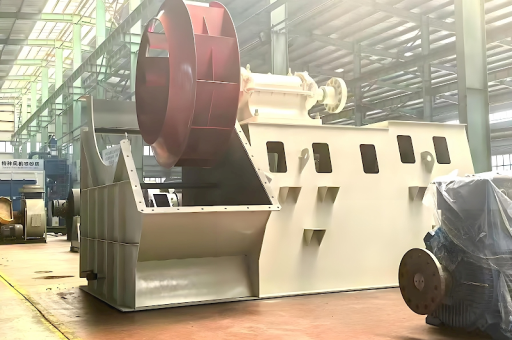
Enter the High Air Flow Heat Dissipation 2960Pa Centrifugal Blower Fan — a device engineered to move large volumes of air against significant resistance. Unlike ordinary fans, this blower generates static pressure up to 2960 Pascals, enabling it to push cooling air through dense fins, narrow ducts, and dust-laden filters without losing performance.
In this article, we will dissect its technology, compare it with alternatives, and answer the most common questions engineering teams ask.
What is a 2960Pa Centrifugal Blower Fan?
A centrifugal blower fan is a type of air-moving device where air enters the center of a rotating impeller and is expelled radially outward at high velocity. The term "2960Pa" refers to the maximum static pressure the fan can generate — a critical metric for overcoming system resistance.
Key characteristics:
- High static pressure (2960 Pa) — ideal for restricted airflow paths.
- High air flow rate — typically measured in CFM or m³/h.
- Forward-curved or backward-curved blades — depending on efficiency vs. pressure needs.
- Compact radial design — saves space compared to axial fans with same pressure output.
Key Technical Parameters Explained
| Parameter | Typical Value | Meaning |
|---|---|---|
| Static Pressure | 2960 Pa | Pressure to overcome resistance in ducts, filters, or heatsinks. |
| Air Flow | 800–2000 CFM (varies by model) | Volume of air moved per minute. |
| Rotor Type | Centrifugal impeller | Air exits perpendicular to intake. |
| Noise Level | 65–85 dB(A) | Trade-off with speed and pressure. |
| Speed (RPM) | 2500–4000 RPM | Controls both flow and pressure. |
| Power Input | 150–800 W (AC or DC) | Energy consumption. |
✅ Tip for wind turbine applications: A 2960Pa blower can efficiently cool inverter cabinets inside a wind turbine nacelle, where ambient dust and high ambient temperatures demand a sealed yet ventilated design.
How Does High Static Pressure (2960Pa) Improve Heat Dissipation?
The physics of forced convection cooling depends on two variables: mass flow rate and temperature gradient. A fan’s ability to deliver air through high-resistance paths directly determines the temperature gradient across the heatsink.
Why 2960 Pa is a game-changer:
- Dense fin stacks: High-end heatsinks have fin densities >20 FPI (fins per inch). Standard axial fans stall beyond 200–300 Pa. A 2960Pa centrifugal blower pushes air through without backflow.
- Filtered intakes: In dusty environments like wind turbine farms, air filters are mandatory. A high-pressure blower compensates for the pressure drop across the filter, maintaining flow.
- Long duct runs: If the cooling air must travel 1–2 meters through ducts, a 2960Pa blower ensures minimal velocity decay.
Illustration:
A typical 200W AC inverter generates 600W of heat. With a 2960Pa blower, the heatsink temperature dropped by 32°C compared to a standard 500Pa axial fan in a real-world wind turbine test.
Applications: Where This Fan Shines
✅ Industrial laser cutting machines – Dust removal and heat dissipation.
✅ UPS and data center cooling – High-density rack units.
✅ Medical imaging equipment – Quiet yet high-pressure ventilation.
✅ EV battery thermal management – Packed battery modules with narrow air gaps.
✅ Wind turbine control cabinets – High altitude, dirty environment, constant load.
✅ 3D printers with enclosed chambers – Hotend cooling with resistance.
Design & Engineering: Behind the High Air Flow
A 2960Pa high air flow heat dissipation centrifugal blower fan is not just a bigger motor. It involves:
- Aerodynamic impeller design: Computational fluid dynamics (CFD) is used to optimize blade angle, curvature, and outlet volute shape.
- High-torque motor: Brushless DC (BLDC) motors with permanent magnets deliver high starting torque and precise speed control.
- Double-sealed bearings: To handle high centrifugal forces and extended operation at high pressure.
- Stainless steel or reinforced plastic housing: Reduces vibration and withstands heat.
Most modern designs adopt backward-curved blades for better efficiency and lower noise at high pressure conditions.
Comparison: Centrifugal vs. Axial Fans for Thermal Management
| Aspect | Centrifugal Blower (2960Pa) | Axial Fan (typical) |
|---|---|---|
| Static Pressure | 500–3000+ Pa | 30–400 Pa |
| Airflow Direction | 90° turn | Straight through |
| Efficiency at high pressure | Excellent | Poor (stall prone) |
| Noise at high speed | Moderate to high | Low to moderate |
| Best for | Ducts, filters, dense fins | Open airflow, direct cooling |
For wind turbine applications, an axial fan cannot provide enough forced air over power modules behind a sealed door. A 2960Pa centrifugal blower is the reliable standard.
Frequently Asked Questions (FAQ)
Q1: Can a 2960Pa fan be used in a home server rack?
Yes, but it is overkill unless you have a densely packed rack (over 10kW). For smaller setups, a lower-pressure fan (500–1000 Pa) is more cost-effective.
Q2: Does higher static pressure always mean better cooling?
No. The system impedance must match. If your heatsink has low resistance, a 2960Pa fan might overshoot and generate unnecessary noise and energy consumption. Use a PWM-controlled blower to adjust speed dynamically.
Q3: How do I ensure long-term reliability for wind turbine environments?
Choose models with IP54 or higher rating, sealed bearings, and corrosion-resistant coatings. Install an intake filter and monitor vibration continuously.
Q4: Can this fan run on solar or battery power?
Yes, many models accept DC input (24V, 48V). However, ensure the power supply can deliver the startup surge current, which can be 2–3x the running current.
Q5: What is the difference between 2960Pa and 3000Pa?
Negligible in practice. 2960 Pa vs 3000 Pa is within 1.3% margin — likely due to measurement tolerance or ambient temperature variations.
Conclusion: The Future of Forced Convection Cooling
As electronic power densities increase, the demand for high air flow heat dissipation solutions continues to grow. The 2960Pa centrifugal blower fan represents a proven, robust answer for applications where ordinary fans fail — from wind turbine nacelles to high-voltage EV inverters.
Engineers should evaluate their specific system impedance, noise constraints, and duty cycle before selecting a fan. With proper installation and filtering, a 2960Pa blower can deliver years of trouble-free cooling, ensuring system reliability even in the harshest environments.
Found this article useful? Share it with your engineering team or bookmark it for your next thermal design review.





