
This article's table of contents introduction:
- The Core Components Defined
- Why This Specific Combination is Necessary
- Typical Applications (Where you'd find this fan)
- Key Specifications to Look For
- Potential Challenges & Considerations
- Summary
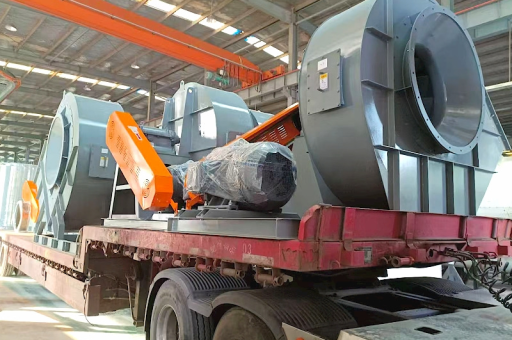
This sounds like you are describing a specialized industrial centrifugal fan designed for a very specific and demanding application. Let's break down what each term means and why those specifications are critical.
The Core Components Defined
- Centrifugal Blower Fan: The fundamental technology. It uses a rotating impeller to increase the velocity of air/gas and then converts that velocity into pressure. It's the workhorse for moving large volumes of air against system resistance (like a boiler's ductwork and fluidized bed).
- Explosion Proof: This is a critical safety rating. It means the fan's motor and electrical components are enclosed in a heavy-duty housing that can contain an internal explosion (e.g., from flammable gas or dust) without igniting the external atmosphere. It also prevents sparks from the fan's internal components (like bearings or impeller contact) from escaping.
- Fluidized Bed Boiler: This is the application. In this type of boiler, fuel (like coal, biomass, or waste) is suspended in a bed of hot, inert particles (like sand or ash) by an upward flow of air. The fan pushes this air through the bed. The environment is extremely harsh: high temperature, abrasive particles (dust/sand), and potentially corrosive gases.
- Stainless Steel: This refers to the material of the fan's impeller (wheel) and often the housing. This is absolutely necessary because standard carbon steel would rapidly corrode or erode in the boiler's flue gas environment.
Why This Specific Combination is Necessary
A standard fan would fail quickly and dangerously in this application. Here’s why each element is crucial:
| Component | Why it’s Essential |
|---|---|
| Stainless Steel | Resists Corrosion & Erosion: Flue gases from burning fuels contain moisture, sulfur, chlorine, and other acids. Abrasive fly ash particles are also present. SS (often 304L or 316L) provides far superior resistance to these conditions than carbon steel. It also handles the higher temperatures found in boiler systems. |
| Explosion Proof | Critical for Safety: The fan handles air mixed with unburned fuel, combustible dust, and potentially flammable gases. A spark from a standard motor or from the impeller hitting the housing could ignite this mixture, causing a catastrophic boiler explosion. The explosion-proof rating ensures this cannot happen. |
| Centrifugal Design | High Pressure & Efficiency: Fluidized beds require high static pressure to force air through the bed of particles. A centrifugal fan is far better at generating this pressure than an axial fan. It also offers stable performance over a range of conditions. |
Typical Applications (Where you'd find this fan)
- Power Plants: Circulating Fluidized Bed (CFB) boilers for coal or biomass.
- Industrial Boilers: For steam generation in refineries, chemical plants, and pulp/paper mills.
- Waste-to-Energy Plants: Burning municipal solid waste or industrial waste.
- Biomass Processing: For wood pellets, agricultural waste, or other solid fuels.
Key Specifications to Look For
When sourcing this fan, you would need to provide the following:
- Flow Rate: Cubic feet per minute (CFM) or cubic meters per hour (m³/h).
- Static Pressure: Inches of water gauge (in. wg.) or Pascals (Pa). This is critical for overcoming the bed's resistance.
- Temperature: The gas temperature at the fan inlet (e.g., 150°C / 300°F, or much higher for some applications). The fan may need to be rated for continuous high-temperature service.
- Gas Composition: Is it clean air for combustion (Primary Air) or dirty flue gas (Secondary Air / Induced Draft)? This dictates the material and design.
- Explosion Proof Rating: What standard (e.g., ATEX for Europe, NEC/CEC for North America) and what specific gas/dust group (e.g., Class I, Division 1, Groups C & D; or Class II, Division 1, Groups E, F, G)?
- Motor Size & Voltage: Horsepower (HP) or kilowatts (kW), voltage, frequency, and enclosure (e.g., TEFC, Explosion Proof).
Potential Challenges & Considerations
- Abrasion: Even with stainless steel, severe erosion from fly ash can be a problem. Impellers may have wear plates or be coated.
- Corrosion: If the fuel is high in sulfur or chlorine, even 316L SS may not be enough. You might need a higher alloy like Duplex or Super Duplex stainless steel.
- High Temperature: If the gas is very hot (>200°C / 400°F), the motor may need to be shaft-mounted or driven by a belt to isolate it from the heat. The fan housing itself will require thermal expansion joints and proper material selection.
Summary
In short, you are looking for a heavy-duty, industrial-grade centrifugal fan built from corrosion-resistant stainless steel with a certified explosion-proof motor and all necessary safety features. It is a critical safety and performance component for a Fluidized Bed Boiler, where it must handle high pressure, high temperature, and hazardous, abrasive conditions.
If you are sourcing this, always work with a manufacturer experienced in power generation, boiler auxiliaries, and hazardous location (ATEX/NEC) equipment. They will be able to design a fan that meets the exact, demanding requirements of your system.





