
This article's table of contents introduction:
- The Core Definitions
- Key Applications (Why you need this specific fan)
- Critical Considerations When Selecting
- Advantages & Disadvantages
- Example Product / Manufacturer
- Summary: When to Specify This Fan
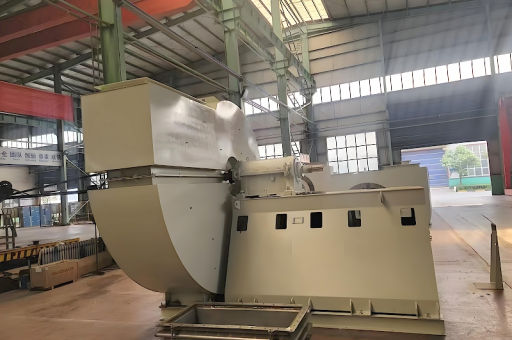
This is a highly specific and industrial piece of equipment. Let's break down what a "Industrial Stainless Steel Explosion Proof Centrifugal Blower Fan" is, where it is used, and why the combination of these features is critical.
The Core Definitions
- Centrifugal Blower Fan: Unlike a standard axial fan (like a desk fan), this type uses a rotating impeller to draw air in axially and discharge it radially (at a 90-degree angle). This creates higher pressure than axial fans, making it suitable for moving air through ductwork, filters, and against system resistance.
- Explosion Proof (Ex): This is the most critical safety feature. It does not mean the fan is immune to explosions. It means the fan is designed, constructed, and certified to contain any internal explosion (e.g., from sparks or hot surfaces igniting flammable gas or dust) and prevent it from igniting the external atmosphere. This is achieved through:
- Non-sparking materials: The impeller is often made of aluminum, bronze, or specially grounded stainless steel.
- Motor Enclosure: The motor is a TEFC (Totally Enclosed Fan Cooled) design certified for hazardous locations (Class I, Div 1 or Div 2, Groups C, D or Class II, Div 1, Groups E, F, G).
- Sealed Conduit: Electrical connections are made via explosion-proof conduit seals.
- Grounding: The housing and impeller are bonded and grounded to prevent static charge buildup.
- Stainless Steel (SS): The housing and often the impeller are made from Stainless Steel (typically 304 or 316L).
- 304 SS: Good for general corrosion resistance, food processing, and many chemical environments.
- 316L SS: Superior corrosion resistance against chlorides, acids, and saline environments (offshore, chemical plants, wastewater).
- Industrial: Built for continuous, heavy-duty operation (24/7) with robust bearings, thick gauge materials, and high-performance motors.
Key Applications (Why you need this specific fan)
The combination of Explosion Proof and Stainless Steel makes this fan the only safe choice for environments that are simultaneously corrosive and hazardous.
| Application | Environment | Why This Fan is Needed |
|---|---|---|
| Chemical Processing | Handling solvent vapors, corrosive fumes (HCl, H2SO4, Cl2). | SS resists corrosion; Ex prevents ignition of flammable vapors. |
| Pharmaceutical Manufacturing | Dust from active ingredients, solvent recovery, clean rooms. | SS for cleanability (sanitary welds); Ex for dust explosion prevention. |
| Oil & Gas / Petrochemical | Offshore platforms, refineries, storage terminals. | Ex for explosive hydrocarbon gases; 316L SS for salt spray corrosion. |
| Wastewater Treatment | Digester gas (methane, H2S) handling, sludge aeration in hazardous areas. | SS resists H2S corrosion; Ex for methane explosion risk. |
| Paint Booths / Spray Finishing | Removing flammable solvent vapors (acetone, toluene, xylene). | Ex prevents ignition; SS is easy to clean and resists solvent attack. |
| Food & Beverage (Specific) | Ethanol production, grain dust handling, cleaning with harsh sanitizers. | SS is food-grade / sanitary; Ex for combustible dust (grain) or alcohol vapors. |
| Mining & Mineral Processing | Underground ventilation, handling pyrophoric dusts or explosive gases. | Robust construction; Ex prevents ignition; SS for harsh environments. |
Critical Considerations When Selecting
- Certification is Paramount: You must verify the fan is UL / CSA / ATEX / IECEx listed for the exact Class, Division, and Group of the hazardous location.
- Class I: Gases, Vapors, Liquids (e.g., propane, hydrogen).
- Class II: Combustible Dusts (e.g., coal, flour, metal).
- Division 1: Hazard present under normal operating conditions.
- Division 2: Hazard present only under abnormal conditions (e.g., a leak).
- Corrosion Resistance: Ensure the impeller, housing, and all fasteners are SS. Ask for a material test certificate (MTC) for 316L if required.
- Motor: Must be a listed Explosion-Proof motor with the correct temperature code (T-code) to ensure the motor surface temperature never reaches the auto-ignition temperature of the surrounding gas or dust.
- Spark-Testing: In the most critical applications, the impeller may be spark-tested (e.g., using a copper or beryllium copper ring) to ensure no ferrous-to-ferrous contact that could create a spark.
- Airflow and Pressure: You'll need to calculate the required CFM (Cubic Feet per Minute) or m³/hr and Static Pressure (in. w.g. or Pa) the system requires. Oversizing or undersizing is dangerous and inefficient.
- Configuration:
- Arrangement: Arrangement 1 (direct drive) or Arrangement 4 (belt driven with bearings on pedestal). Direct drive is simpler but limits speed; belt drive allows for speed adjustments.
- Discharge: Clockwise or Counter-Clockwise rotation, Top Horizontal, Down Blast, etc.
Advantages & Disadvantages
| Advantages | Disadvantages |
|---|---|
| ✅ Highest level of safety in explosive, corrosive environments. | ❌ Very high initial cost (often 3-10x more than a standard fan). |
| ✅ Long lifespan due to corrosion-resistant stainless steel. | ❌ Heavy weight requiring robust mounting. |
| ✅ Reliable, continuous duty capability. | ❌ Specialized maintenance required (Ex-rated components must be serviced by certified technicians). |
| ✅ Compliance with OSHA, NFPA, and local fire codes. | ❌ Noise levels can be higher than standard blowers. |
| ✅ High static pressure capability for ducted systems. | ❌ Standardized designs may not be easily customized. |
Example Product / Manufacturer
You're looking for manufacturers like:
- New York Blower (NYB)
- Greenheck
- Cincinnati Fan
- Howden
- AirPro Fan & Blower
- Sodeca
A sample product line would be: "New York Blower Type 672 Belt Drive or Type 606 Direct Drive Stainless Steel Explosion Proof Ventilating Fan."
Summary: When to Specify This Fan
Use it if: You need to move air or a gas mixture that is both corrosive (attacks carbon steel) and flammable/explosive (requires ignition prevention).
Do Not Use it if: The environment is only corrosive. You can use a cheaper FRP (Fiberglass Reinforced Plastic) or coated carbon steel fan. If the environment is only explosive but not corrosive, a cast aluminum explosion-proof fan is typically much cheaper.
Final Recommendation: Work with an industrial ventilation engineer or a certified fan manufacturer's representative. They will calculate your system's exact CFM/Static Pressure requirements and match you with a fan that has the specific Ex Certification (e.g., Class I, Div 2, Group D) and material (304 vs 316L) you need. Never guess on explosion-proof equipment.





