
This article's table of contents introduction:
- The Role of the Fan in a Kiln System
- Why a Centrifugal Blower?
- Key Technical Specifications to Look For
- What to Look for in a Manufacturer / Supplier
- Common Manufacturers (Global & Indian)
- Summary of the Specification You'd Need to Write
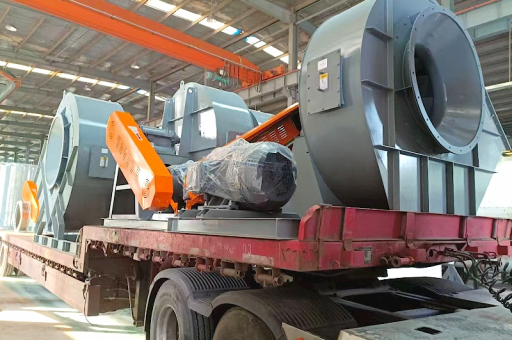
It sounds like you are looking for information on a Forced Draught (FD) Fan used specifically for cooling in a kiln application, which is typically an Industrial Centrifugal Blower.
Here is a detailed breakdown of what this equipment is, how it functions in a kiln system, and key specifications to consider when selecting or specifying one.
The Role of the Fan in a Kiln System
In most industrial kilns (cement, lime, ceramics, minerals), there are three main air systems. Your request specifies the "Cooling" and "Forced Draught" functions:
- Forced Draught (FD) Fan: Pushes ambient air into the system. For a cooling application, this fan is located at the kiln outlet or the clinker cooler.
- Induced Draught (ID) Fan: Sucks hot exhaust gases out of the kiln (upstream).
- Cooling Fan: Specifically forces cool, ambient air through the material (e.g., clinker on a grate cooler) to rapidly drop its temperature and recover heat.
Your specific application is likely an FD Fan for a Grate Cooler or an FD Fan for the Kiln Hood/Nose Ring.
Why a Centrifugal Blower?
Centrifugal blowers are preferred for this task for several reasons:
- High Pressure: Kilns and coolers have significant resistance to airflow (material bed depth, ducts, dust collectors). Centrifugal fans generate high static pressure.
- Stable Performance: They handle fluctuating system resistance better than axial fans.
- Rugged Construction: Designed to handle abrasive dust (clinker dust, raw meal) and high temperatures.
Key Technical Specifications to Look For
When sourcing or specifying a Kilns Cooling Forced Draught Fan, these are the critical parameters:
A. Impeller Type (Wheel Design)
- Radial (Paddlewheel): Best for highly abrasive dust. Simple, robust, but less efficient. Used for dirty air (e.g., exhausting from the cooler).
- Backward Curved / Backward Inclined (BC/BI): More efficient, lower noise, self-limiting power curve. Most common for modern FD cooling fans where the air is relatively clean (ambient air being forced in).
- Airfoil: Highest efficiency, but most sensitive to dust. Used only for the cleanest inlet air.
B. Casing & Construction
- Material: Typically Carbon Steel (IS 2062) for ambient air. Stainless Steel (SS 304/316) for hot sections or corrosive environments. Corten Steel for high-temperature cooling zones.
- Belt Drive vs. Direct Drive:
- Belt Drive: Allows for speed adjustment (changing cooling air volume) via pulley changes. Lower motor cost. Standard for variable process needs.
- Direct Drive: More efficient (no belt loss), lower maintenance (no belts/pulleys). Usually paired with a VFD (Variable Frequency Drive) for speed control.
- Labyrinth Seals: Essential to prevent bearing contamination from fine kiln dust.
C. Performance Parameters
- Volume (Flow): Measured in m³/hr or CFM. (e.g., 200,000 m³/hr for a medium-sized cooler).
- Static Pressure: Measured in mmWC (mm of Water Column) or Pa. (e.g., 700-1000 mmWC).
- Temperature:
- Inlet Temperature: Usually ambient (30-40°C) for cooling air.
- Outlet Temperature: May rise slightly due to heat transfer from the material. The fan must be rated for this temperature plus a safety margin.
- Speed: Typically 750 to 1500 RPM for large industrial units.
What to Look for in a Manufacturer / Supplier
When buying a "Kilns Cooling Forced Draught Fan Industrial Centrifugal Blower Fan," you should ask the supplier:
- Are the impeller blades replaceable? (Critical for abrasive duty).
- Is the shaft sealing designed for dust-laden environments? (Labyrinth or air purge seals?).
- What is the vibration tolerance? (ISO 14683 Grade G6.3 or better).
- Is the fan designed for continuous 24/7 operation?
- Does it come with an inlet box damper (for volume control) or is it designed for VFD compatibility?
- What is the wear protection? (Hard facing on blade edges, ceramic tiles, or sacrificial liners).
Common Manufacturers (Global & Indian)
If you are sourcing this fan, consider these well-known industrial fan OEMs:
Global:
- Howden (Renowned for heavy industrial fans, Roots blowers)
- Greenheck (Industrial Division)
- New York Blower (NYB)
- ABB / Fläkt Woods
Indian (Highly competitive for cement/kiln fans):
- Kruger Ventilation
- Aircon Engineers
- Aeroventic
- Excel Industries
- Dynamic Fan
- Mahajan Industrial Company
Summary of the Specification You'd Need to Write
If you are creating a purchase requisition or enquiry for this fan, it should look like this:
Item: Forced Draught Cooling Fan for Kiln Clinker Cooler Type: Centrifugal, Backward Inclined (or Radial), Belt/Direct Drive Design Conditions:
- Flow: 150,000 Nm³/hr
- Static Pressure: 750 mmWC
- Inlet Temp: 35°C (Ambient)
- Operating Temp: Max 80°C (Safety margin)
- Density: 1.2 kg/m³
- Material: Hot Rolled Carbon Steel (IS 2062)
- Accessories: Inlet box, expansion joint, VFD compatible motor (IP55, F-class), base frame with vibration dampers.
Need a more specific calculation or a recommendation for a specific kiln capacity (e.g., 1000 TPD cement plant)? Let me know and I can refine the answer.





