
This article's table of contents introduction:
- Breakdown of the Product Description
- Common Applications
- Key Specifications to Verify
- Where to Find This Product
- Important Note on Safety & Compliance
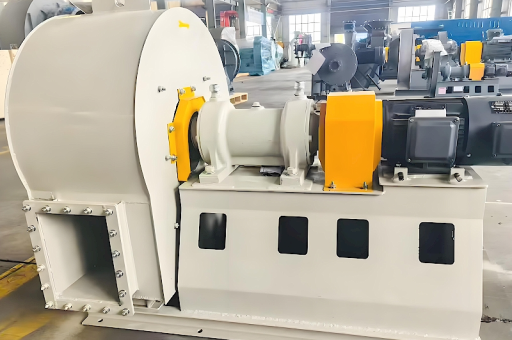
This is a specific product category request. "SA Stainless Steel Blower Explosion Proof Industrial Ventilation" refers to a specialized piece of equipment designed for hazardous environments.
Here is a breakdown of what this description means, the typical applications, and key specifications you should look for.
Breakdown of the Product Description
-
SA: This likely refers to a specific model series or manufacturer code. Common manufacturers using "SA" prefixes include:
- Suntech (often used for motor codes)
- Sofasco (a brand of fans and blowers)
- A specific "San Ace" model series (Sanyo Denki).
- A generic "Series A" designation for a specific airflow/performance curve.
-
Stainless Steel:
- Why? Corrosion resistance. Standard steel will rust in chemical, marine, or high-humidity environments.
- Grade: Typically SS304 (general purpose) or SS316 (superior chemical resistance, often required for acidic or chloride-laden fumes).
- Components: The impeller (fan wheel), housing (volute), and often the motor frame or external hardware.
-
Blower:
- Type: This is usually a Centrifugal Blower (as opposed to an axial fan). It pulls air in the center and pushes it out at 90 degrees. It generates high static pressure, which is necessary to push air through long ducts, filters, or scrubbers.
-
Explosion Proof (Ex Proof):
- Why? To prevent sparks (mechanical or electrical) from igniting flammable gases, vapors, or combustible dust in the air.
- Key Requirements:
- Motor: Must be "Explosion Proof" (e.g., Class I, Div 1 or 2, Groups C & D for gases; Class II for dust).
- Construction: Non-sparking materials. The impeller is often made of aluminum bronze or non-ferrous metal (even on a stainless steel housing) to prevent metal-on-metal sparks.
- Bonding/Grounding: The unit must be properly grounded to prevent static build-up.
- Sealing: Conduit connections require explosion-proof seals.
-
Industrial Ventilation:
- Purpose: Moving large volumes of air or removing fumes, smoke, dust, or heat from a workspace. This is not a small computer fan or residential bathroom fan.
Common Applications
Given the combination of Stainless Steel and Explosion Proof, this blower is for harsh, hazardous industrial environments:
- Chemical & Petrochemical Plants: Removing corrosive fumes and flammable vapors.
- Pharmaceutical Manufacturing: Handling volatile solvents.
- Laboratories & Fume Hoods: Exhausting corrosive and flammable chemical fumes.
- Marine & Offshore: Ventilating engine rooms, battery rooms, or paint lockers where saltwater corrosion is a risk.
- Paint Booths: Exhausting flammable paint solvents and overspray.
- Wastewater Treatment: Ventilating confined spaces (like digesters) with explosive methane gas and corrosive H2S (hydrogen sulfide) – SS316 is critical here.
- Food Processing: Ventilating areas with combustible dust (grain, sugar, flour) or corrosive cleaning agents.
Key Specifications to Verify
When searching for or purchasing this specific item, you must confirm the following:
| Specification | Detail to Look For | Why It Matters |
|---|---|---|
| Material | Confirm SS316 vs. SS304. | SS316 is essential for chlorides (e.g., seawater, bleach). |
| Impeller Material | Aluminum Bronze or Monel | These are non-sparking. Even if the housing is SS, a steel impeller will spark. |
| Motor Class | Class I, Div 1 or 2 (Groups C & D) or Class II (Groups E, F, G) | This legally defines the gas/dust environment it can handle. |
| Temperature Code (T-Code) | T3 (200°C) or T4 (135°C) | The maximum surface temperature the motor/blower can reach. Must be lower than the ignition temperature of the gas/dust. |
| Static Pressure | e.g., 2" - 10" w.g. (inches water gauge) | Determines how much resistance (duct length, filters) it can overcome. |
| CFM (Airflow) | e.g., 500 - 5,000+ CFM | The volume of air moved per minute. |
| Horsepower (HP) | e.g., 1/4 HP to 15+ HP | The motor power required to achieve the airflow/pressure. |
Where to Find This Product
- Direct from Manufacturers: Greenheck, Cincinnati Fan, Dayton (Grainger), New York Blower (NYB), Hartzell.
- Industrial Distributors: Grainger, McMaster-Carr, MSC Industrial Supply.
- Specialty Suppliers: Companies that specialize in Ex-Proof ventilation for chemical/marine use (e.g., "SA" brand distributors).
Important Note on Safety & Compliance
Do not substitute or modify this equipment. An explosion-proof blower must be certified by a recognized agency (e.g., UL, ATEX, CSA, IECEx) for the specific environment. Using a "regular" stainless steel blower in an explosive environment is a serious safety hazard and likely a violation of OSHA or local fire codes.
If you provide a specific model number (e.g., "SA-1500-EX-SS316"), a professional can give you exact specifications. Otherwise, this breakdown covers the industry standard for this type of equipment.





